 January 2015 in “Turkiye Klinikleri Journal of Dermatology”
 Peripilar keratin casts are a helpful sign for diagnosing traction alopecia.
1 citations
,
December 2022 in “Skin Appendage Disorders” Recognizing trichofolliculomas is important to avoid unnecessary surgery.
 November 2025 in “International Journal Of Ayurvedic And Herbal Medicine”
 A multidisciplinary approach effectively improves trichotillomania without side effects.
 7 citations
,
January 2022 in “Molecules”
7 citations
,
January 2022 in “Molecules” Tectoridin helps human hair cells grow and makes mouse hair longer, suggesting it could treat hair loss.
 5 citations
,
August 2020 in “Curēus”
5 citations
,
August 2020 in “Curēus” The document concludes that recent studies help tell apart desmoplastic trichoepitheliomas from other skin tumors, but more research is needed for clear differentiation.
3 citations
,
January 2011 in “Indian Journal of Dermatology Venereology and Leprology” Switching to a twice-weekly betamethasone treatment led to full hair regrowth in alopecia areata without side effects.
10 citations
,
May 2020 in “Dermatologic therapy” Tildrakizumab significantly improved recalcitrant lichen planopilaris and frontal fibrosing alopecia.
 February 2026 in “Frontiers in Immunology”
 Tralokinumab for atopic dermatitis may cause eye issues and skin reactions, needing careful monitoring.
33 citations
,
December 1982 in “Developmental Medicine & Child Neurology” Hair-shaft abnormalities can indicate neurological disorders, some of which are treatable.
 1 citations
,
December 2024 in “Dermatology and Therapy”
1 citations
,
December 2024 in “Dermatology and Therapy” The STRIAA tool helps doctors quickly and effectively assess the severity of Alopecia Areata.
 February 2025 in “Revista Eletrônica Acervo Saúde”
 Triamcinolone hexacetonide is effective but has side effects, while PRP and minoxidil are safer alternatives for treating alopecia areata.
 13 citations
,
February 2020 in “Journal of the American Academy of Dermatology”
13 citations
,
February 2020 in “Journal of the American Academy of Dermatology” Microneedling and oral tranexamic acid both improve facial melasma, but microneedling shows more sustained benefits.
3 citations
,
March 2013 in “American Journal of Dermatopathology” Ossification in trichilemmal cysts is more common than previously believed.
18 citations
,
September 1994 in “Clinical and Experimental Dermatology” Localized trichorrhexis nodosa is a hair condition where hair becomes fragile and breaks easily due to damage.
13 citations
,
March 2014 in “Journal of the American Medical Directors Association” Trichotillomania was successfully treated with risperidone and naltrexone.
6 citations
,
March 2018 in “The American journal of dermatopathology/American journal of dermatopathology” BerEP4 and CD34 staining can help tell apart tricholemmoma from basal cell carcinoma.
 9 citations
,
February 2011 in “Revista Brasileira de Farmacognosia”
9 citations
,
February 2011 in “Revista Brasileira de Farmacognosia” Tridax procumbens plant parts boost immune response in mice.
July 2026 in “Dermatology Practical & Conceptual” Trichoscopy is important for diagnosing Folliculotropic Mycosis Fungoides on the scalp.
January 2022 in “Clinical Cases in Dermatology” Early treatment of traction alopecia can reverse hair loss; prevention involves avoiding tight hairstyles.
 April 2026 in “Research Square”
 Trichoscopy is reliable for diagnosing different types of frontal non-scarring hair loss.
 2 citations
,
August 2021 in “Skin appendage disorders”
2 citations
,
August 2021 in “Skin appendage disorders” White piedra is a rare hair infection treated with oral and topical antifungals.
 19 citations
,
June 2007 in “Veterinary Dermatology”
19 citations
,
June 2007 in “Veterinary Dermatology” Amitraz effectively treated sarcoptic mange in three alpacas.
 October 2024 in “Asian Journal of Pharmaceutical and Clinical Research”
 Topical methotrexate is more effective and as safe as betamethasone for treating alopecia areata.
 July 2025 in “Clinical Dermatology Review”
 A rare family case of multiple benign hair follicle tumors was identified, highlighting the need to distinguish them from similar conditions.
 November 2023 in “Laser therapy”
 Trichoscopy is essential for diagnosing and managing alopecia areata in children.
23 citations
,
July 1994 in “Journal of Dermatological Science” Pili torti hair twists due to uneven outer root sheath cell development.
 December 2024 in “Animals”
 Tithonia diversifolia extract improved digestion but didn't enhance lamb growth.
July 2025 in “INTERNATIONAL JOURNAL OF SCIENTIFIC RESEARCH” Trichoscopy is crucial for diagnosing alopecia areata by identifying specific hair features.
 3 citations
,
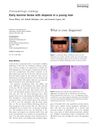
April 2016 in “International Journal of Dermatology”
3 citations
,
April 2016 in “International Journal of Dermatology” A young man was diagnosed with trichoepitheliomas, causing thick skin and hair loss.
414 citations
,
August 2005 in “Nature” Activating TERT in mice skin boosts hair growth by waking up hair follicle stem cells.