 May 2023 in “Journal of Cosmetic Dermatology”
 Using platelet-rich plasma, basic fibroblast growth factor, and minoxidil together significantly increases hair count and growth rate in people with hair loss.
January 2023 in “JOURNAL OF CLINICAL AND DIAGNOSTIC RESEARCH” Combining injections with lotion is more effective for hair regrowth in alopecia areata than using the lotion alone.
 January 2023 in “Dermatologic Therapy”
 The nutritional supplement Pilopeptan® WOMAN improved hair growth and thickness in women with hair loss.
 May 2022 in “Annals of Oncology”
 Photobiomodulation therapy may speed up hair regrowth after chemotherapy in the short term.
June 2021 in “Current developments in nutrition” The LustrivaTM BH-002 supplement and hair serum improved women's hair, skin, and nail health and appearance.
January 2021 in “Annals of translational medicine” YH0618 helped reduce skin and nail problems and fatigue in chemotherapy patients.
January 2021 in “Journal of clinical & experimental dermatology research” The new 5% minoxidil formulation without propylene glycol effectively promotes hair growth with fewer side effects and better user satisfaction.
April 2020 in “Research Square (Research Square)” Oral contraceptives with cyproterone acetate improved quality of life for women with PCOS more than those with levonorgestrel.
 April 2019 in “Biometrics”
 The new clinical trial design is promising but needs real-world trials to test its effectiveness and possible enhancements.
April 2018 in “International journal of innovative research in medical science” Neem and Zanjabeel are as effective as standard drugs for treating hirsutism in PCOD patients.
 March 2017 in “BJU international”
 The BJUI supports clinical trials as key for unbiased medical evidence and works to enhance their design, reporting, and discussion.
January 2016 in “Refubium (Universitätsbibliothek der Freien Universität Berlin)” CAP7.1 is generally safe at 200 mg/m²/day, but can cause fatigue, nausea, hair loss, fever, and blood-related issues.
 April 2014 in “Significance”
 Unconventional home remedies can sometimes show surprising results.
 March 2014 in “Journal of The American Academy of Dermatology”
 Tavaborole is a safe and effective toenail fungus treatment, with the 5% solution being the best option.
 June 2013 in “Annals of the rheumatic diseases”
 Methotrexate dose has little effect on its toxicity when used with adalimumab for early rheumatoid arthritis.
 July 2012 in “The Journal of Urology”
 Testosterone increases muscle mass regardless of DHT conversion blocking.
 January 2012 in “Yearbook of Dermatology and Dermatologic Surgery”
 Acne treatment, including isotretinoin, improves quality of life and does not worsen depression.
 June 2011 in “Journal of clinical and experimental investigations”
 Oral zinc sulphate is an effective and safe treatment for thallium poisoning.
Topical minoxidil, intralesional steroids, and cryotherapy significantly improve alopecia areata.
August 2006 in “JNCI Journal of the National Cancer Institute”  June 2001 in “Annals of Internal Medicine”
 The conclusion suggests that the zinc lozenge study is valid despite imperfect blinding, as many participants could not correctly identify their lozenge type.
 July 1997 in “The Lancet”
 Finasteride increased hair count and regrowth in men with hair loss but also caused more sexual side effects than placebo.
Polyphenolic compounds may help hair growth but aren't better than minoxidil.
Polyphenolic compounds may help hair growth but need more research.
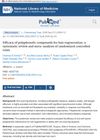
Polyphenolic compounds may help improve hair growth in non-scarring alopecia.
January 2026 in “British Journal of Dermatology” Combined microneedling with minoxidil improves hair growth more than minoxidil alone for hair loss.
November 2025 in “SKIN The Journal of Cutaneous Medicine” Ritlecitinib is generally safe for adolescents with alopecia areata over 5 years.
November 2025 in “SKIN The Journal of Cutaneous Medicine” The study found that Baricitinib (Bari), a Janus kinase inhibitor, is effective and safe for treating severe alopecia areata (AA) in both adolescents and adults. In the BRAVE-AA trials, 257 adolescents and 1,200 adults were treated with either Bari 4mg, Bari 2mg, or a placebo. At 36 weeks, 42.4% of adolescents on Bari 4mg achieved a SALT score of less than 20, compared to 34% of adults. Adolescents showed higher response rates despite having more severe disease at baseline, indicating the potential benefits of early intervention. Common side effects included headache, acne, and upper respiratory tract infections.
 September 2025 in “Journal of the American Academy of Dermatology”
 Combining minoxidil and PRP is more effective for hair growth than using either alone.
September 2025 in “Journal of the American Academy of Dermatology” Deuruxolitinib significantly improves hair satisfaction in severe alopecia areata patients.