December 2023 in “Advances in Integrative Medicine” Boswellia sacra helped improve pilonidal sinus symptoms in one case.
 13 citations
,
January 2011 in “International Journal of Trichology”
13 citations
,
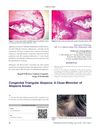
January 2011 in “International Journal of Trichology” CTA is often mistaken for AA but doesn't respond to steroids and may require hair transplantation.
 9 citations
,
July 2019 in “Folia Morphologica”
9 citations
,
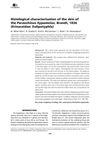
July 2019 in “Folia Morphologica” Brandt's hedgehog has thick skin on its back and many glands near its nostrils.
 April 2023 in “Journal of Investigative Dermatology”
 Skin cells and immune cells change in a skin condition called hidradenitis suppurativa, and a certain treatment can improve these changes.
 April 2023 in “Journal of Investigative Dermatology”
 An elderly woman's upper lip lump, thought to be a mucocele, was actually a rare type of lymphoma usually found on legs, treated successfully with chemotherapy and radiation.
A woman with a rare hair loss condition developed skin cancer in the bald area.
A wavy two-layer closure in hair transplants makes scars nearly invisible for most patients.
 April 2025 in “Dermatology Practical & Conceptual”
 Biopsy is crucial to accurately distinguish Erosive Pustular Dermatosis of the Scalp from Squamous Cell Carcinoma.
1 citations
,
May 2024 in “Pediatric Blood & Cancer” Trametinib can effectively treat severe kaposiform lymphangiomatosis when other treatments fail.
 March 2023 in “Journal of skin and stem cell”
 Trichoscopy is a good, quick, non-invasive way to diagnose different types of hair loss.
 6 citations
,
January 2019 in “The American Journal of Dermatopathology”
6 citations
,
January 2019 in “The American Journal of Dermatopathology” The conclusion is that fat tissue in the skin is a new finding in Frontal fibrosing alopecia and may contribute to hair follicle and muscle degeneration.
1 citations
,
January 2012 in “International journal of trichology” Sheep hair follicle cells can grow a lot but need the dermal papilla to do so.
 1 citations
,
May 2019 in “Veterinarski arhiv”
1 citations
,
May 2019 in “Veterinarski arhiv” The yeast found in a sea lion's skin lesion was almost identical to that on healthy skin, suggesting environmental factors may affect fungal growth and the cause of the lesion is unclear.
September 2016 in “Journal of dermatological science” TSC2 is crucial for proper hair follicle development and patterning.
 2 citations
,
July 2021 in “JAAD Case Reports”
2 citations
,
July 2021 in “JAAD Case Reports” Trichoscopy of the beard is useful for diagnosing frontal fibrosing alopecia in men.
July 2019 in “Zenodo (CERN European Organization for Nuclear Research)” Follicular mucinosis in a 15-year-old is usually harmless but needs monitoring for possible lymphoma.
6 citations
,
November 1977 in “Archives of Dermatology” A 6-year-old girl in the U.S. had a rare scalp infection caused by *Trichophyton soudanense*.
2 citations
,
July 2019 in “Indian dermatology online journal” A 17-year-old girl and her brothers have a rare hair condition with long eyelashes, thick eyebrows, and easily pluckable hair.
 December 2023 in “Clinical, cosmetic and investigational dermatology”
 The study found that white hair in vitiligo has specific patterns and structures, which vary with the stage of the disease and may be similar to another hair condition.
 9 citations
,
December 2018 in “JAAD case reports”
9 citations
,
December 2018 in “JAAD case reports” Lipedematous alopecia involves a thickened scalp and hair loss, with limited effective treatments available.
Two new mite species were found in a monkey's hair follicles, leading to a new genus and family proposal.
 September 2024 in “Archiv Euromedica”
 Trichoscopy is a quick, accurate, and non-invasive method to diagnose and treat non-scarring hair loss.
1 citations
,
January 2019 in “Dermatology Online Journal” A rare skin condition appeared on a 19-year-old woman's scalp.
3 citations
,
January 2021 in “Therapeutic advances in infectious disease” A 9-year-old girl with a healthy immune system was successfully treated for a severe fungal scalp infection caused by Microsporum audouinii.
 January 2012 in “Yearbook of Dermatology and Dermatologic Surgery”
 The study concluded that a 'Swiss cheese' pattern in hair follicles is a useful sign for diagnosing alopecia areata.
 January 2015 in “Hair therapy & transplantation”
 New hair and scalp disease diagnosis methods are important for correct treatment.
May 2005 in “Hair transplant forum international” Trichotemnomania causes hair loss due to compulsive hair cutting or shaving.
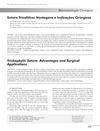 December 2017 in “Journal of the Portuguese Society of Dermatology and Venereology”
 A sutura tricofítica melhora a aparência de cicatrizes em transplantes de cabelo e outras áreas pilosas.
39 citations
,
February 2011 in “American Journal of Dermatopathology” Onychomatricoma is a unique nail tumor that mimics the entire nail unit and is not related to other hair-related tumors.
Accurate diagnosis of cicatricial alopecias requires thorough scalp examination and multiple biopsy techniques.