19 citations
,
November 1937 in “Experimental biology and medicine” Nutritional deficiencies in rats cause skin problems that can be treated with the right vitamins.
 March 2021 in “Revista Medicina Cutánea Ibero-Latino-Americana”
 Trichoscopy helps diagnose scarring alopecia early and non-invasively.
 October 2024 in “Medicine”
 Cronkhite-Canada syndrome is rare, has a poor prognosis, and requires early diagnosis and ongoing treatment.
 2 citations
,
February 2009 in “Clinical and Experimental Dermatology”
2 citations
,
February 2009 in “Clinical and Experimental Dermatology” A man had rare skin tumors with bone formation and cholesterol deposits.
 3 citations
,
January 2011 in “Intestinal Research”
3 citations
,
January 2011 in “Intestinal Research” Cronkhite-Canada syndrome can cause multiple gastrointestinal polyps and various physical symptoms.
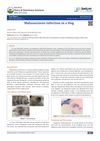 July 2018 in “Journal of Dairy & Veterinary Sciences”
 The dog recovered from a skin infection after treatment with medication.
 2 citations
,
July 2008 in “Dermatologic Surgery”
2 citations
,
July 2008 in “Dermatologic Surgery” The Cross-section Trichometer is a promising tool for measuring hair characteristics without cutting the hair and may have various clinical uses.
 8 citations
,
July 2014 in “Anais Brasileiros de Dermatologia”
8 citations
,
July 2014 in “Anais Brasileiros de Dermatologia” A man's scalp condition was misidentified as hair loss dots but was actually a common follicular disorder.
September 2025 in “International Journal of Molecular Sciences” Bacteroides fragilis and Microbacterium sp. T32 may be linked to autoimmune activity in Hashimoto's thyroiditis and alopecia areata.
September 2023 in “Journal of the American Academy of Dermatology” Dermatologists should consider alpha-gal syndrome in patients with unexplained chronic skin issues.
 February 2018 in “BMJ case reports”
 An 18-year-old woman was diagnosed with a rare skin condition called Pityriasis rubra pilaris.
 43 citations
,
October 1955 in “The journal of nutrition/The Journal of nutrition”
43 citations
,
October 1955 in “The journal of nutrition/The Journal of nutrition” Germ-free rats need biotin for growth and have different vitamin metabolism compared to regular rats.
 March 2021 in “CRC Press eBooks”
 The document concludes that different patterns of hair thickness and scalp changes can help diagnose types of non-scarring hair loss.
 15 citations
,
October 2016 in “Journal of dermatological treatment”
15 citations
,
October 2016 in “Journal of dermatological treatment” Proper hair care can prevent and stop hair breakage in people with acquired trichorrhexis nodosa.
21 citations
,
December 2014 in “Pediatric Dermatology” Most children with pediatric trachyonychia improve over time, regardless of treatment.
 29 citations
,
April 2013 in “Mycoses”
29 citations
,
April 2013 in “Mycoses” A young man was initially misdiagnosed with a scalp condition but was found to have a fungal infection, which improved with antifungal treatment.
May 2017 in “Journal of the American Academy of Dermatology” Monilethrix is a rare, inherited condition causing fragile hair and hair loss, with no cure but some treatments may help.
7 citations
,
January 2009 in “Indian Journal of Dermatology Venereology and Leprology” Hair changes may indicate disease activity in pemphigus patients.
4 citations
,
July 2024 in “Skin Research and Technology” Certain bacteria may influence alopecia areata risk, but skin bacteria don't mediate gut-skin effects.
 69 citations
,
January 2020 in “Veterinary World”
69 citations
,
January 2020 in “Veterinary World” Ringworm in pets is influenced by fungi type, immune status, and stress hormones.
October 2025 in “Pediatric Dermatology” UVFD helps quickly diagnose hair loss conditions in children.
 January 2018 in “Springer eBooks”
 Congenital triangular alopecia is a harmless, non-spreading hair loss condition often seen in young children.
 January 2026 in “Forum Dermatologicum”
 Hair loss can be caused by cancer, treatments, or skin conditions, and trichoscopy helps diagnose it.
 1 citations
,
January 2025 in “medRxiv”
1 citations
,
January 2025 in “medRxiv” Trichotillomania may have a genetic link to psychiatric disorders.
April 2025 in “Pediatric Dermatology” Scalp biopsies are essential for diagnosing congenital alopecia areata.
2 citations
,
January 1990 in “PubMed” Perforating folliculitis is a skin condition with small bumps that may be linked to other diseases and is hard to treat.
 February 2022 in “Cleveland Clinic Journal of Medicine”
 Prolonged use of topical corticosteroids can cause excessive hair growth.
 2 citations
,
January 1997 in “Journal of Clinical Biochemistry and Nutrition”
2 citations
,
January 1997 in “Journal of Clinical Biochemistry and Nutrition” Biotin deficiency causes severe hair loss and weight reduction in germ-free mice.
166 citations
,
November 2008 in “Expert Review of Endocrinology & Metabolism” Biotin and biotinidase are essential to prevent health issues, and deficiencies require lifelong supplementation.
18 citations
,
January 2015 in “Experimental Dermatology” New mutations in KRT83 and KRT86 are linked to the hair disorder monilethrix.