 4 citations
,
March 2015 in “Skin Research and Technology”
4 citations
,
March 2015 in “Skin Research and Technology” Trichotillometry is a reliable method to measure hair strength and assess hair loss treatments.
 April 2025 in “International Journal For Multidisciplinary Research”
 Hypertrichosis causes excessive hair growth and can be managed with treatments like laser, electrolysis, or new topical solutions.
3 citations
,
November 2015 in “International Journal of Dermatology” Trichostasis spinulosa is common but often underdiagnosed, mainly affecting women's faces.
Isotretinoin may cause temporary, reversible facial hair growth in some women.
1 citations
,
June 2022 in “International Journal of Infectious Diseases” A fungal infection was successfully treated with oral and topical antifungals after being misdiagnosed and worsened by corticosteroids.
 August 2025 in “Frontiers in Pharmacology”
 [6]-Gingerdiol 3-monoacetate shows promise for treating T. whipplei infections.
Trichotillometry can measure hair plucking force, aiding alopecia treatment evaluation.
11 citations
,
August 2016 in “Journal of the European Academy of Dermatology and Venereology” Serial trichoscopy is more reliable than the modified hair pull test for tracking alopecia areata.
 89 citations
,
December 2010 in “The Journal of Dermatology”
89 citations
,
December 2010 in “The Journal of Dermatology” The conclusion is that an algorithm using trichoscopy helps diagnose different types of hair loss but may need updates and a biopsy if results are unclear.
Hair microscopy is a useful and affordable way to diagnose hair disorders.
Trichoscopy is a valuable tool for accurately diagnosing scalp conditions without invasive procedures.
10 citations
,
January 1997 in “Dermatology” Two siblings were diagnosed with Trichothiodystrophy, identified by brittle hair and low sulfur content.
 13 citations
,
October 2021 in “Anais Brasileiros de Dermatologia”
13 citations
,
October 2021 in “Anais Brasileiros de Dermatologia” Dermoscopy is effective for diagnosing various skin infestations and infections.
 74 citations
,
July 2008 in “Journal of Dermatological Case Reports”
74 citations
,
July 2008 in “Journal of Dermatological Case Reports” Trichoscopy is a quick and easy way to diagnose most genetic hair problems without invasive methods.
 37 citations
,
January 2017 in “International Journal of Dermatology”
37 citations
,
January 2017 in “International Journal of Dermatology” Trichoscopy helps tell apart alopecia areata and trichotillomania in Asians by looking at specific hair and scalp features.
 May 2026 in “Aesthetic Cosmetology and Medicine”
 Effective scalp problem treatment needs a comprehensive approach.
The product made from plant extracts was tested for treating hair loss caused by genetics.
January 2024 in “Muller Journal of Medical Sciences and Research” Trichoscopy is a useful tool for diagnosing patchy hair loss, reducing the need for biopsies.
 15 citations
,
September 2015 in “Journal der Deutschen Dermatologischen Gesellschaft”
15 citations
,
September 2015 in “Journal der Deutschen Dermatologischen Gesellschaft” Skin doctors should recognize and treat conditions like hair-pulling and skin-picking early, often using therapy and medication, to help 50-70% of patients.
July 2025 in “Dermatology Practical & Conceptual” Hair changes and a high occipital hairline may help diagnose Trichorhinophalangeal Syndrome.
4 citations
,
November 2018 in “Postgraduate Medical Journal” Trichoscopy is a useful, quick, and non-invasive way to diagnose tinea capitis.
 August 2012 in “Reactions Weekly”
 Albendazole likely caused temporary hair loss in a 25-year-old woman.
 December 2022 in “Skin Pharmacology and Physiology”
 Special scalp and hair examination techniques can identify hair problems.
3 citations
,
March 2013 in “American Journal of Dermatopathology” Ossification in trichilemmal cysts is more common than previously believed.
9 citations
,
October 1947 in “The Lancet” 1 citations
,
November 1947 in “The Lancet” Trichoscopy is a useful tool for monitoring hair and scalp diseases.
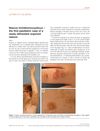 8 citations
,
April 2010 in “JEADV. Journal of the European Academy of Dermatology and Venereology/Journal of the European Academy of Dermatology and Venereology”
8 citations
,
April 2010 in “JEADV. Journal of the European Academy of Dermatology and Venereology/Journal of the European Academy of Dermatology and Venereology” The first pediatric case of naevus trichilemmocysticus was documented.
4 citations
,
December 2022 in “Al-mağallaẗ al-ʻirāqiyyaẗ li-l-ʻulūm al-bayṭariyyaẗ/Iraqi journal of veterinary sciences” Tioconazole cream is highly effective and easy to use for treating sheep dermatophytosis.
June 2025 in “British Journal of Dermatology” Trichoscopy is highly effective for diagnosing scalp disorders and should be used more in dermatology.