 1 citations
,
January 2018 in “Journal of SAFOMS”
1 citations
,
January 2018 in “Journal of SAFOMS” A rare ovarian tumor can cause unusual male-like symptoms, but surgery usually leads to a good outcome.
87 citations
,
August 1974 in “Journal of Investigative Dermatology” 3 citations
,
March 2013 in “American Journal of Dermatopathology” Ossification in trichilemmal cysts is more common than previously believed.
A neck lesion misdiagnosed as benign was later treated successfully with Mohs Micrographic Surgery.
Benign tumors from hair follicles can look like other skin cancers but have distinct features under dermoscopy.
January 2022 in “Optometric clinical practice” A woman had a non-cancerous skin tumor on her eyelid removed successfully.
3 citations
,
January 1989 in “The Nishinihon Journal of Dermatology” A hair cyst can become cancerous, showing specific keratins from the hair sheath.
 March 2026 in “Dermatopathology”
 A rare skin tumor with extra hair growth was found and safely removed from a 27-year-old woman.
121 citations
,
December 2001 in “American Journal of Dermatopathology” TB and BCC tumors show similar follicular differentiation patterns.
2 citations
,
June 1989 in “Archives of Dermatology” A black pore on a man's cheek was a hair follicle tumor and was removed.
March 2022 in “JAAD case reports” A man had a non-cancerous, fast-growing skin lump on his arm that was removed with surgery.
September 2025 in “Journal of Veterinary and Animal Sciences” Nine hair follicle tumors were found in dogs.
 October 2023 in “Research Review”
 Some skin tumors from hair follicles and glands can be linked to genetic syndromes and may be benign or malignant.
1 citations
,
January 2007 in “The Internet Journal of Dermatology” A rare, harmless skin tumor was found on a man's nose.
26 citations
,
May 2001 in “British Journal of Dermatology” Pilomatrixomas likely originate from the hair matrix due to changes in hair keratin expression.
21 citations
,
April 2000 in “Journal of Cutaneous Pathology” The hamartoma is an abnormal hair growth with limited development in the upper hair follicle.
3 citations
,
December 2003 in “Archives of Pathology & Laboratory Medicine” The nodule was a benign cutaneous lymphadenoma, not cancer, and was successfully removed.
Basaloid follicular hamartoma is a rare, benign skin growth often misdiagnosed.
 May 2026 in “World Journal of Advanced Research and Reviews”
 A rare foot cyst was successfully diagnosed and removed without cancer.
 1 citations
,
January 1995 in “Skin Cancer”
1 citations
,
January 1995 in “Skin Cancer” Immunohistochemistry helps accurately identify and differentiate malignant trichilemmoma.
1 citations
,
January 2021 in “Figshare” The conclusion is that surgical removal of solitary fibrofolliculoma is effective with no relapses, and diagnosis requires a biopsy due to varied symptoms.
June 2023 in “Dermatopathology” A woman had a unique skin growth with hair follicle, oil glands, fat cells, spindle cells, and nerve fibers.
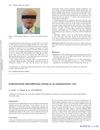 3 citations
,
May 2011 in “Journal of Obstetrics and Gynaecology”
3 citations
,
May 2011 in “Journal of Obstetrics and Gynaecology” A woman's pelvic pain and bleeding led to finding and successfully treating a rare benign tumor in her reproductive system.
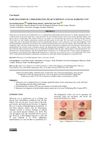 March 2022 in “Folia Medica Indonesiana”
 The lump on a woman's scalp was a rare, potentially cancerous tumor from the hair follicle, not a common cyst.
 3 citations
,
June 2023 in “Cureus”
3 citations
,
June 2023 in “Cureus” Pilomatricomas should be considered to avoid misdiagnosis in children with unusual skin tumors.
12 citations
,
August 1988 in “Histopathology” The tumor likely shows dual neural crest differentiation.
August 2024 in “Clinical Case Reports” Pilomatricoma is a rare, benign skin tumor that requires surgical removal for best results.
 February 2021 in “IP Indian journal of clinical and experimental dermatology”
 A rare non-cancerous tumor that grows like hair was found in an unusual spot, the vulva.
1 citations
,
September 2023 in “Portuguese Journal of Dermatology and Venereology” Trichoscopy can help diagnose and decide when to biopsy folliculotropic mycosis fungoides.
 March 2022 in “Ophthalmology Journal”
 A woman's rare benign eyelid tumor was correctly identified through detailed tissue analysis.