3 citations
,
December 2013 in “American Journal of Dermatopathology” A rare skin growth in a baby was successfully removed without coming back.
3 citations
,
January 2021 in “Therapeutic advances in infectious disease” A 9-year-old girl with a healthy immune system was successfully treated for a severe fungal scalp infection caused by Microsporum audouinii.
May 2025 in “Apollo Medicine” Trichoscopy is a useful tool for diagnosing and assessing the severity of alopecia areata.
11 citations
,
August 2016 in “Journal of the European Academy of Dermatology and Venereology” Serial trichoscopy is more reliable than the modified hair pull test for tracking alopecia areata.
40 citations
,
November 1966 in “Archives of Dermatology” Trichorrhexis nodosa is mainly caused by hair trauma and improves with gentler hair care.
2 citations
,
January 2018 in “International Journal of Trichology” Two sisters had a rare hair condition without other usual symptoms.
 March 2023 in “Journal of skin and stem cell”
 Trichoscopy is a good, quick, non-invasive way to diagnose different types of hair loss.
 January 2022 in “Dermatology Review”
 EGFR inhibitors can cause unusual localized hair growth.
19 citations
,
July 1997 in “British Journal of Dermatology” LHTric-1 is a specific antibody useful for studying hair and nail formation.
 33 citations
,
January 2005 in “Dermatology”
33 citations
,
January 2005 in “Dermatology” Trichoscan is a reliable method for measuring hair growth and monitoring treatment effectiveness in hair loss.
1 citations
,
June 2022 in “International Journal of Infectious Diseases” A fungal infection was successfully treated with oral and topical antifungals after being misdiagnosed and worsened by corticosteroids.
 April 2025 in “Dermatology Practical & Conceptual”
 Biopsy is crucial to accurately distinguish Erosive Pustular Dermatosis of the Scalp from Squamous Cell Carcinoma.
3 citations
,
May 2008 in “Journal of Clinical Oncology” Panitumumab treatment can cause unusual hair growth in some colorectal cancer patients.
39 citations
,
January 1998 in “Dermatology” Milia, SM, and EVHC may be related conditions, not separate ones.
47 citations
,
April 1978 in “Journal of Cutaneous Pathology” Basal cell epithelioma resembles fetal hair follicles, not adult or fetal skin.
30 citations
,
October 1994 in “Journal of Cutaneous Pathology” Multiple perifollicular fibromas may actually be unrecognized cases of Birt-Hogg-Dubé syndrome.
14 citations
,
January 2010 in “Dermatology” Some people with congenital triangular alopecia have a central tuft of hair in the bald patch, but the cause is unknown.
 16 citations
,
March 2013 in “The Journal of Dermatology”
16 citations
,
March 2013 in “The Journal of Dermatology” Low TRPS1 expression in skin and hair cells is linked to hair problems in Trichorhinophalangeal syndrome.
11 citations
,
July 2019 in “Pediatric dermatology” Children with alopecia areata have different trichoscopic features than adults, including more empty follicular openings and pigtail hairs.
 53 citations
,
February 2017 in “Journal of The American Academy of Dermatology”
53 citations
,
February 2017 in “Journal of The American Academy of Dermatology” The conclusion is that high-potency steroids or tacrolimus are effective treatments for erosive pustular dermatosis of the scalp.
47 citations
,
November 1966 in “Archives of Dermatology” Trichorrhexis nodosa is mainly caused by hair trauma, not a metabolic defect.
72 citations
,
July 1984 in “Journal of Investigative Dermatology” 8 citations
,
June 1934 in “Archives of Dermatology and Syphilology” Ringworm of the scalp can heal on its own, especially if caused by animal-related fungi.
January 2025 in “Indian Journal of Dermatopathology and Diagnostic Dermatology” Nevus sebaceous is identified by unique skin changes, including thickened skin, fewer hair follicles, and many sebaceous glands.
 2 citations
,
June 1980 in “International Journal of Dermatology”
2 citations
,
June 1980 in “International Journal of Dermatology” Scalp biopsies are important for diagnosing hair loss conditions.
September 2011 in “Chinese Journal of Dermatology” A man's skin condition was misdiagnosed and later identified as a rare type of skin cancer, which did not improve with treatment.
11 citations
,
July 1984 in “Australian Veterinary Journal” Some treatments worked for horse ringworm, but mass treatment should focus on stopping infection spread, not just hair regrowth.
 January 2025 in “Surgical & Cosmetic Dermatology”
 Histopathological confirmation is crucial to accurately diagnose alopecia triangular temporal and avoid unnecessary treatments.
 89 citations
,
March 2018 in “The Journal of Dermatology”
89 citations
,
March 2018 in “The Journal of Dermatology” Trichoscopy helps diagnose and monitor alopecia areata by looking at a combination of specific hair and scalp features.
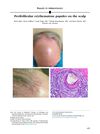 January 2016 in “Journal of The American Academy of Dermatology”
 The woman has a type of scarring hair loss with red bumps around hair follicles.