4 citations
,
January 2011 in “International Journal of Trichology” Treating scalp issues in hair-pulling disorder helps hair regrow and reduces itch.
 April 2020 in “International journal of research in dermatology”
 An 8-year-old girl has a rare, irreversible hair loss condition caused by a genetic mutation.
4 citations
,
August 1991 in “The Journal of Dermatology” The tumor on the man's nose was a rare type called pedunculated follicular hamartoma.
 May 2022 in “Experimental dermatology”
 Trichothiodystrophy hair is structurally abnormal with protein and organization issues.
 April 2026 in “Research Square”
 Trichoscopy is reliable for diagnosing different types of frontal non-scarring hair loss.
 129 citations
,
January 2009 in “International Journal of Trichology”
129 citations
,
January 2009 in “International Journal of Trichology” Trichoscopy can diagnose female hair loss with high accuracy by looking for specific patterns in hair and scalp appearance.
3 citations
,
January 2002 in “Actas Dermo-Sifiliográficas” Excessive minoxidil use can damage hair structure.
 June 2003 in “Journal of Investigative Dermatology Symposium Proceedings”
 Advancements in hair biology include new treatments and tools for hair growth and alopecia.

A 14-year-old girl with a condition that makes her hair easy to pull out also has a hair-pulling disorder, and treatment helped but she relapsed after a year.
December 2025 in “Al-Azhar International Medical Journal /Al-Azhar International Medical Journal” Using both trichoscopy and folliscopy together improves hair loss diagnosis in men.
April 2026 in “Academia Polonica.” Alopecia in women can signal broader health issues and requires a thorough diagnosis to tailor treatments.
 January 2020 in “Przegla̧d dermatologiczny”
 A 5-year-old boy was diagnosed with congenital triangular alopecia, a type of hair loss without skin changes, usually starting between ages 2-5, with no specific treatment.
January 2021 in “International journal of dermatology, venereology and leprosy sciences” AGA and TE can be differentiated by specific trichoscopic features, with AGA showing more variation in hair thickness in fronto-temporal areas.
 November 2022 in “Journal of Investigative Dermatology”
 The medicine Cyclosporin A might cause excessive hair growth by reducing a protein that controls hair growth.
 14 citations
,
February 2017 in “Anais brasileiros de dermatologia/Anais Brasileiros de Dermatologia”
14 citations
,
February 2017 in “Anais brasileiros de dermatologia/Anais Brasileiros de Dermatologia” Trichotillomania is often misdiagnosed as alopecia areata and can be treated effectively with N-acetylcysteine and psychotropic drugs.
June 2025 in “British Journal of Dermatology” A rare skin condition in a boy is likely due to a specific genetic mutation pattern.
5 citations
,
March 2015 in “Indian Journal of Dermatology” Multiple trichofolliculomas can look like multiple trichoepitheliomas on the face.
 2 citations
,
March 2023 in “Skin research and technology”
2 citations
,
March 2023 in “Skin research and technology” Temporal triangular alopecia in infants is mostly seen in males at birth, with unique features that help with diagnosis.
March 2025 in “International Journal of Trichology” Trichodaganomania involves biting one's hair and needs combined psychological and medical treatment.
 38 citations
,
June 2003 in “Journal of Investigative Dermatology Symposium Proceedings”
38 citations
,
June 2003 in “Journal of Investigative Dermatology Symposium Proceedings” Accurate clinical, histological, and genetic methods are key for understanding and treating hair disorders.
June 2026 in “International Journal of Homoeopathic Sciences” An 11-year-old girl regrew all her hair and stopped pulling it out after homeopathic treatment.
 December 2025 in “TURKDERM”
 Facial trichostasis spinulosa is a chronic condition with significant cosmetic impact, especially in young women.
 June 2021 in “International journal of research in dermatology”
 Shaving and avoiding brushing improved the patient's beard hair condition.
56 citations
,
January 1970 in “Cell and Tissue Research”  14 citations
,
June 2018 in “JAMA Dermatology”
14 citations
,
June 2018 in “JAMA Dermatology” Trichoscopy is useful for diagnosing and monitoring hair and scalp conditions over time.
June 2026 in “Indian Journal of Postgraduate Dermatology” Trichoscopy helps diagnose unclear hair loss cases effectively.
 45 citations
,
January 2012 in “International Journal of Trichology”
45 citations
,
January 2012 in “International Journal of Trichology” Trichoscopy is better than trichogram for diagnosing female hair loss.
8 citations
,
March 2023 in “British Journal of Dermatology” Next-generation sequencing greatly improves understanding and treatment of genetic hair disorders.
Trichoscopy is a valuable tool for diagnosing hair loss accurately and non-invasively.
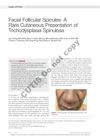
Trichodysplasia spinulosa can occur after a heart transplant due to immunosuppressive drugs.