 March 2021 in “Revista Medicina Cutánea Ibero-Latino-Americana”
 Trichoscopy helps diagnose scarring alopecia early and non-invasively.
4 citations
,
May 2020 in “The journal of pediatrics/The Journal of pediatrics” A boy with monilethrix has brittle hair that breaks easily due to a genetic condition, which might improve by puberty.
 6 citations
,
August 2006 in “Journal of Cutaneous Pathology”
6 citations
,
August 2006 in “Journal of Cutaneous Pathology” Two teenage brothers had a rare, treatment-resistant form of female-pattern hair loss with unusual scalp changes.
The product made from plant extracts was tested for treating hair loss caused by genetics.
 July 2023 in “International journal of trichology”
 The research found no clear link between the severity of male baldness and the scalp examination findings in Indonesian men.
 6 citations
,
July 2011 in “Journal of Plastic Reconstructive and Aesthetic Surgery”
6 citations
,
July 2011 in “Journal of Plastic Reconstructive and Aesthetic Surgery” Eyebrow reconstruction using hair follicle grafts was successful in a man with a benign hereditary disorder affecting his eyebrows.
 August 2012 in “Nature Cell Biology”
 Hair grows when stem cell offspring in the follicle base proliferate, influenced by the dermal papilla.
September 2016 in “Journal of dermatological science” TSC2 is crucial for proper hair follicle development and patterning.
 April 2023 in “Journal of Investigative Dermatology”
 The research found that certain factors in hair follicle cells control hair growth and development, and these could be used to create new treatments for hair loss.
December 2001 in “中華皮膚科醫學雜誌” An 18-year-old boy had a harmless skin nodule near his nose with hair and oil glands inside.
26 citations
,
January 1983 in “PubMed” Trichothiodystrophy involves brittle hair due to low sulfur amino acids, not a transport defect.
28 citations
,
December 2002 in “Der Hautarzt” TrichoScan accurately measures hair growth and loss, showing increased hair counts and thickness with treatment.
January 2023 in “Clinical and Experimental Dermatology” Oral minoxidil may help improve fragile hair.
March 2026 in “Pakistan Armed Forces Medical Journal” Trichoscopy is useful for diagnosing and assessing androgenetic alopecia severity.
 2 citations
,
January 2013 in “Elsevier eBooks”
2 citations
,
January 2013 in “Elsevier eBooks” The document explains the genetic causes and characteristics of inherited hair disorders.
2 citations
,
March 2024 in “Pediatric Dermatology” Two siblings have a rare hair condition caused by a new genetic variant.
17 citations
,
December 1994 in “International Journal of Dermatology” Recognizing both trichostasis spinulosa and eruptive vellus hair cysts together is crucial for accurate diagnosis and treatment.
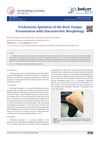 May 2020 in “JOJ Dermatology & Cosmetics”
 A rare skin condition usually on the face was found on a man's heel.
 24 citations
,
May 1982 in “Biochemical Pharmacology”
24 citations
,
May 1982 in “Biochemical Pharmacology” These drugs cause hair growth without affecting testosterone or adrenal hormones.
22 citations
,
December 1991 in “PubMed”  26 citations
,
January 2019 in “Experimental Dermatology”
26 citations
,
January 2019 in “Experimental Dermatology” Researchers created early-stage hair-like structures from skin cells, showing how these cells can self-organize, but more is needed for complete hair growth.
 26 citations
,
July 2016 in “PLOS ONE”
26 citations
,
July 2016 in “PLOS ONE” Activating β-catenin in certain skin cells speeds up hair growth in mice.
 April 2023 in “Journal of Investigative Dermatology”
 Hair growth is driven by cells that move and change like a conveyor belt.
1 citations
,
September 2023 in “Portuguese Journal of Dermatology and Venereology” Trichoscopy can help diagnose and decide when to biopsy folliculotropic mycosis fungoides.
January 2026 in “Biochemical Pharmacology”  January 2022 in “Journal of Skin and Stem Cell”
 Trichodynia is a painful scalp condition needing targeted treatments beyond symptom management.
 March 2021 in “CRC Press eBooks”
 Physical exams are important in hair loss diagnosis, considering cosmetic history, systemic diseases, and classifying alopecia types.
 January 2012 in “International Journal of Trichology”
 Psychological factors significantly affect hair health, suggesting a need for integrating mental health care in treating hair loss.
Hair dysplasias involve various hair disorders causing fragility, breakage, and poor hair adhesion.