28 citations
,
December 2002 in “Der Hautarzt” TrichoScan accurately measures hair growth and loss, showing increased hair counts and thickness with treatment.
January 2026 in “Skin Appendage Disorders” The trichogram is a practical, non-invasive, and cost-effective tool for diagnosing female androgenetic alopecia.
 2 citations
,
July 2015 in “The Open Dermatology Journal”
2 citations
,
July 2015 in “The Open Dermatology Journal” Trichoscopy is a tool for detailed examination of hair and scalp diseases.
 1 citations
,
January 2018 in “Indian journal of dermatopathology and diagnostic dermatology”
1 citations
,
January 2018 in “Indian journal of dermatopathology and diagnostic dermatology” Trichoscopy helps diagnose and monitor hair and scalp problems without needing many biopsies.
 31 citations
,
August 2001 in “PubMed”
31 citations
,
August 2001 in “PubMed” TrichoScan accurately measures hair growth and showed improved hair counts and thickness after finasteride treatment.
 40 citations
,
April 2006 in “Journal of the European Academy of Dermatology and Venereology”
40 citations
,
April 2006 in “Journal of the European Academy of Dermatology and Venereology” The Trichoscan system was found to be inaccurate for measuring hair growth, needing better software to be useful.
Hair microscopy is a useful and affordable way to diagnose hair disorders.
 69 citations
,
January 2015 in “Current problems in dermatology”
69 citations
,
January 2015 in “Current problems in dermatology” Trichoscopy is a quick, noninvasive method to diagnose hair and scalp disorders, often reducing the need for biopsies.
The trichotillometer is a simple, effective tool for diagnosing and assessing female pattern hair loss.
 2 citations
,
July 2018 in “Elsevier eBooks”
2 citations
,
July 2018 in “Elsevier eBooks” Trichoscopy is a useful tool for diagnosing and managing hair and scalp conditions, often better than traditional methods.
Trichoscopy is a useful tool for monitoring hair and scalp diseases.
June 2015 in “Turkish Journal of Dermatology” Trichoscopy helps diagnose different hair diseases effectively.
 1 citations
,
May 2016 in “Dermatologic Surgery”
1 citations
,
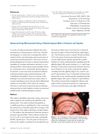
May 2016 in “Dermatologic Surgery” The document concludes that using a phototrichogram with a protractor and tapeline is a reliable and noninvasive way to measure hair loss.
 September 2024 in “Archiv Euromedica”
 Trichoscopy is a quick, accurate, and non-invasive method to diagnose and treat non-scarring hair loss.
 December 2019 in “Дерматологія та венерологія”
 Trichoscopy is a useful tool for diagnosing hair and scalp disorders.
 36 citations
,
August 2018 in “Dermatologic Clinics”
36 citations
,
August 2018 in “Dermatologic Clinics” Trichoscopy is a useful tool for diagnosing hair disorders without pulling out hair.
 69 citations
,
August 2014 in “Journal of The American Academy of Dermatology”
69 citations
,
August 2014 in “Journal of The American Academy of Dermatology” Trichoscopy is a quick, cost-effective tool for diagnosing different hair loss conditions.
 2 citations
,
April 2023 in “Archives of Aesthetic Plastic Surgery”
2 citations
,
April 2023 in “Archives of Aesthetic Plastic Surgery” The phototrichogram is better for measuring hair thickness.
 74 citations
,
July 2008 in “Journal of Dermatological Case Reports”
74 citations
,
July 2008 in “Journal of Dermatological Case Reports” Trichoscopy is a quick and easy way to diagnose most genetic hair problems without invasive methods.
 January 2024 in “Lecture notes in networks and systems”
 "TRICHOASSIST" is a system that analyzes hair and scalp images to help diagnose scalp diseases.
February 2023 in “International Journal of Advanced Research” Trichoscopy is a cost-effective and non-invasive tool for diagnosing alopecia areata.
 14 citations
,
June 2018 in “JAMA Dermatology”
14 citations
,
June 2018 in “JAMA Dermatology” Trichoscopy is useful for diagnosing and monitoring hair and scalp conditions over time.
 5 citations
,
January 2018 in “Skin Research and Technology”
5 citations
,
January 2018 in “Skin Research and Technology” TrichoScan needs optimization as it underestimated hair density by 38.9% compared to manual counting.
 90 citations
,
October 1983 in “British Journal of Dermatology”
90 citations
,
October 1983 in “British Journal of Dermatology” The unit area trichogram is a reliable method to assess hair loss and treatment response in people with androgenic alopecia by measuring hair density and thickness.
 38 citations
,
May 2009 in “European journal of dermatology/EJD. European journal of dermatology”
38 citations
,
May 2009 in “European journal of dermatology/EJD. European journal of dermatology” TrichoScan® is a reliable tool for measuring hair growth, providing quicker and more consistent results than manual methods.
 46 citations
,
April 2009 in “Journal of Dermatological Case Reports”
46 citations
,
April 2009 in “Journal of Dermatological Case Reports” Researchers established normal hair and scalp characteristics for healthy women using trichoscopy.
17 citations
,
October 1981 in “American Journal of Clinical Nutrition” Malnourished people have weaker hair that is easier to pluck.
 December 2023 in “Portuguese journal of dermatology and venereology”
 Trichoscopy can reliably distinguish between alopecia areata and trichotillomania.
 1 citations
,
March 2009 in “Hair transplant forum international”
1 citations
,
March 2009 in “Hair transplant forum international” The TrichoScan method effectively measures hair growth and helps choose patients for hair restoration surgery.
 96 citations
,
January 2013 in “International Journal of Trichology”
96 citations
,
January 2013 in “International Journal of Trichology” Trichoscopy is a useful, non-invasive way to diagnose different types of hair loss.