 December 2023 in “Portuguese journal of dermatology and venereology”
 Trichoscopy can reliably distinguish between alopecia areata and trichotillomania.
 November 2023 in “Laser therapy”
 Trichoscopy is essential for diagnosing and managing alopecia areata in children.
 November 2023 in “International Journal of Dermatology”
 Trichoscopy helps tell apart other hair loss conditions from common hair loss.
 August 2023 in “Asian journal of pharmaceutical and clinical research”
 Intense Pulsed Light is an effective and safe hair removal method for people with excessive hair growth.
 July 2023 in “Dermatology practical & conceptual”
 The machine learning model effectively assesses the severity of hair loss and could help dermatologists with treatment decisions.
 July 2023 in “International journal of trichology”
 The research found no clear link between the severity of male baldness and the scalp examination findings in Indonesian men.
 June 2023 in “Italian journal of dermatology and venereology”
 Trichoscopy effectively diagnoses allergic scalp contact dermatitis.
April 2023 in “Al-Azhar International Medical Journal /Al-Azhar International Medical Journal” Trichoscopy is easier and quicker than folliscopy for diagnosing telogen effluvium.
 April 2023 in “Our Dermatology Online”
 Trichoscopy is effective in diagnosing trichotillomania by showing specific hair patterns.
March 2023 in “Journal of Cosmetic Dermatology” Trichoscopy is effective for diagnosing scalp ACC in darker skin tones.
 March 2023 in “Photodiagnosis and Photodynamic Therapy”
 Low vitamin D levels are linked to severe and active alopecia areata.
 March 2023 in “Journal of skin and stem cell”
 Trichoscopy is a good, quick, non-invasive way to diagnose different types of hair loss.
February 2023 in “International Journal of Advanced Research” Trichoscopy is a cost-effective and non-invasive tool for diagnosing alopecia areata.
February 2023 in “Zenodo (CERN European Organization for Nuclear Research)” Trichoscopy is a useful and affordable tool for diagnosing Alopecia areata.
 January 2023 in “Al-Azhar International Medical Journal /Al-Azhar International Medical Journal”
 Trichoscopy is a quick, non-invasive way to measure hair density and thickness, helping diagnose hair loss.

Both trichoscopy and folliscopy accurately diagnose telogen effluvium, but trichoscopy is easier and faster.

Hair loss is common in the studied community, often linked to aging and hair care practices like braids, weaves, and chemical relaxers.
 December 2021 in “International Journal of Research in Dermatology”
 The study concluded that female pattern hair loss is linked to psychological distress and is hard to diagnose and treat, with its causes still not fully understood.
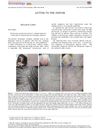 July 2021 in “Australasian Journal of Dermatology”
 The trichoscopy-assisted hair pull test is useful for diagnosing different types of hair loss.
 July 2021 in “Indian journal of dermatopathology and diagnostic dermatology”
 Trichoscopy is a reliable method for diagnosing hair and scalp disorders quickly and non-invasively.
 March 2021 in “CRC Press eBooks”
 The document concludes that different patterns of hair thickness and scalp changes can help diagnose types of non-scarring hair loss.
 January 2021 in “International journal of dermatology, venereology and leprosy sciences”
 Most adult women experiencing hair loss are aged 21-40, with the most common type being female pattern hair loss. Trichoscopy is a useful tool for diagnosing different types of hair loss.
 January 2021 in “International journal of dermatology, venereology and leprosy sciences”
 Trichoscopy shows black dots, yellow dots, and empty follicles are common in Alopecia Areata, with broken and exclamation mark hair as typical patterns.
December 2020 in “Journal of Face Aesthetics” Trichoscopy effectively helps diagnose different types of hair loss in women.
December 2020 in “Dermatology practical & conceptual” Trichoscopy helped diagnose a teenage girl's hair loss as monilethrix.
 December 2019 in “Дерматологія та венерологія”
 Trichoscopy is a useful tool for diagnosing hair and scalp disorders.

Hair loss in SLE patients is mostly due to chronic telogen effluvium and is linked to moderate disease activity.
 May 2017 in “InTech eBooks”
 Trichoscopy and trichogram are useful for diagnosing hair and scalp conditions.
 April 2016 in “Journal of The American Academy of Dermatology”
 Low-cost videomicroscopy may not be reliable for diagnosing hair loss compared to standard videodermatoscopy.
 January 2016 in “Elsevier eBooks”
 Trichoscopy is a key method for dermatologists to quickly and effectively diagnose hair and scalp conditions.