January 2003 in “Linchuang pifuke zazhi” A benign skin tumor was removed from a man's leg, and it didn't come back after 9 months.
January 2026 in “Dermatologic Therapy” Alopecia is more common in younger women, and many patients also have thyroid issues, especially subclinical hypothyroidism.
11 citations
,
December 2015 in “Indian journal of dermatology, venereology, and leprology” Dermoscopy quickly and accurately diagnosed a rare hair disorder in a 12-year-old girl.
4 citations
,
March 2024 in “Journal of the American Academy of Dermatology” Clinical signs don't match inflammation levels in lichen planopilaris and frontal fibrosing alopecia.
Trichorrhexis nodosa causes hair to break easily, often affecting young to middle-aged black women.
 1 citations
,
January 2023 in “Indian Journal of Dermatology/Indian journal of dermatology”
1 citations
,
January 2023 in “Indian Journal of Dermatology/Indian journal of dermatology” 5% minoxidil can significantly increase hair growth in TRPS patients.
 10 citations
,
April 2018 in “Facial Plastic Surgery”
10 citations
,
April 2018 in “Facial Plastic Surgery” The surgical technique of scalp advancement and pretrichial brow lift shortens the forehead and lifts brows, is good for women and transgender women with high foreheads, but not recommended for men and has some risks.
 1 citations
,
April 2018 in “Our Dermatology Online”
1 citations
,
April 2018 in “Our Dermatology Online” Trichoscopy can detect early signs of steroid overuse on the scalp, suggesting a need for non-steroidal treatments.
 12 citations
,
May 2001 in “British journal of dermatology/British journal of dermatology, Supplement”
12 citations
,
May 2001 in “British journal of dermatology/British journal of dermatology, Supplement” A rare benign skin tumor showed unusual features of sebaceous and sweat glands, important for correct diagnosis.
 August 2003 in “Dermatologic Surgery”
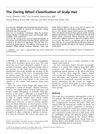
 Craig Ziering created a system to classify scalp hair patterns, important for improving hair restoration surgery results.
 1 citations
,
November 2023 in “Curēus”
1 citations
,
November 2023 in “Curēus” Early diagnosis and treatment of nail and skin conditions can improve health and appearance.
May 2015 in “UC Merced Undergraduate Research Journal” Behavioral therapies are more effective than drugs for treating trichotillomania.
April 2022 in “Dermato Mag” Triphasic Progressive is more effective against hair loss.
15 citations
,
February 2006 in “Journal of Investigative Dermatology” More research is needed to understand and treat cicatricial alopecias.
1 citations
,
September 2024 in “Veterinary Dermatology” Trichography is important for diagnosing hair fragility in Pomeranian dogs with hair cycle issues.
2 citations
,
March 2024 in “Pediatric Dermatology” Two siblings have a rare hair condition caused by a new genetic variant.
1 citations
,
August 2021 A young girl had a rare neck cyst removed and needs careful monitoring for related health issues.
 March 2025 in “The Open Dermatology Journal”
 Trichorrhexis nodosa is common hair breakage, often due to styling, and new treatments are being explored.
December 2021 in “Pathologica” Trichogerminoma is a rare, benign skin tumor from hair cells, with a small risk of becoming cancerous.
 10 citations
,
January 2015 in “Skin appendage disorders”
10 citations
,
January 2015 in “Skin appendage disorders” Low-cost videomicroscopes are not as reliable as standard videodermatoscopes for scalp examination due to lower image quality.
January 2015 in “Elsevier eBooks” Targeting the endocannabinoid system might help reduce hair pulling in trichotillomania.
December 2021 in “Digital Doctor”  86 citations
,
August 2014 in “Journal of The American Academy of Dermatology”
86 citations
,
August 2014 in “Journal of The American Academy of Dermatology” To diagnose hair loss, use a systematic approach including history, exams, and tests.
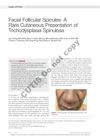
Trichodysplasia spinulosa can occur after a heart transplant due to immunosuppressive drugs.
 May 2026 in “World Journal of Advanced Research and Reviews”
 A rare foot cyst was successfully diagnosed and removed without cancer.

New imaging tools help doctors better examine hair and scalp health without surgery.
OCT can effectively diagnose different stages of hair loss non-invasively.

Accurate diagnosis and new therapies are crucial for effectively treating certain types of hair loss.
 September 2017 in “Journal of Investigative Dermatology”
 Thermal imaging is a useful non-invasive method to diagnose active inflammation in frontal fibrosing alopecia.
July 2012 in “International Journal of Trichology” Hair disorders are complex and varied, with diverse treatments available.