61 citations
,
September 1994 in “Journal of Medical Genetics” Pachyonychia congenita is linked to a keratin gene on chromosome 17.
 April 2012 in “Informa Healthcare eBooks”
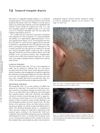
 Temporal triangular alopecia is a lifelong condition with hairless patches on the side of the head that may be present from birth.
3 citations
,
July 2022 in “Brain and Behavior” The HtrA1L364P mutation causes brain dysfunction and blood vessel damage.
April 2023 in “The Medical Journal of Australia” A five-year-old girl has a harmless, unchanging bald patch on her scalp.
13 citations
,
April 1994 in “Baillière's clinical endocrinology and metabolism” Some people have genetic mutations that make them resistant to vitamin D, leading to rickets even with enough vitamin D intake.
73 citations
,
December 2015 in “Nature Genetics” Mutations in TBX3 cause horses to have more even hair color instead of Dun camouflage.
 April 2017 in “Journal of Investigative Dermatology”
 A boy with Oculodentodigital syndrome had a unique GJA1 gene mutation causing his symptoms.
 October 2011 in “Journal of dermatology”
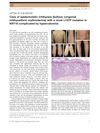
 A man with a rare skin condition and a new gene mutation developed high calcium levels due to his treatment.
 3 citations
,
October 2024 in “Advances in Therapy”
3 citations
,
October 2024 in “Advances in Therapy” Triptorelin effectively treats central precocious puberty in Chinese children with minimal side effects.

A genetic variant in the KRT71 gene may cause loose anagen hair and wooly hair, and symptoms might improve with age.
July 2025 in “International Journal of Trichology” Trichoscopy effectively diagnoses temporal triangular alopecia in children.
 July 2024 in “Egyptian Journal of Medical Human Genetics”
 These gene variations are not linked to alopecia areata in Egyptians.
3 citations
,
May 1964 in “Nature”  5 citations
,
August 2014 in “Archivos Argentinos de Pediatria”
5 citations
,
August 2014 in “Archivos Argentinos de Pediatria” A girl with Turner syndrome had psoriasis, alopecia areata, and trachyonychia.
December 2021 in “Pathologica” Trichogerminoma is a rare, benign skin tumor from hair cells, with a small risk of becoming cancerous.
5 citations
,
June 1993 in “Pediatric dermatology” Monilethrix Syndrome causes fragile, beaded hair that breaks easily and needs early diagnosis for better care.
2 citations
,
September 1998 in “Der Hautarzt” A gene mutation causes a rare hereditary hair loss, offering potential for new treatments.
1 citations
,
September 2024 in “Animals” Specific gene variants affect wool traits in Chinese Tan sheep.
December 2025 in “Clinical Case Reports” Netherton syndrome causes skin and hair issues, confirmed by "bamboo hair" under dermoscopy, with no cure but managed with topical treatments.
 76 citations
,
September 1992 in “Endocrinology”
76 citations
,
September 1992 in “Endocrinology” The human type II 5α-reductase gene has a specific structure important for understanding certain medical conditions.
 74 citations
,
January 2006 in “The journal of investigative dermatology/Journal of investigative dermatology”
74 citations
,
January 2006 in “The journal of investigative dermatology/Journal of investigative dermatology” Mutations in the DSG4 gene can cause a rare hair disorder similar to monilethrix.
April 2019 in “Journal of the Endocrine Society” A young patient with unusual insulin resistance and high testosterone levels had a rare INSR gene mutation.
1 citations
,
January 2018 in “Jornal Brasileiro de Patologia e Medicina Laboratorial” Monilethrix causes brittle hair and hair loss, and it runs in families.
January 2026 in “SSRN Electronic Journal” 7 citations
,
August 2017 in “European journal of endocrinology” Mutations in the POC1A gene can cause a unique form of extreme insulin resistance and short stature.
5 citations
,
February 1981 in “Experientia” A new gene causes hairlessness and skin cysts in rats.
January 2011 in “대한피부과학회지” A 7-year-old girl was diagnosed with trichothiodystrophy due to low sulfur levels in her hair.
2 citations
,
August 2025 in “Pharmaceutics” PN hydrates skin; PDRN heals and regenerates skin and hair.
8 citations
,
June 1981 in “Clinica Chimica Acta”  19 citations
,
November 1993 in “Mammalian Genome”
19 citations
,
November 1993 in “Mammalian Genome” A gene mutation in mice causes permanent hair loss and skin issues.