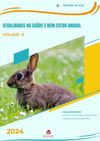
 January 2024 in “Editora In Vivo eBooks”
 Cryptosporidiosis in dogs can spread to humans, so prevention is crucial.
July 2025 in “Clinical Case Reports” A new genetic mutation in the TRPS1 gene causes Trichorhinophalangeal Syndrome, leading to specific hair, dental, and bone issues.
 16 citations
,
April 2007 in “Journal of Medical Primatology”
16 citations
,
April 2007 in “Journal of Medical Primatology” The monkey's hair loss was due to an autoimmune disease, not genetics.
May 2022 in “The journal of immunology/The Journal of immunology” FOXN1 is crucial for thymus development and immune response in Xenopus laevis.
19 citations
,
April 2014 in “Veterinary Dermatology” Demodicosis should be considered in cats with facial skin issues exposed to inhalant glucocorticoids.
29 citations
,
January 2003 in “Genomics” A new mouse mutation causes skin and hair issues, influenced by another gene.
 February 2024 in “BMC genomics”
 The TRPV3 gene variant may cause the long-haired suri alpaca coat.
20 citations
,
July 2005 in “Experimental dermatology” The fuzzy gene is crucial for controlling hair growth cycles.
 August 2024 in “Indian Journal of Animal Research”
 Clove oil effectively treats cattle dermatophytosis in 7 days.
 1 citations
,
April 2024 in “Science Advances”
1 citations
,
April 2024 in “Science Advances” Female cuckoo color differences are linked to their unique genes and help avoid male harassment.
 April 2023 in “The journal of investigative dermatology/Journal of investigative dermatology”
 Deleting the Hoxc13 gene in frogs shows its crucial role in developing skin structures similar to hair.
40 citations
,
February 1946 in “Canadian Journal of Research/Canadian journal of research” Hereditary factors cause hair loss in mice by affecting skin and hair follicle structure.
 June 2023 in “Small animal advances”
 Selamectin spot-on effectively treats scabies in rabbits.
 1 citations
,
June 2011 in “Journal of Genetics”
1 citations
,
June 2011 in “Journal of Genetics” Some human genetic markers work for genetic studies in pig-tailed and stump-tailed macaques, which can help in their conservation.
 7 citations
,
November 2010 in “Genesis”
7 citations
,
November 2010 in “Genesis” Mouse Scube3 affects teeth, tongue, vibrissae, and eye development, but not facial structure or limb growth.
March 2021 in “LA Referencia (Red Federada de Repositorios Institucionales de Publicaciones Científicas)” A dog with a rare skin infection caused by a human fungus was successfully treated with antifungal medication.
 9 citations
,
August 2017 in “Journal of comparative pathology”
9 citations
,
August 2017 in “Journal of comparative pathology” Trichoblastomas in rabbits are linked to uncontrolled embryonic hair growth and have distinct histological features.
 35 citations
,
November 1996 in “Journal of the American Academy of Dermatology”
35 citations
,
November 1996 in “Journal of the American Academy of Dermatology” Itraconazole was effective in treating unusual M. canis infections in only one of two HIV-infected men.
January 2015 in “Dermatología Venezolana” The document's conclusion cannot be summarized because the content is not available for analysis.
9 citations
,
June 2016 in “The Cerebellum” 83 citations
,
October 1998 in “The American Journal of Human Genetics” A specific gene mutation causes complete hair loss in an Irish Traveller family.
April 2012 in “Neuropediatrics” Trichothiodystrophy is a rare genetic disorder causing hair issues and sometimes linked to DNA repair defects.
 19 citations
,
June 2007 in “Veterinary Dermatology”
19 citations
,
June 2007 in “Veterinary Dermatology” Amitraz effectively treated sarcoptic mange in three alpacas.
 January 2017 in “International journal of biomedical engineering and clinical science”
 Cri-du-chat syndrome can cause skin and oral lesions affecting nutrition and quality of life.
January 2024 in “Editora In Vivo eBooks” A dog had a fungal skin infection that can also affect humans.
1 citations
,
June 2016 in “Medicina” Monilethrix is a genetic disorder causing brittle hair, diagnosed using tricoscopy.
52 citations
,
April 2000 in “International Journal of Dermatology” Tinea capitis in Benghazi mainly affects children under 10, with Trichophyton violaceum as the leading cause.
March 2003 in “中華皮膚科醫學雜誌” Trichothiodystrophy causes unusual hair and developmental issues.
 January 2024 in “Jurnal Ilmu Kesehatan Hewan”
 Oreo the dog got better from skin and worm infections after treatment and cleaner living conditions.
 3 citations
,
December 1994 in “JEADV. Journal of the European Academy of Dermatology and Venereology/Journal of the European Academy of Dermatology and Venereology”
3 citations
,
December 1994 in “JEADV. Journal of the European Academy of Dermatology and Venereology/Journal of the European Academy of Dermatology and Venereology” Oral itraconazole effectively reaches and treats deep skin layers in guinea pigs.