
Arginine deficiency hinders hair growth in androgenetic alopecia, but restoring it can promote hair regeneration.
 June 2025 in “Clinical Cosmetic and Investigational Dermatology”
 Gray hair can potentially be managed or reversed with treatments that boost melanin production and address nutritional deficiencies.
 December 2024 in “Medical Review”
 Organoids help study and treat genetic diseases, offering personalized medicine and therapy testing.

Intermittent fasting slows hair growth by damaging hair follicle cells.
December 2024 in “Tissue and Cell” A new method helps detect androgen receptor movement in cells, aiding research on hair loss treatments.
March 2024 in “Preprints.org” Activated protein C helps protect mice from radiation damage.
 September 2023 in “Journal of Nutrition and Metabolism”
 One Ashwagandha extract may help protect cells with its antioxidant properties, while another could promote hair growth.
November 2021 in “OPAL (Open@LaTrobe) (La Trobe University)” Melatonin may treat rosacea and Alzheimer's by reducing inflammation and affecting blood vessel growth.
 February 2023 in “Molecules”
 Cactus extract from Notocactus ottonis may help promote hair growth.
November 2022 in “Regenerative Therapy” Advancements in tissue engineering show promise for hair follicle regeneration to treat hair loss.
Introducing the OTC gene improved symptoms in mice with OTC deficiency.
15 citations
,
August 2011 in “Lasers in medical science” The 755-nm alexandrite laser effectively and quickly treats trichostasis spinulosa with minimal pain and no side effects.
November 1968 in “Journal of the American Pharmaceutical Association” 33 citations
,
February 2011 in “International Journal of Dermatology” Orange spots in scalp trichoscopy can help diagnose scalp sarcoidosis.
52 citations
,
January 2003 in “Journal of Investigative Dermatology” Thrombospondin-1 is crucial for hair follicle regression and reduced blood vessel growth during the catagen phase.
Trichoepithelioma and desmoplastic trichoepithelioma have distinct features that can be identified using reflectance confocal microscopy.
7 citations
,
November 1997 in “Pediatric Dermatology” Trichothiodystrophy can be linked to urologic issues and high calcium in urine.
October 2025 in “Diagnostics” Temporal triangular alopecia is a harmless, non-progressive hair loss condition.
 April 2017 in “The journal of investigative dermatology/Journal of investigative dermatology”
 Astrotactin2 affects hair follicle orientation and skin cell polarity.
14 citations
,
March 2006 in “TSpace”  6 citations
,
May 1986 in “Cancer Chemotherapy and Pharmacology”
6 citations
,
May 1986 in “Cancer Chemotherapy and Pharmacology” The drug TGU was ineffective against small cell lung cancer and caused significant bone marrow suppression.
 June 2026 in “bioRxiv (Cold Spring Harbor Laboratory)”
 AQB reduces harmful skin changes in systemic sclerosis.
 December 2023 in “Journal of ethnopharmacology”
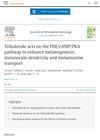
 Tribuloside can increase skin pigmentation by enhancing melanin production and distribution.
6 citations
,
October 2014 in “International Journal of Molecular Sciences” Tanshinone IIA helps protect tissue from low oxygen damage by activating certain cell pathways.
 March 2018 in “Hair transplant forum international”
 The Thai Society of Hair Restoration Surgery (TSHRS) is introduced.
2 citations
,
May 2022 in “The journal of immunology/The Journal of immunology” BST2 protein and certain T cells increase in early alopecia areata.
December 2019 in “Thèses en ligne de l'Université Toulouse III (Université Toulouse III)” EGM2 and SOX2 help form beige adipocytes by maintaining ASC immaturity and activating brown adipocytes.
 21 citations
,
July 2020 in “Stem Cell Research & Therapy”
21 citations
,
July 2020 in “Stem Cell Research & Therapy” Fat stem cells from diabetic mice can still help heal wounds.
 13 citations
,
June 2012 in “Journal of Dermatological Case Reports”
13 citations
,
June 2012 in “Journal of Dermatological Case Reports” An 8-year-old boy with hair-pulling disorder had a bald patch that was confirmed not to be a fungal infection and was treated with therapy.
September 2024 in “Journal of the American Academy of Dermatology” Generic topical and transdermal systems usually cause minimal irritation or sensitization.