 November 2021 in “bioRxiv (Cold Spring Harbor Laboratory)”
 4-aminopyridine helps skin wounds heal faster and better.
19 citations
,
November 1979 in “Archives of dermatology” Tretinoin may be effective for treating Fox-Fordyce disease.
 7 citations
,
January 2019 in “PeerJ”
7 citations
,
January 2019 in “PeerJ” A protein called sFRP4 can slow down hair regrowth.
 November 2023 in “bioRxiv (Cold Spring Harbor Laboratory)”
 Scientists made a mouse that shows how a specific protein in the skin changes and affects hair growth and shape.
10 citations
,
January 1997 in “Dermatology” Two siblings were diagnosed with Trichothiodystrophy, identified by brittle hair and low sulfur content.
1 citations
,
May 2020 in “bioRxiv (Cold Spring Harbor Laboratory)” The fer-ts mutation in plants prevents root hair growth at high temperatures.
TRPV4 channels in the skin may enhance the effects of acupuncture.
9 citations
,
November 2013 in “BMC Pharmacology and Toxicology” Suppressing eIF4E can prevent hair loss from chemotherapy.
1 citations
,
August 2013 in “PubMed” Testosterone changes reduce thyroxin levels in rats.
June 2026 in “Indian Dermatology Online Journal” Tofacitinib may work better than methotrexate for treating moderate-to-severe alopecia areata.
 October 2021 in “Journal of Investigative Dermatology”
 Dkk4 protein is necessary for the proper development and arrangement of hair follicles.
 2 citations
,
November 2017 in “Case Reports”
2 citations
,
November 2017 in “Case Reports” A baby boy's toe was saved from damage caused by hair strangulation by quick surgical treatment.
 5 citations
,
June 2012 in “The journal of investigative dermatology/Journal of investigative dermatology”
5 citations
,
June 2012 in “The journal of investigative dermatology/Journal of investigative dermatology” Putting thymidine dinucleotide on newborn mice's skin can delay and reduce skin cancer.
 6 citations
,
May 1986 in “Cancer Chemotherapy and Pharmacology”
6 citations
,
May 1986 in “Cancer Chemotherapy and Pharmacology” The drug TGU was ineffective against small cell lung cancer and caused significant bone marrow suppression.
25 citations
,
March 2004 in “Regulatory Toxicology and Pharmacology” Using testosterone-stimulated weanling rats can effectively replace castrated rats for anti-androgen testing, reducing animal stress.

Isotretinoin reduced inflammation in tufted hair folliculitis, but hair tufting remained.
October 2025 in “Cell Reports” Regulatory T cells help hair growth by using the Cxcr4-Cxcl12 pathway.
 4 citations
,
June 2020 in “British Journal of Pharmacology”
4 citations
,
June 2020 in “British Journal of Pharmacology” Activating TRPV4 in skin cells helps regrow hair in mice, possibly offering a treatment for hair loss.
 March 2024 in “CRC Press eBooks”
 Telogen effluvium is a type of hair loss where more hair than normal falls out after stress or illness.
321 citations
,
January 2012 in “Cell stem cell” TGF-β2 helps activate hair follicle stem cells by counteracting BMP signals.
3 citations
,
January 2017 in “Acta Dermato Venereologica” Lipid-antigen stimulation may play a role in folliculotropic mycosis fungoides.
 April 2023 in “Journal of Investigative Dermatology”
 Dkk4 protein helps control how hair grows and its arrangement.
52 citations
,
June 1991 in “Journal of Virology” The hamster polyomavirus middle T antigen is linked to tumors in hamsters and associates with a specific tyrosine kinase.
May 2022 in “Reactions Weekly” January 2013 in “International Journal of Trichology” Early diagnosis and a multidisciplinary approach are crucial for children with Trichothiodystrophy and hidden learning disorders.
 March 2016 in “Indian Journal Of Applied Research”
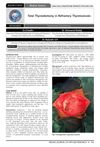
 Surgery may be needed for resistant thyrotoxicosis.
 24 citations
,
September 2014 in “Journal of the European Academy of Dermatology and Venereology”
24 citations
,
September 2014 in “Journal of the European Academy of Dermatology and Venereology” Trichoscopy is reliable for diagnosing Temporal Triangular Alopecia and can prevent unnecessary biopsies and wrong treatments.
 December 2013 in “Appetite”
 A defective gene causes hair loss and taste insensitivity in BTBR mice.
43 citations
,
January 2016 in “Oxidative medicine and cellular longevity” THSG from a Chinese plant helps with aging and related diseases.
 2 citations
,
March 2023 in “Skin research and technology”
2 citations
,
March 2023 in “Skin research and technology” Temporal triangular alopecia in infants is mostly seen in males at birth, with unique features that help with diagnosis.