21 citations
,
January 2000 in “Fetal Diagnosis and Therapy” Prenatal diagnosis of trichothiodystrophy is possible in the second trimester using fetal eyebrow biopsy, with sulfur content analysis being more reliable.
12 citations
,
April 2004 in “PubMed” A rare skin condition in a baby showed unusual fat and hair follicle changes.
52 citations
,
June 1991 in “Journal of Virology” The hamster polyomavirus middle T antigen is linked to tumors in hamsters and associates with a specific tyrosine kinase.
January 2005 in “Journal of Cutaneous Pathology” A unique type of complex cyst was found on a man's scrotum.
 88 citations
,
August 2019 in “Nature communications”
88 citations
,
August 2019 in “Nature communications” Researchers found a specific immune receptor in patients that causes severe skin reactions to a drug.
May 2022 in “The journal of investigative dermatology/Journal of investigative dermatology” Loss of TET2 increases the risk of skin and oral cancer.
October 2025 in “Diagnostics” Temporal triangular alopecia is a harmless, non-progressive hair loss condition.
43 citations
,
September 2001 in “Annals of Neurology” Hair root analysis can effectively detect somatic mosaicism in double cortex syndrome.
 November 2024 in “NeoReviews”
 Pallister-Killian Syndrome is a complex genetic disorder requiring coordinated care and genetic counseling.
 2 citations
,
February 2019 in “Anais brasileiros de dermatologia/Anais Brasileiros de Dermatologia”
2 citations
,
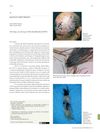
February 2019 in “Anais brasileiros de dermatologia/Anais Brasileiros de Dermatologia” Tufted folliculitis is common in patients with folliculitis decalvans.
 17 citations
,
January 2011 in “Indian journal of dermatology, venereology, and leprology”
17 citations
,
January 2011 in “Indian journal of dermatology, venereology, and leprology” A rare genetic skin condition usually affecting males was found in a 9-year-old girl.
14 citations
,
January 2010 in “Dermatology” Some people with congenital triangular alopecia have a central tuft of hair in the bald patch, but the cause is unknown.
 14 citations
,
September 2018 in “The journal of allergy and clinical immunology/Journal of allergy and clinical immunology/The journal of allergy and clinical immunology”
14 citations
,
September 2018 in “The journal of allergy and clinical immunology/Journal of allergy and clinical immunology/The journal of allergy and clinical immunology” A boy's growth and immune problems were caused by a new mutation in the STAT5B gene.
15 citations
,
February 2015 in “Anais brasileiros de dermatologia/Anais Brasileiros de Dermatologia” Dermoscopy helps accurately diagnose temporal triangular alopecia, avoiding unnecessary treatments.
79 citations
,
October 2003 in “PubMed” Overexpression of PKCepsilon leads to increased TNFalpha, promoting metastatic squamous cell carcinoma in mice.
A KRT32 gene variant causes loose anagen hair syndrome.
 5 citations
,
January 2014 in “Journal of Cutaneous and Aesthetic Surgery”
5 citations
,
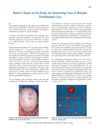
January 2014 in “Journal of Cutaneous and Aesthetic Surgery” A woman had 13 non-cancerous cysts on her scalp successfully removed in one surgery.
 1 citations
,
January 2020 in “Skin appendage disorders”
1 citations
,
January 2020 in “Skin appendage disorders” A family was found with both Trichorhinophalangeal syndrome and Loose Anagen Syndrome, suggesting a genetic connection.
 February 2023 in “JEADV Clinical Practice”
 Biotin supplements significantly improved a young girl's uncombable hair.
1 citations
,
January 2016 in “Dermatology Online Journal” Triangular temporal alopecia can occur in adults and should be correctly identified to prevent misdiagnosis.
 28 citations
,
July 2007 in “Development”
28 citations
,
July 2007 in “Development” TAF4 is important for skin cell growth and helps prevent skin cancer in mice.
 June 2023 in “British journal of dermatology/British journal of dermatology, Supplement”
 A child with skin and tooth symptoms was found to have a genetic mutation causing cardiocutaneous syndrome, leading to heart problems.
 21 citations
,
October 2019 in “The journal of investigative dermatology/Journal of investigative dermatology”
21 citations
,
October 2019 in “The journal of investigative dermatology/Journal of investigative dermatology” A specific gene change plus an additional mutation in the same gene cause hereditary trichilemmal cysts.
July 2025 in “Journal of Investigative Dermatology” Tissue-engineered skin substitutes can model junctional epidermolysis bullosa and may help develop gene therapy.
 April 2026 in “Human Genome Variation”
 The MBTPS2 gene variant c.970+5G>A is a common mutation causing IFAP syndrome.
87 citations
,
January 1999 in “British Journal of Dermatology” Trichoblastic fibroma and basal cell carcinoma are similar but different from trichoepithelioma.
2 citations
,
January 2014 in “Dermatology Online Journal” Hair-thread tourniquet syndrome needs more awareness and discussion in dermatology.
1 citations
,
January 2013 in “Indian journal of dermatology, venereology, and leprology” A girl inherited excessive body hair from her mother and grandmother.
14 citations
,
June 1989 in “Journal of dermatology” Three siblings had both Vohwinkel's disease and congenital alopecia, with no effective treatment.
 7 citations
,
January 2014 in “Case reports in pediatrics”
7 citations
,
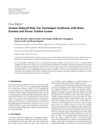
January 2014 in “Case reports in pediatrics” A baby's toe was severely damaged by a hair tourniquet, leading to bone and tendon damage, but improved after surgery and treatment.