 December 2021 in “Research Square (Research Square)”
 S100A4 and NMIIA promote tumor growth in glioblastoma by enhancing blood vessel functions.
1 citations
,
September 2020 in “DOAJ (DOAJ: Directory of Open Access Journals)” Dihydrotestosterone (DHT) promotes the growth and spread of aggressive brain tumor cells.
November 2025 in “Cancer Cell International” Cancer-associated fibroblasts promote tumor growth in skin cancer.
 54 citations
,
April 2020 in “Experimental & Molecular Medicine”
54 citations
,
April 2020 in “Experimental & Molecular Medicine” Cox-2 significantly contributes to the development and progression of skin and esophageal cancers.
9 citations
,
July 2022 in “Journal of Clinical Oncology” Oral paclitaxel plus encequidar improved tumor response and caused less neuropathy but more serious infections than intravenous paclitaxel.
ETS2 drives cancer progression in squamous cell carcinoma and is linked to poor patient outcomes.
80 citations
,
January 1979 in “Journal of Surgical Oncology” Keratoacanthoma is a common, usually non-dangerous skin tumor that looks like squamous cell carcinoma but rarely becomes severe.
February 2013 in “Americanae (AECID Library)” Finasteride may reduce prostate tumor cell invasion and spread.
 29 citations
,
July 2014 in “PloS one”
29 citations
,
July 2014 in “PloS one” Meis1 is crucial for skin health and tumor development.
16 citations
,
December 2021 in “Journal of Integrative Neuroscience” miR-325-3p can slow down brain tumor growth by targeting FOXM1.
1 citations
,
December 2014 in “Zenodo (CERN European Organization for Nuclear Research)” The method effectively induces skin cancer in mice for studying tumor development.
 October 2021 in “International journal of basic and clinical pharmacology”
 Excessive eyelash growth from erlotinib may indicate positive tumor response and help treat madarosis.
 March 2011 in “European Urology Supplements”
 CEC levels may be a useful marker for predicting prostate cancer progression.
12 citations
,
September 2022 in “Frontiers in Genetics” Enhancing CD8+ T cell function to induce ferroptosis in tumor cells may help treat skin melanoma.
Loss of Dnmt3a and Dnmt3b leads to more aggressive skin tumors, but blocking PPAR-γ can reduce this effect.
91 citations
,
December 2019 in “The EMBO Journal” NEDD4 and NEDD4L help control intestinal stem cells and prevent tumors by breaking down the LGR5 receptor.
 November 2018 in “Atlas of genetics and cytogenetics in oncology and haematology”
 WNT10B is linked to cancer development and affects survival and disease progression in various cancers.
Eyelid pilomatrixomas are rare, benign tumors that need accurate diagnosis for proper treatment.
10 citations
,
October 2012 in “Andrology” Prostate cancer can progress even with low testosterone due to internal hormone production in the tumor.
 9 citations
,
July 2008 in “Oncology Reports”
9 citations
,
July 2008 in “Oncology Reports” HPV16-transformed cells can change human skin cell properties, aiding tumor growth.
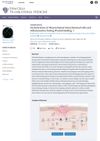 July 2023 in “Stem Cells Translational Medicine”
 Mesenchymal Stem/Stromal Cells (MSCs) help in wound healing and tissue regeneration, but can also contribute to tumor growth. They show promise in treating chronic wounds and certain burns, but their full healing mechanisms and potential challenges need further exploration.
7 citations
,
October 2016 in “American Journal of Dermatopathology” The man died from lung cancer, not the rare nail tumor.
 November 2022 in “Journal of the Endocrine Society”
 An 8-year-old boy's early puberty was caused by a rare hormone-secreting brain tumor, which was successfully treated with surgery.
 2 citations
,
July 2012 in “Journal of Pediatric and Adolescent Gynecology”
2 citations
,
July 2012 in “Journal of Pediatric and Adolescent Gynecology” A 12-year-old girl with very high testosterone and insulin resistance improved with birth control pills, suggesting PCOS can cause high testosterone without tumors.
The reviewers suggest clarifying the abstract, adding background on inflammation's effect on stem cells and cancer, discussing immune cells' role in tumors, and considering inflammation's potential to reduce cancer growth.
The reviewers found the manuscript on inflammation's role in cancer stem cells to be relevant but suggested it needs clarity, more background information, discussion on immune cells' role in tumors, updated references, and grammar corrections.
 36 citations
,
January 2019 in “Nature communications”
36 citations
,
January 2019 in “Nature communications” High lactate dehydrogenase activity is not necessary for the growth of squamous cell carcinoma.
 30 citations
,
August 2021 in “Oncogene”
30 citations
,
August 2021 in “Oncogene” miR-22 helps skin cancer grow and spread by activating specific cell signals.
3 citations
,
November 2024 in “Egyptian Journal of Medical Human Genetics” SGK1 is important in cancer growth and treatment resistance, and targeting it could improve therapies.
 1 citations
,
June 2023 in “Advances in therapy”
1 citations
,
June 2023 in “Advances in therapy” Ripretinib is effective and safe for treating advanced GIST in Chinese patients, particularly for non-gastric GISTs.