 19 citations
,
January 2001 in “Internal Medicine”
19 citations
,
January 2001 in “Internal Medicine” Protein-losing enteropathy worsened with lupus symptoms but improved with prednisolone.
 13 citations
,
July 1951 in “Industrial & Engineering Chemistry”
13 citations
,
July 1951 in “Industrial & Engineering Chemistry” Yeast grown on wood sugar with added methionine could be a cheap alternative to animal protein for feed.
 12 citations
,
August 1984 in “Genetics Research”
12 citations
,
August 1984 in “Genetics Research” The N gene affects the protein makeup of mouse hair.
 8 citations
,
July 2011 in “Animal science journal”
8 citations
,
July 2011 in “Animal science journal” Keratin 33A is a key protein in goat winter coats, especially in high-producing breeds.
 6 citations
,
January 1988 in “Japanese Journal of Medicine”
6 citations
,
January 1988 in “Japanese Journal of Medicine” Hair glycation levels can indicate long-term blood sugar control.
 3 citations
,
January 2021 in “ScienceAsia”
3 citations
,
January 2021 in “ScienceAsia” Using an enzyme and keratin treatment can significantly repair and strengthen damaged hair.
 3 citations
,
December 2019 in “Biomedical dermatology”
3 citations
,
December 2019 in “Biomedical dermatology” Sonic hedgehog proteins may help grow hair.
 2 citations
,
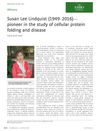
December 2016 in “EMBO journal”
2 citations
,
December 2016 in “EMBO journal” Susan Lee Lindquist was a pioneering biologist who made significant contributions to understanding protein folding and its role in disease.
 11 citations
,
September 2012 in “Journal of animal physiology and animal nutrition”
11 citations
,
September 2012 in “Journal of animal physiology and animal nutrition” Higher protein diets with DL-methionine improve mink hair growth and fur quality.
 7 citations
,
September 2019 in “Journal of Cellular Physiology”
7 citations
,
September 2019 in “Journal of Cellular Physiology” Akt2 protein is essential for normal cell division in early mouse embryos.
 5 citations
,
December 2004 in “Dermatology”
5 citations
,
December 2004 in “Dermatology” Two women with very high androgen levels had only slight skin issues, one due to a non-classical adrenal disorder and the other due to an adrenal tumor.
 June 2023 in “International Journal of Research in Medical Sciences”
 Two brothers from Bangladesh were diagnosed with X-linked adrenoleukodystrophy, showing neurological and adrenal symptoms.
 March 2022 in “Benha Journal of Applied Sciences”
 ULBP3 levels are higher in Tinea capitis patients and may help predict the disease's severity.
 September 2020 in “Benha Journal of Applied Sciences”
 Protein hair straighteners damage the hair more than hair dyes.
 September 2016 in “Journal of Dermatological Science”
 The protein aPKCλ is crucial for keeping hair follicle stem cells inactive and for hair growth and regeneration.
 27 citations
,
March 2018 in “Biomaterials”
27 citations
,
March 2018 in “Biomaterials” Three specific proteins can turn adult skin cells into hair-growing cells, suggesting a new hair loss treatment.
 6 citations
,
November 2010 in “Histochemistry and cell biology”
6 citations
,
November 2010 in “Histochemistry and cell biology” The proteins transthyretin and megalin are more present in the growth phase of hair, suggesting they might affect hair health and growth.
 November 2022 in “Research Square (Research Square)”
 Keratin-associated proteins have ancient origins and were used for different purposes before being adapted for hair in mammals.
 January 2019 in “Durham e-Theses (Durham University)”
 Advanced microscopy shows hair damage and keratin proteins' roles, aiding future cosmetic treatments.
 April 2018 in “D-Scholarship@Pitt (University of Pittsburgh)”
 Keratin-75 is secreted by ameloblasts in a unique way without a signal peptide.
 72 citations
,
November 2012 in “PloS one”
72 citations
,
November 2012 in “PloS one” The protein folliculin, involved in a rare disease, works with another protein to control how cells stick together and their organization, and changes in this interaction can lead to disease symptoms.
 46 citations
,
December 2001 in “Journal of Endocrinology/Journal of endocrinology”
46 citations
,
December 2001 in “Journal of Endocrinology/Journal of endocrinology” FLRG and follistatin have different roles in wound healing.
 4 citations
,
January 2015 in “Journal of microbial & biochemical technology”
4 citations
,
January 2015 in “Journal of microbial & biochemical technology” Biotin helps regulate proteins in the blood, which may explain its role in hair growth.
 41 citations
,
July 2020 in “Colloids and surfaces. B, Biointerfaces”
41 citations
,
July 2020 in “Colloids and surfaces. B, Biointerfaces” Different hair protein amounts change the strength of keratin/chitosan gels, useful for making predictable tissue engineering materials.
 122 citations
,
May 2010 in “Plant Physiology”
122 citations
,
May 2010 in “Plant Physiology” Different PIN proteins affect plant root hair growth by changing how auxin is transported.
 72 citations
,
June 2001 in “Journal of Investigative Dermatology”
72 citations
,
June 2001 in “Journal of Investigative Dermatology” S100A4 and S100A6 proteins may activate stem cells for hair follicle regeneration and could be potential targets for hair loss treatments.
 48 citations
,
February 2013 in “Molecular and Cellular Endocrinology”
48 citations
,
February 2013 in “Molecular and Cellular Endocrinology” The protein StAR is found in 17 different organs and can affect hair loss and brain functions, but its full role is not yet fully understood.
 45 citations
,
July 2009 in “Journal of Investigative Dermatology”
45 citations
,
July 2009 in “Journal of Investigative Dermatology” The S100A4 protein is more common in psoriatic skin and could be a target for treating psoriasis.
 44 citations
,
February 2021 in “Scientific Reports”
44 citations
,
February 2021 in “Scientific Reports” Mutations in the spike protein affect drug binding and effectiveness.
 44 citations
,
June 2009 in “Biomaterials”
44 citations
,
June 2009 in “Biomaterials” Skin cell clumping for hair growth is improved by a protein called fibronectin, which helps cells stick and move better.