1 citations
,
December 2012 in “Journal of dermatological science” Combining ficlatuzumab and gefitinib can cause severe scarring hair loss.
June 2025 in “British Journal of Clinical Pharmacology” Chemotherapy often causes skin and hair issues, but early management can help improve patient care.
 June 2025 in “BMJ Case Reports”
 Axitinib treatment turned a man's grey hair back to black.
May 2025 in “Dermatology Online Journal” Erlotinib can cause excessive eyelash growth.
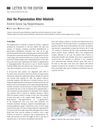 April 2025 in “Turkish Journal of Hematology”
 Nilotinib may cause gray hair to return to its original color.
 October 2021 in “International journal of basic and clinical pharmacology”
 Excessive eyelash growth from erlotinib may indicate positive tumor response and help treat madarosis.
 April 2018 in “The journal of investigative dermatology/Journal of investigative dermatology”
 Androgens increase growth factors in skin cells, which may lead to acne.
January 2008 in “Projeto: revista mensal de arquitetura” Targeted cancer drugs can cause skin reactions, so dermatologists must manage these effects.
 1066 citations
,
March 2010 in “Nature Reviews Molecular Cell Biology”
1066 citations
,
March 2010 in “Nature Reviews Molecular Cell Biology” MicroRNAs are crucial in controlling cell signaling, affecting cancer and tissue regeneration.
 65 citations
,
February 2009 in “The journal of investigative dermatology/Journal of investigative dermatology”
65 citations
,
February 2009 in “The journal of investigative dermatology/Journal of investigative dermatology” Anti-acne medications may work by reducing the activity of a protein involved in acne development.
36 citations
,
October 2015 in “Cell reports” Gab1 protein is crucial for hair growth and stem cell renewal, and Mapk signaling helps maintain these processes.
7 citations
,
March 2024 in “Skin Research and Technology” miR-200c-3p could help diagnose and treat alopecia areata.
52 citations
,
June 1991 in “Journal of Virology” The hamster polyomavirus middle T antigen is linked to tumors in hamsters and associates with a specific tyrosine kinase.
4 citations
,
March 2007 in “British Journal of Dermatology” Gefitinib therapy can cause unusual hair growth on the nose.
3 citations
,
September 2016 in “Dermatologic Therapy” Doxycycline helps prevent skin issues from erlotinib in lung cancer patients.
October 2024 in “Clinical Cosmetic and Investigational Dermatology” Brevilin-A is a safe and effective treatment for mild to moderate alopecia areata in children.
21 citations
,
November 2015 in “Phytomedicine” Glycyrrhizic acid may help reduce unwanted hair growth.
 7 citations
,
May 2022 in “PLOS ONE”
7 citations
,
May 2022 in “PLOS ONE” Certain genes and pathways are linked to the production of finer and denser wool in Hetian sheep.
 1 citations
,
April 2023 in “International Journal of Molecular Sciences”
1 citations
,
April 2023 in “International Journal of Molecular Sciences” Botryococcus terribilis Ethanol Extract may reduce inflammation by changing gene expression in cells.
PDGF signaling is crucial for cell development, wound healing, and fluid regulation in the body.
19 citations
,
April 2016 in “Case Reports in Dermatology” Nilotinib can cause keratosis pilaris, a skin condition.
1 citations
,
April 2004 in “Cancer” Imatinib mesylate can cause skin lightening, especially in Chinese patients, due to its effect on pigment production.
 June 2024 in “Journal of Clinical Oncology”
 EGFR-TKIs can cause unexpected skin, nail, and hair issues.
 4 citations
,
January 2021 in “Journal of Clinical Medical Research”
4 citations
,
January 2021 in “Journal of Clinical Medical Research” c-Kit is important for heart regeneration and cancer development.
2 citations
,
January 2004 in “Linchuang pifuke zazhi” ZD1839 can cause skin issues like acne and hair changes.
February 2007 in “Oncology Times” Lung cancer biology differs between women and men, with women responding better to certain treatments.
15 citations
,
June 2024 in “Frontiers in Pharmacology” Using existing drugs for new purposes can effectively treat infections resistant to multiple antibiotics.
 8 citations
,
January 2013 in “Medicinal chemistry”
8 citations
,
January 2013 in “Medicinal chemistry” The compound 4c showed strong potential as an anticancer agent.
3 citations
,
December 2024 in “International Journal of Dermatology” Premature hair graying is caused by genetics, stress, and lifestyle, and affects mental health.
December 2005 in “Science s STKE” Localized ROS production is essential for cell growth and movement in plants and animals.