 2 citations
,
January 2022 in “Lasers in Medical Science”
2 citations
,
January 2022 in “Lasers in Medical Science” Using a carbon dioxide laser and platelet-rich plasma together can effectively restore hair and patients are generally satisfied with the results.
15 citations
,
January 2019 in “Lasers in surgery and medicine” Home-use light devices can significantly reduce hair but are less effective on very dark skin and slower than professional devices.
16 citations
,
December 2022 in “Expert Opinion on Drug Delivery” AFL is safe and effective for topical drug delivery but needs larger studies and cheaper devices for wider use.
1 citations
,
August 2018 in “Dermatologic Surgery” 2 citations
,
January 2017 in “Indian Dermatology Online Journal” A rare skin reaction from laser hair removal can be prevented with medication.
 December 2020 in “Lasers in Surgery and Medicine”
 Laser safely and effectively removes unwanted scalp micropigmentation.
December 2025 in “Journal of Veterinary Clinics” CO₂ laser surgery successfully healed a dog's chronic paw condition.
November 2020 in “Journal of the American Academy of Dermatology” Intense pulsed light with radiofrequency showed mixed results in improving quality of life for hidradenitis suppurativa patients, with no clinical improvements.
 10 citations
,
January 2007 in “Journal of cosmetic and laser therapy”
10 citations
,
January 2007 in “Journal of cosmetic and laser therapy” The IPL device is safe, effective, and has high patient satisfaction for hair removal.
March 2026 in “Health Science Reports” The 755 nm laser is more effective and safer for hair removal than the dual-wavelength laser.
 May 2017 in “Journal of The American Academy of Dermatology”
 595 nm pulsed dye laser is a cost-effective treatment for nonmelanoma skin cancer with a low recurrence rate.
 January 2000 in “Optics Letters”
 Laser treatment can inhibit hair growth and different hair colors reach different temperatures when lasered.
March 1996 in “The American Journal of Cosmetic Surgery” The technique offers natural-looking hair transplants with minimal bleeding.
April 2020 in “The Aesthetics” LED-LLLT helps heal wounds, reduce pain, and regrow hair using specific light wavelengths.
 15 citations
,
January 2017 in “Lasers in Surgery and Medicine”
15 citations
,
January 2017 in “Lasers in Surgery and Medicine” Laser treatment improved scalp skin condition with no side effects.
31 citations
,
February 1999 in “Dermatologic surgery” Sun exposure after laser hair removal can cause skin darkening, which is hard to treat and requires avoiding UV light.
 July 2024 in “Scholars Journal of Medical Case Reports”
 Combining low-level laser therapy and exosome therapy promotes hair growth.
57 citations
,
December 2011 in “Lasers in Surgery and Medicine” Selective photothermolysis can target sebaceous glands and may treat acne effectively.
7 citations
,
August 2024 in “Skin Research and Technology” The study's findings are unreliable due to retraction.
1 citations
,
October 2025 in “Journal of Clinical Medicine” Laser therapy effectively treats all stages of hidradenitis suppurativa, offering a reliable alternative to medication.
 January 2017 in “Lasers in Surgery and Medicine”
 The 2017 issue emphasized progress in laser and energy-based skin treatments, but noted the need for more research on certain procedures and technologies.
 November 2023 in “Journal of cosmetic dermatology”
 The 595-nm pulsed dye laser effectively reduces symptoms of EFFC with minimal side effects.
1 citations
,
April 2018 in “Dermatologic Surgery”  September 2024 in “Journal of the Pakistan Medical Association”
 A 589 nm laser increases IL-2 and IFN-y gene expression in human T-cells.
 10 citations
,
January 2013 in “Journal of The European Academy of Dermatology and Venereology”
10 citations
,
January 2013 in “Journal of The European Academy of Dermatology and Venereology” The home-use IPL device effectively reduced hair and delayed its regrowth after six months of use, with users happy and no negative side effects.
June 2024 in “Cermin Dunia Kedokteran” Low level laser therapy is effective and safe for various skin and hair conditions.
46 citations
,
December 2000 in “Seminars in Cutaneous Medicine and Surgery” Laser and light treatments offer quick, long-lasting hair removal for large areas.
16 citations
,
April 2020 in “Dermatology practical & conceptual” Laser treatment can effectively reduce unwanted hair growth, particularly for people with fair skin and dark hair.
 11 citations
,
June 2005 in “Journal of Cosmetic Dermatology”
11 citations
,
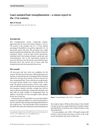
June 2005 in “Journal of Cosmetic Dermatology” Lasers in hair transplantation show promise but are not yet standard, with current methods causing some side effects and needles still being preferred for creating recipient sites.
41 citations
,
September 2010 in “British journal of dermatology/British journal of dermatology, Supplement” Both intense pulsed light and long-pulsed diode laser effectively reduced facial hair in women, with no significant difference in satisfaction after 6 months, but intense pulsed light was more painful.