 September 2017 in “Journal of Investigative Dermatology”
 Mackerel fermented fish oil protects skin cells from damage by UVB light.
 7 citations
,
April 2020 in “Curēus”
7 citations
,
April 2020 in “Curēus” Combining hair transplantation with microneedling or laser and UV light may help treat tough vitiligo on hands and feet, with microneedling being affordable and easy to learn.
 185 citations
,
February 2018 in “Journal of Investigative Dermatology”
185 citations
,
February 2018 in “Journal of Investigative Dermatology” Melatonin may benefit skin health and could be a promising treatment in dermatology.
 11 citations
,
January 2014 in “International Journal of Trichology”
11 citations
,
January 2014 in “International Journal of Trichology” Witch hazel-based hair products improved scalp irritation and were well-tolerated.
 2 citations
,
August 2020 in “Clinical, Cosmetic and Investigational Dermatology”
2 citations
,
August 2020 in “Clinical, Cosmetic and Investigational Dermatology” The hair-growth formula with L-cystine helps protect and grow hair cells.
 January 2025 in “Clinical and Medical Engineering Live”
 Implementing safety strategies is crucial to prevent radiation-related health issues.
 21 citations
,
January 2012 in “Biological and Pharmaceutical Bulletin”
21 citations
,
January 2012 in “Biological and Pharmaceutical Bulletin” Liposomes and iontophoresis effectively deliver protective enzymes into the skin against UV damage.
 March 2026 in “DergiPark (Istanbul University)”
 Biotinoyl tripeptide-1 nanoparticles protect hair from heat damage.
 August 2023 in “The Indonesian Biomedical Journal”
 Rosemary essential oil improved hair growth and thickness in UVB-exposed mice.
 53 citations
,
January 2009 in “Journal of Investigative Dermatology”
53 citations
,
January 2009 in “Journal of Investigative Dermatology” UVB radiation harms hair growth and health, causing cell death and other changes in human hair follicles.
 59 citations
,
January 2013 in “Annals of Dermatology”
59 citations
,
January 2013 in “Annals of Dermatology” Asian hair is more resistant to UV damage due to higher lipid content.
 32 citations
,
February 2024 in “Growth Hormone & IGF Research”
32 citations
,
February 2024 in “Growth Hormone & IGF Research” Dihydrotestosterone (DHT) stops hair growth in mice by lowering a growth factor important for hair.
 1 citations
,
December 2022 in “Journal of applied biological chemistry”
1 citations
,
December 2022 in “Journal of applied biological chemistry” TRP-hair essence protects hair from heat damage, maintains color, and strengthens hair.
 December 2022 in “Journal of Tropical Pharmacy and Chemistry”
 The hair tonic made from oil palm leaf extract is very effective in preventing hair damage from the sun.
 June 2025 in “International Journal of Cosmetic Science”
 Keratin-encapsulated liposomes effectively repair and protect UV-damaged hair.
 April 2016 in “Journal of Investigative Dermatology”
 Vitamin D can reduce skin inflammation caused by UV rays by enhancing cell "fitness" and skin repair.
 24 citations
,
January 2006 in “Dermatologic clinics”
24 citations
,
January 2006 in “Dermatologic clinics” Hair sunscreens are important for maintaining hair's cosmetic value.
 September 2025 in “Archives of Dermatological Research”
 Basal cell carcinoma is more common than squamous cell carcinoma on the scalp, especially along the part line.
 6 citations
,
October 2019 in “Jo'jig gonghag gwa jaesaeng uihag/Tissue engineering and regenerative medicine”
6 citations
,
October 2019 in “Jo'jig gonghag gwa jaesaeng uihag/Tissue engineering and regenerative medicine” Rice bran extract boosts melanin production in hair follicles.
 April 2014 in “Journal of evolution of medical and dental sciences”
 Women over forty can maintain skin and hair health with lifestyle and dietary changes.
 14 citations
,
October 2021 in “Dermatology and Therapy”
14 citations
,
October 2021 in “Dermatology and Therapy” UV exposure accelerates skin aging by altering elastin, leading to wrinkles.
The gene Endothelin 3 makes mice's fur darker by increasing pigment cells and pigment levels.
 January 2025 in “International Journal of Veterinary Science”
 Hibiscus leaf ointment helps hair growth and reduces UV skin damage in rats.
 76 citations
,
February 2021 in “International Journal of Molecular Sciences”
76 citations
,
February 2021 in “International Journal of Molecular Sciences” Mesenchymal stem cells show potential for skin healing and anti-aging, but more research is needed for safe use, especially regarding stem cells from induced pluripotent sources.
 132 citations
,
January 2017 in “International Journal of Molecular Sciences”
132 citations
,
January 2017 in “International Journal of Molecular Sciences” Fat-derived stem cells show promise for skin repair and reducing aging signs but need more research for consistent results.
 127 citations
,
January 2015 in “Journal of Biological Rhythms”
127 citations
,
January 2015 in “Journal of Biological Rhythms” The skin's internal clock affects healing, cancer risk, aging, immunity, and hair growth, and disruptions can harm skin health.
 101 citations
,
October 2016 in “Nanomedicine: Nanotechnology, Biology and Medicine”
101 citations
,
October 2016 in “Nanomedicine: Nanotechnology, Biology and Medicine” Fullerenes show potential in skin care but need more safety research.
 77 citations
,
December 2010 in “The journal of investigative dermatology/Journal of investigative dermatology”
77 citations
,
December 2010 in “The journal of investigative dermatology/Journal of investigative dermatology” Human skin cells produce proenkephalin, which changes with environmental factors and skin diseases.
 62 citations
,
January 2003 in “Dermatology”
62 citations
,
January 2003 in “Dermatology” Sunlight worsens hair loss; protect scalp.
 26 citations
,
June 2018 in “Australasian Journal of Dermatology”
26 citations
,
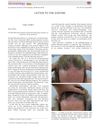
June 2018 in “Australasian Journal of Dermatology” Stopping sunscreen use on the forehead led to hair regrowth in a woman with frontal fibrosing alopecia.