 January 2018 in “Indian Dermatology Online Journal”
 Trichoscopy can help tell the difference between artificial hair fibers and other scalp artifacts.
 19 citations
,
March 1988 in “International Journal of Dermatology”
19 citations
,
March 1988 in “International Journal of Dermatology” Hair shaft dysplasias are abnormal hair conditions that can be inherited or acquired and may signal other health issues, with limited treatment options available.
 January 2023 in “Al-Azhar International Medical Journal /Al-Azhar International Medical Journal”
 Trichoscopy is a quick, non-invasive way to measure hair density and thickness, helping diagnose hair loss.
 11 citations
,
January 1987 in “Electrophoresis”
11 citations
,
January 1987 in “Electrophoresis” Keratin proteins are consistent across different hair types from the same person.
April 2023 in “Journal of Investigative Dermatology” 3D ultrasound can detect hair follicle changes and disease phases in alopecia areata.
 6 citations
,
December 2018 in “International Journal of Cosmetic Science”
6 citations
,
December 2018 in “International Journal of Cosmetic Science” Mexican women's hair is between Asian and Caucasian hair in thickness and shape, with varied strength and some damage.
 July 2022 in “The journal of investigative dermatology/Journal of investigative dermatology”
 Hair growth cycles need varied signals in space and time.
13 citations
,
March 2020 in “Spectrochimica Acta Part A Molecular and Biomolecular Spectroscopy” Alopecic hair has more irregular structures and chemical changes than normal hair, reducing its strength.
 25 citations
,
April 2007 in “Journal of The American Academy of Dermatology”
25 citations
,
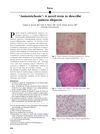
April 2007 in “Journal of The American Academy of Dermatology” The document suggests "anisotrichosis" as a new term for hair thickness variation in common baldness.
 61 citations
,
April 2012 in “British Journal of Dermatology”
61 citations
,
April 2012 in “British Journal of Dermatology” Caucasian women's hair appears thickest in their 20s, with perceived thinning after mid-30s due to both decreasing density and diameter.
January 2019 in “Durham e-Theses (Durham University)” Less stiff collagen promotes higher cell growth in hair follicles.
February 2013 in “Journal of the American Academy of Dermatology” Uncombable hair syndrome causes dry, frizzy hair that can't be combed flat, seen in a young child.
50 citations
,
March 2001 in “Clinics in dermatology” Human hair is complex and grows in cycles starting from embryonic life.
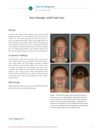 July 2019 in “Journal der Deutschen Dermatologischen Gesellschaft”
 A mother and daughter have a rare genetic hair loss disorder with no effective treatment.
 3 citations
,
May 2006 in “Dermatologic Surgery”
3 citations
,
May 2006 in “Dermatologic Surgery” Most men's multi-hair follicles naturally stand perpendicular to a line from the top of their head, which is important for natural-looking hair transplants.
June 2024 in “British Journal of Dermatology” There are unequal access to wigs for alopecia patients in the UK, needing policy changes for fairness.
January 2026 in “Journal of Hair Restoration and Regenerative Medicine” Hair transplantation is unsafe for diffuse unpatterned alopecia; focus on medical treatment and reassessment.
147 citations
,
September 2001 in “Computer graphics forum” The authors created a realistic and efficient method to simulate hair movement by combining fluid dynamics with individual hair strand behavior.
 21 citations
,
January 2010 in “International Journal of Trichology”
21 citations
,
January 2010 in “International Journal of Trichology” TrichoScan often makes mistakes and needs improvement for correct hair growth analysis.
3 citations
,
July 2024 in “Dermatology and Therapy” Hair shaft abnormalities can help distinguish mycosis fungoides from other skin conditions.
 2 citations
,
December 1999 in “Dermatologic Surgery”
2 citations
,
December 1999 in “Dermatologic Surgery” Achieving original hair density with transplants is unrealistic; skilled practitioners are essential for the best results.
 1 citations
,
December 2022 in “Clinical, cosmetic and investigational dermatology”
1 citations
,
December 2022 in “Clinical, cosmetic and investigational dermatology” Arab hair is generally thicker but less dense compared to other ethnicities, affecting hair disorder diagnosis and treatment.
1 citations
,
June 2022 in “Tidsskrift for Den norske legeforening” A young boy's uncombable hair is due to a rare genetic condition that usually improves over time.
 11 citations
,
November 2015 in “Skin Research and Technology”
11 citations
,
November 2015 in “Skin Research and Technology” Women's hair grows faster and thicker than men's, but hair growth slows for both genders with pattern hair loss.
May 2023 in “Elsevier eBooks” July 2026 in “Journal of Investigative Dermatology” September 2014 in “Journal of the American Academy of Dermatology” The girl likely has Loose anagen hair syndrome, which may improve on its own or with minoxidil.
 1 citations
,
August 1994 in “Journal of Cutaneous Pathology”
1 citations
,
August 1994 in “Journal of Cutaneous Pathology” Hair loss happens due to faster cell growth and fewer cells in affected follicles.
 40 citations
,
February 1990 in “Journal of The American Academy of Dermatology”
40 citations
,
February 1990 in “Journal of The American Academy of Dermatology” A 17-year-old developed woolly hair nevus in adolescence, which is unusual, and over time the hair darkened and straightened slightly, but microscopic changes persisted.
 28 citations
,
November 2018 in “Journal of structural biology”
28 citations
,
November 2018 in “Journal of structural biology” Different populations have distinct hair structures related to their ancestry.