 4 citations
,
January 2014 in “International Journal of Trichology”
4 citations
,
January 2014 in “International Journal of Trichology” A 12-year-old boy with a rare genetic condition has progressive hair loss with no effective treatment.
 12 citations
,
November 1987 in “Pediatric dermatology”
12 citations
,
November 1987 in “Pediatric dermatology” Four children had unmanageable pale blond hair due to uncombable-hair syndrome.
 September 2023 in “Cutis”
 A baby girl has a hair disorder called monilethrix, causing fragile hair that may improve over time.
October 2001 in “Science news” Understanding hair growth and loss is complex, involving genetic and molecular factors.
 June 2021 in “International journal of research in dermatology”
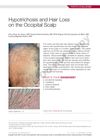
 A boy and his father with hereditary hypotrichosis simplex were treated for hair loss, but the treatment result is unknown.
264 citations
,
October 1958 in “Archives of Dermatology” A 4-year-old girl has a rare hair condition causing fragile, short hair.
21 citations
,
January 2010 in “International journal of trichology” Trichoscopy can diagnose monilethrix, a genetic hair defect causing hair thinning and loss.
February 2026 in “Journal of Cosmetic Dermatology” A new reliable scale improves accuracy in measuring hair density and treatment response.
95 citations
,
January 2009 in “Journal of Biomedical Optics” Nanoparticles penetrate hair follicles better when their size matches the cuticula thickness.
 September 2016 in “Journal of The American Academy of Dermatology”
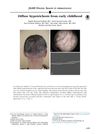
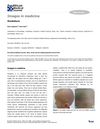
 The girl has a genetic hair condition causing thin hair since childhood.
 January 2013 in “The Pan African medical journal”
 Monilethrix causes short, fragile hair with no specific treatment available.
 September 2025 in “International Journal of Ayurvedic Medicine”
 Hair medulla patterns vary by Prakruti type, affecting hair strength.
June 2025 in “British Journal of Dermatology” Segmented hair color changes can indicate active alopecia areata.
 January 2009 in “Nihon Keshouhin Gijutsushakaishi/Journal of S C C./Nihon Keshouhin Gijutsushakai kaishi”
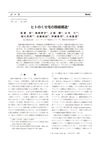
 Curved human hair has different structures on each side, which might cause its shape and is similar to wool.
 34 citations
,
October 1982 in “Journal of applied polymer science”
34 citations
,
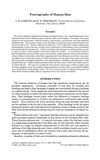
October 1982 in “Journal of applied polymer science” Moisture content significantly affects how human hair breaks.
 40 citations
,
May 2012 in “British Journal of Dermatology”
40 citations
,
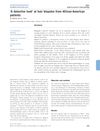
May 2012 in “British Journal of Dermatology” Recognizing specific features of African-American hair can help diagnose hair loss conditions.
January 2020 in “International journal of scientific research” Dermoscopy shows that varying hair shaft thickness and single hair follicles are main signs of male pattern baldness, especially in the fronto-temporal region.
 25 citations
,
March 2017 in “Experimental Dermatology”
25 citations
,
March 2017 in “Experimental Dermatology” The document concludes that understanding hair follicles requires more research using computational methods and an integrative approach, considering the current limitations in hair treatment products.
 November 2020 in “INDIAN JOURNAL OF APPLIED RESEARCH”
 Women with hair loss have weaker hair that breaks more easily.
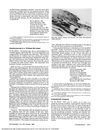 October 1990 in “Archives of Dermatology”
 Hair loss and growth can be accurately measured using computer-assisted counting.
16 citations
,
June 2015 in “The journal of investigative dermatology/Journal of investigative dermatology” The enzyme DHHC13 is essential for healthy hair and skin, and its deficiency leads to hair loss and skin problems.
7 citations
,
August 2023 in “Skin Research and Technology” Scalp conditions change with age, affecting hair health.
 31 citations
,
May 2008 in “Drug Discovery Today: Disease Mechanisms”
31 citations
,
May 2008 in “Drug Discovery Today: Disease Mechanisms” Different hair growth problems are caused by genetic issues or changes in hair growth cycles, and new treatments are being developed.
 5 citations
,
January 2004 in “Annals of Dermatology”
5 citations
,
January 2004 in “Annals of Dermatology” People with androgenetic alopecia (AGA) have lower hair density and more single-hair units compared to those with normal scalps.
3 citations
,
January 2021 in “Medicinski arhiv” Trichoscopy, a hair loss evaluation technique, found that people with Androgenetic Alopecia have more thin hairs, yellow dots, and perifollicular discoloration than healthy individuals.
 January 2001 in “Nishi Nihon hifuka”
 The document concluded that there are differences in hair growth cycles and skin cell turnover rates, which can be measured with electronic equipment.
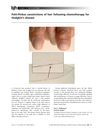 8 citations
,
February 2005 in “British Journal of Haematology”
8 citations
,
February 2005 in “British Journal of Haematology” Chemotherapy caused the patient's hair to have alternating thick and thin segments.
 20 citations
,
January 2015 in “Current problems in dermatology”
20 citations
,
January 2015 in “Current problems in dermatology” Hair gets thinner, grayer, and changes texture with age due to genetics, environment, and cellular changes, affecting the growth cycle.
 3 citations
,
April 2018 in “Cosmetics”
3 citations
,
April 2018 in “Cosmetics” As people get older, they have less active hair growth, but women have thicker hair than men and respond better to hair loss treatments.
January 2015 in “프로그램북(구 초록집)” Trichoscopy effectively diagnoses and assesses hair loss severity in androgenetic alopecia and alopecia areata.