19 citations
,
December 2021 in “Stem Cell Research & Therapy” Muse cells from human bone marrow help reduce symptoms of atopic dermatitis in mice.
January 2010 in “DR-NTU (Nanyang Technological University)” Hair coloring and chlorine change hair strength differently.
 September 2019 in “The journal of investigative dermatology/Journal of investigative dermatology”
 Hair follicles repair 3D injuries using a 2D healing process.
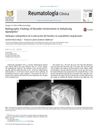 July 2016 in “Reumatología Clínica (English Edition)”
 The patient with Ankylosing Spondylitis had shoulder joint damage and bone changes.
15 citations
,
May 2009 in “Chemical Physics Letters” A new method accurately measures molecular movement without complex modeling.
8 citations
,
May 2005 in “The American journal of dermatopathology/American journal of dermatopathology” The hair defect is due to abnormal inner root sheath keratinization.
 5 citations
,
September 2017 in “Colloids and surfaces. B, Biointerfaces”
5 citations
,
September 2017 in “Colloids and surfaces. B, Biointerfaces” Tying a knot can measure hair friction, useful for medical applications.
May 2024 in “International journal of medicine and psychology.” Active coping improves stress resistance in law enforcement officers.
 2 citations
,
February 2024 in “Nature cell biology”
2 citations
,
February 2024 in “Nature cell biology” Mechanical forces are crucial for shaping cells and forming tissues during development.
 7 citations
,
November 1977 in “JAMA”
7 citations
,
November 1977 in “JAMA” A woman got a serious strep infection from an IUD, likely passed from her husband's infected throat during sexual activity.
 March 2026 in “bioRxiv (Cold Spring Harbor Laboratory)”
 Spiny mice have a unique skin structure that helps them heal and regenerate quickly.
47 citations
,
November 1966 in “Archives of Dermatology” Trichorrhexis nodosa is mainly caused by hair trauma, not a metabolic defect.
July 2025 in “International Journal of Cosmetic Science” A new 6-point scale reliably measures heat damage to hair from styling tools.
The EMG-to-force model accurately predicts hip muscle forces during walking.
99 citations
,
July 2005 in “Ultramicroscopy” The research improved understanding of hair and skin properties across different ethnicities and conditions.
40 citations
,
November 1966 in “Archives of Dermatology” Trichorrhexis nodosa is mainly caused by hair trauma and improves with gentler hair care.
Sensory neuron and Merkel cell changes in the skin happen independently during normal skin maintenance.
 4 citations
,
August 2021 in “Theriogenology”
4 citations
,
August 2021 in “Theriogenology” Neurosteroids play a key role in controlling the brain-adrenal gland activity in pregnant sheep, both in normal and stressful situations.
 37 citations
,
June 2021 in “Journal of the European Academy of Dermatology and Venereology”
37 citations
,
June 2021 in “Journal of the European Academy of Dermatology and Venereology” Adult skin quickly reacts to short-term environmental and internal stress, leading to various skin issues and the need for protective measures.
Genetic factors might cause fibrosing alopecia linked to hair shaft abnormalities.
18 citations
,
June 2010 in “Cell Stress and Chaperones” Heat treatment increases hair loss in certain mice.
2 citations
,
May 2020 in “Journal of the American Academy of Dermatology” Hair shaft changes may be linked to CCCA, but their role is unclear.
 August 2012 in “Nature Cell Biology”
 The tumor suppressor BRCA2 helps in cell division by bringing key proteins to the area where cells split.
 41 citations
,
April 2016 in “Journal of experimental botany”
41 citations
,
April 2016 in “Journal of experimental botany” RACB in barley is crucial for cell polarity and nucleus positioning, aiding fungal infection.
 August 2025 in “International Journal For Multidisciplinary Research”
 Adaptive coping reduces PCOS symptoms, while maladaptive coping worsens them.
 November 2020 in “Journal of The American Academy of Dermatology”
 Fluid viscosity affects fracture design and proppant placement in hydraulic fracturing.
 5 citations
,
March 2009 in “Pediatric Dermatology”
5 citations
,
March 2009 in “Pediatric Dermatology” The study found that pili bifurcati causes hair to intermittently split into two branches, each with its own outer layer.
18 citations
,
September 1994 in “Clinical and Experimental Dermatology” Localized trichorrhexis nodosa is a hair condition where hair becomes fragile and breaks easily due to damage.
27 citations
,
February 1991 Cuticle damage doesn't affect hair's tensile strength; the cortex is responsible for it.