iEdgePathDDA effectively finds new drug-disease links, outperforming other methods.
 6 citations
,
January 2013 in “The Journal of Dermatology”
6 citations
,
January 2013 in “The Journal of Dermatology” Researchers found a new genetic mutation causing a rare hair loss condition in the first Japanese child studied.
13 citations
,
June 2014 in “Molecular therapy” The lentiviral array can monitor and predict gene activity during stem cell differentiation.
July 2026 in “Journal of Investigative Dermatology”  June 2004 in “Dermatologic Surgery”
 Dr. Walter P. Unger suggests that copying a person's natural hair direction and angle during transplants leads to a more natural and fuller appearance.

The document cannot be understood or processed.
 April 2016 in “Proceedings of SPIE”
 UV-induced autofluorescence is effective for identifying different types of alopecia.
 3 citations
,
October 2021 in “Research Square (Research Square)”
3 citations
,
October 2021 in “Research Square (Research Square)” The model can effectively help diagnose meibomian gland dysfunction automatically.
January 2026 in “Diagnostics” Large language models are less accurate than dermatologists in diagnosing trichoscopic images.

The document's conclusion cannot be summarized because the content is not accessible or understandable.
2 citations
,
November 2025 in “Comprehensive Reviews in Food Science and Food Safety” Combining advanced sensors with portable devices could enhance on-site food safety monitoring.
July 2024 in “Journal of Investigative Dermatology” October 1966 in “Archives of Dermatology” A 19-year-old female with alopecia universalis experienced total hair loss, and previous treatments were ineffective.
 27 citations
,
July 1994 in “Human Pathology”
27 citations
,
July 1994 in “Human Pathology” Understanding chaos and control mechanisms in disease can improve diagnosis and prediction in medicine.
 1 citations
,
September 2021 in “Physiology News”
1 citations
,
September 2021 in “Physiology News” The authors suggest standardizing how the heart's electrical axis is calculated to improve precision and consistency in ECG analysis.
27 citations
,
November 2015 in “American Journal of Primatology” Stable isotope analysis of hair helps study primate diets over time non-invasively.
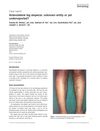 September 2018 in “International Journal of Dermatology”
 Anterolateral leg alopecia is a benign, nonprogressive hair loss condition on the lower legs that is not well understood and may resolve on its own.
 4 citations
,
January 2014 in “International Journal of Trichology”
4 citations
,
January 2014 in “International Journal of Trichology” A 12-year-old boy with a rare genetic condition has progressive hair loss with no effective treatment.
December 1990 in “PubMed” Different glycoconjugates are present in the outer and inner root sheaths of human hair follicles.
2 citations
,
May 2023 in “International Journal of Molecular Sciences” Gene expression in hair follicles can help diagnose methamphetamine use disorder.
 2 citations
,
November 2007 in “Hair transplant forum international”
2 citations
,
November 2007 in “Hair transplant forum international” The conclusion is that hair transplant surgery should use microscopically dissected natural hair groupings and some new terms were suggested for clarity.
Machine learning can improve early and accurate detection of PCOS.
 2 citations
,
May 2021 in “Journal of pharmaceutical and biomedical analysis”
2 citations
,
May 2021 in “Journal of pharmaceutical and biomedical analysis” A new method was developed to accurately detect and measure 47 different drug ingredients in various products.
 April 2019 in “Journal of Investigative Dermatology”
 Non-coding RNA boosts retinoic acid production and signaling, aiding regeneration.
 November 2001 in “Hair transplant forum international”
 The document's conclusion cannot be provided because the document is not readable.
 April 2026 in “Laboratory Animal Research”
 The new Hairless R/J mice model improves imaging for tumor monitoring and cancer therapy evaluation.
 January 2024 in “Dermatology Practical & Conceptual”
 Spotted lunula may help identify alopecia areata.
117 citations
,
September 2003 in “Molecular & cellular proteomics” The technology can help diagnose and subtype autoimmune diseases by identifying specific autoantibodies.
28 citations
,
June 2003 in “Applied immunohistochemistry & molecular morphology” Combining cell conditioning with mild protease digestion effectively shows versican mRNA in mouse skin sections.
 September 2020 in “Research Square (Research Square)”
 Researchers found that certain RNA sequences play a role in yak hair growth and these sequences are somewhat similar to those in cashmere goats.