June 2020 in “Research Square (Research Square)” The study found key long non-coding RNAs involved in yak hair growth cycles.
4 citations
,
February 2018 in “EMBO reports” New DNA analysis and machine learning are advancing forensic science, improving accuracy and expanding into non-human applications.
 November 2006 in “Hair transplant forum international”
 The document's conclusion cannot be summarized because the content is not available.
January 2026 in “Skin Research and Technology” The study's findings on VLDL as a biomarker for hair loss are unreliable.
 April 2023 in “Journal of Investigative Dermatology”
 An automated system can predict death risk in thin melanoma by analyzing immune cells.
 March 1996 in “Hair transplant forum international”
 The document cannot be understood or processed.
 1 citations
,
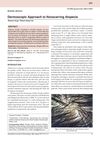
January 2017 in “International Journal of Dermoscopy”
1 citations
,
January 2017 in “International Journal of Dermoscopy” Dermoscopy is useful for identifying and tracking different types of hair loss without scarring.
 May 2026 in “Mendeley Data”
 Hair follicle stem cells and their exosomes help repair nerve injuries.
October 2022 in “Zenodo (CERN European Organization for Nuclear Research)”  November 1993 in “Hair transplant forum international”
 The document's conclusion cannot be provided because the document is not readable or understandable.
 March 2024 in “medRxiv (Cold Spring Harbor Laboratory)”
 Recent selection on immune response genes was identified across seven ethnicities.
 September 2019 in “Journal of Investigative Dermatology”
 Different staff in a dermatology clinic understand mostly their own tasks, not the full clinic process.

Observing someone's physical appearance can give hints about their health, hygiene, and potential medical conditions.
2 citations
,
October 2021 in “JID innovations” Uterine leiomyomas don't significantly change gene expression in the scalp of people with Central Centrifugal Cicatricial Alopecia.
July 2017 in “OPAL (Open@LaTrobe) (La Trobe University)” High-throughput LC-MS screening is effective for finding new autotaxin inhibitors for asthma treatment.
32 citations
,
May 2022 in “Frontiers in Pharmacology” The method effectively predicts new drug uses, including potential COVID-19 treatments.
August 2025 in “Journal of Cosmetic Dermatology” Standardized photos improve hair loss treatment and patient care.
 8 citations
,
January 2013 in “The scientific world journal/TheScientificWorldjournal”
8 citations
,
January 2013 in “The scientific world journal/TheScientificWorldjournal” Human hair follicles may provide a noninvasive way to diagnose diseases and have potential in regenerative medicine.
 July 2013 in “Hair transplant forum international”
 The document's conclusion cannot be provided because the content is not available to parse.
1 citations
,
August 2013 in “Journal of Clinical Epidemiology” The "exposure–crossover design" helps assess individual changes in risk after events like car crashes.
25 citations
,
January 2013 in “Colloids and surfaces. B, Biointerfaces” Hair dye colors mainly target melanin granules in black hair.
 July 2011 in “Oxford University Press eBooks”
 The document's conclusion cannot be determined without content to analyze.
September 2024 in “Annals of Dermatology” A new diagnostic model can help better diagnose and understand Alopecia Areata.

Centralized imaging provides more accurate and consistent hair loss measurements in alopecia areata.
 November 2021 in “World Family Medicine Journal /Middle East Journal of Family Medicine”
 The document's conclusion cannot be provided because the document is not readable or understandable.
5 citations
,
November 2020 in “Forensic Science International Genetics” Using trait prevalence priors in genetic prediction models for appearance traits is currently impractical due to limited knowledge and potential accuracy issues.
 April 2026 in “Frontiers in Pharmacology”
 Many medications may be linked to cognitive disorders, but most lack warnings on labels.
 November 2023 in “Journal of Dermatological Science”
 A new computer tool quickly measures hair thickness differences in people with common types of hair loss.
1 citations
,
October 2000 in “Journal of Investigative Dermatology” The Thr1022Ala variant in the hairless gene is not a disease-causing mutation.
 4 citations
,
December 2017 in “American Journal of Dermatopathology”
4 citations
,
December 2017 in “American Journal of Dermatopathology” Naked hair shafts are significantly associated with scarring hair loss and may help diagnose it, especially when multiple are found.