 June 2022 in “Journal of Experimental Biology and Agricultural Sciences”
 Most E. coli in broiler chickens are resistant to multiple antibiotics.
 May 2024 in “Physiologia Plantarum”
 Bacillus subtilis helps plants get more phosphorus and grow better roots.
January 2025 in “Microorganisms” Using Armillaria strain A541 boosts Polyporus umbellatus yield and polysaccharide content.
1 citations
,
June 2016 in “DOAJ (DOAJ: Directory of Open Access Journals)” The Enterobacter isolate AMS1-S8 is effective for removing selenium from wastewater.
April 2024 in “Iranian Journal of Microbiology” Shallot extract from Palu Valley can effectively kill Salmonella typhi.
 12 citations
,
November 2014 in “Bioscience, Biotechnology, and Biochemistry”
12 citations
,
November 2014 in “Bioscience, Biotechnology, and Biochemistry” Genetically modifying a bacteria and changing its growth conditions significantly increased the production of a chemical called dipicolinic acid.
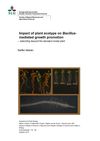 September 2018 in “Epsilon Archive for Student Projects (University of Southampton)”
 Bacillus amyloliquefaciens can boost root hair growth in some Arabidopsis plants, potentially improving agriculture.
Four bacteria from the lab were found to be resistant to selenium.
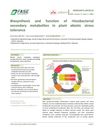 November 2025 in “Frontiers of Agricultural Science and Engineering”
 Rhizobacterial strain RT3 helps lettuce survive drought by producing protective substances like proline.
 January 2025 in “Annals of Dermatology”
 PCA patients have more harmful bacteria and antibiotic resistance, needing specific testing for treatment.
May 2021 in “bioRxiv (Cold Spring Harbor Laboratory)” Calprotectin starves Pseudomonas aeruginosa of essential metals, affecting its growth and resistance.
June 2021 in “International Journal of Biosciences (IJB)” Tridax procumbens flower extracts can kill bacteria.
 7 citations
,
March 2012 in “Journal of Investigative Dermatology”
7 citations
,
March 2012 in “Journal of Investigative Dermatology” Some thymic peptides can increase human hair growth, while others may inhibit it.
66 citations
,
August 2007 in “Applied and environmental microbiology” The engineered yeast strain BLYAS can quickly and sensitively detect androgenic chemicals.
July 2024 in “Journal of Investigative Dermatology” ATR04-484 ointment shows promise for treating skin issues from cancer therapies.
24 citations
,
May 2017 in “Annals of botany” Pathogenic Pseudomonas syringae bacteria stimulate early root hair growth in Arabidopsis plants.
 22 citations
,
August 2019 in “Environmental research”
22 citations
,
August 2019 in “Environmental research” Pseudomonas sp. T5-6-I bacteria increase selenium uptake in Brassica oleracea plants by 130%.
 September 2024 in “Cermin Dunia Kedokteran”
 Improving medical training is key to eradicating frambusia by 2030.
 4 citations
,
March 2019 in “Biodiversitas Journal of Biological Diversity”
4 citations
,
March 2019 in “Biodiversitas Journal of Biological Diversity” Only 5 duku seedlings showed resistance to stem canker, linked to specific mother tree traits.
8 citations
,
February 2025 in “Cell Systems” Engineered bacteria can deliver antioxidants to protect skin.
 6 citations
,
February 2023 in “Plant and Soil”
6 citations
,
February 2023 in “Plant and Soil” Bacillus subtilis strain WM13-24 helps plant root growth through volatile compounds.
3 citations
,
August 2023 in “Molecules” A compound from Sansevieria trifasciata shows strong antibacterial effects against E. coli and S. aureus.
Some bacteria use arsenic compounds as antibiotics, and others have evolved resistance; a particular arsenic-based compound shows potential as a new antimalarial treatment.
 47 citations
,
February 2019 in “Journal of The American Academy of Dermatology”
47 citations
,
February 2019 in “Journal of The American Academy of Dermatology” LGBT individuals have unique skin health needs, including higher STD risks and side effects from gender-affirming treatments, requiring dermatologists to offer knowledgeable and culturally competent care.
 13 citations
,
July 2019 in “Pediatric dermatology”
13 citations
,
July 2019 in “Pediatric dermatology” Pediatric dermatologists need to understand the unique skin health needs of LGBTQIA youth to provide better care.
June 2025 in “Formosa Journal of Sustainable Research” Mangkokan leaf extract can fight bacteria and may help prevent hair loss and treat infections.
 January 2022 in “JPK Jurnal Proteksi Kesehatan”
 Mangkokan leaf extract is more effective against Staphylococcus aureus than Escherichia coli.
May 2018 in “Digital ProScholar Media eBooks” The new fluoroquinolone effectively fights certain bacteria.
1 citations
,
April 2021 in “IOP Conference Series Earth and Environmental Science” Two rice strains showed stable high yield and Zinc content in different climates.
 4 citations
,
September 2017 in “International research journal of pharmacy”
4 citations
,
September 2017 in “International research journal of pharmacy” Banana bract extract might treat bacterial infections and help reduce waste.