 November 2022 in “Journal of Investigative Dermatology”
 Scientists developed a new way to study mutations in a skin condition using blood cells, which may help diagnose and treat the disease.
 3 citations
,
June 2022 in “European journal of human genetics”
3 citations
,
June 2022 in “European journal of human genetics” A new type of pachyonychia congenita linked to a specific keratin gene mutation was found in two Pakistani families.
18 citations
,
January 2018 in “BMC dermatology” A new mutation in the PLEC gene causes a rare condition with skin blistering, muscle weakness, and hair loss.
37 citations
,
August 2024 in “Current Issues in Molecular Biology” Keratins 6, 16, and 17 increase in damaged or diseased skin and may help diagnose skin issues.
 November 2022 in “Journal of Investigative Dermatology”
 Neutrophils quickly respond to skin injury.
 July 2022 in “The journal of investigative dermatology/Journal of investigative dermatology”
 A patient with a PLEC mutation has epidermolysis bullosa, muscular dystrophy, and myasthenia gravis, which improved with steroid treatment.
70 citations
,
March 1997 in “Journal of Investigative Dermatology” 65 citations
,
September 2014 in “Orphanet Journal of Rare Diseases” Different STUB1 gene mutations cause varied symptoms in autosomal recessive ataxias.
December 2021 in “Figshare” BBS7 is crucial for healthy gums and teeth by supporting cell and blood vessel function.
December 2021 in “Figshare” BBS7 is crucial for maintaining healthy gums by regulating important signaling pathways.
July 2026 in “Journal of Investigative Dermatology” 2 citations
,
May 2020 in “The journal of investigative dermatology/Journal of investigative dermatology” A TP63 gene mutation causes significant hair loss and mild skin, nail, and tooth abnormalities.
December 2021 in “Figshare” BBS7 is crucial for maintaining healthy gums through Shh signaling.
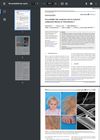 December 2022 in “American journal of medical genetics. Part A”
 A person got uncombable hair syndrome from two copies of chromosome 1 from their mother.
 April 2018 in “Journal of Investigative Dermatology”
 IL-17C is important in inflammatory skin diseases and could be a target for treatment.
61 citations
,
September 1994 in “Journal of Medical Genetics” Pachyonychia congenita is linked to a keratin gene on chromosome 17.
10 citations
,
December 2021 in “Frontiers in Cell and Developmental Biology” BBS7 is essential for healthy gums by supporting cell function and blood flow.
7 citations
,
August 2017 in “Genetic testing and molecular biomarkers” A new mutation in the FLCN gene linked to Birt-Hogg-Dube syndrome was found, suggesting people with certain lung collapse should be tested for this mutation and screened for kidney and colon cancer.
3 citations
,
February 2018 in “Experimental and Molecular Medicine/Experimental and molecular medicine” A protein called PCBP2 controls the production of a hair growth protein by interacting with its genetic message and is linked to hair loss when this control is disrupted.
 3 citations
,
April 2012 in “Bioinformation”
3 citations
,
April 2012 in “Bioinformation” Two specific SNPs in the TRPS1 gene cause excessive hair growth by altering the protein's structure.
May 2005 in “Molecular Carcinogenesis” mrp/plf-mRNA can indicate tumor-promoting effects in skin.
87 citations
,
March 2017 in “Journal of Clinical Investigation” PSENEN gene mutations can cause both Dowling-Degos disease and acne inversa.
December 2021 in “Figshare” BBS7 is essential for healthy gums by supporting cell function and blood flow.
December 2021 in “Figshare” BBS7 is crucial for maintaining periodontal health by supporting Shh signaling.
December 2021 in “Figshare” BBS7 is essential for healthy gums by supporting cell movement and blood flow.
January 2022 in “Mammalian Genome” The wavy coat in NCT mice is caused by multiple genes, including a mutation in the Prss53 gene.
99 citations
,
October 2008 in “Journal of Investigative Dermatology” Mutations in the ST14 gene cause skin and hair issues by disrupting important protein processing.
37 citations
,
January 1993 in “Journal of Investigative Dermatology”  2 citations
,
January 2024 in “Advances in Dermatology and Allergology”
2 citations
,
January 2024 in “Advances in Dermatology and Allergology” S100A7 and IL-17 may contribute to inflammation in lichen planopilaris.
27 citations
,
April 2004 in “Biochemical and Biophysical Research Communications” Two new gene clusters important for hair formation were found on human chromosome 11.