 1 citations
,
February 2021 in “Gastroenterology”
1 citations
,
February 2021 in “Gastroenterology” A woman with inflammatory bowel disease improved after treatment with ustekinumab for a rare skin condition associated with her disease.
 November 2023 in “Anticancer Research”
 Using ultrasound may make cisplatin more effective against cervical cancer in mice.
1 citations
,
January 2016 in “Methods in molecular biology” The method helps estimate and track skin cell growth and movement during healing.
 24 citations
,
November 2008 in “Arquivos Brasileiros de Endocrinologia & Metabologia”
24 citations
,
November 2008 in “Arquivos Brasileiros de Endocrinologia & Metabologia” Four patients with a type of rickets and hair loss had different mutations in their vitamin D receptor gene, causing it to not work properly.
 108 citations
,
December 2003 in “Lasers in surgery and medicine”
108 citations
,
December 2003 in “Lasers in surgery and medicine” ICG-enhanced NIR laser therapy may be a promising acne treatment with improvement and no side effects.
17 citations
,
October 2009 in “Dermatology” Ultraviolet light helped hair growth more effectively than triamcinolone acetonide.
December 2021 in “Cosmetics”  July 2025 in “Journal of Dermatology Research and Therapy”
 Verteporfin may improve hair regrowth and reduce scarring after hair transplants.
 May 2015 in “Journal of The American Academy of Dermatology”
 A heart transplant patient developed a skin condition called epidermodysplasia verruciformis after taking immune-suppressing drugs.
12 citations
,
June 2016 in “Clinical and experimental dermatology” A new genetic mutation in the TRPV3 gene causes Olmsted-like syndrome in a Mongolian family.
March 2023 in “International Journal of Dermatology” Non-itchy rashes can indicate serious diseases like lupus.
July 2025 in “Ultrasound in Medicine & Biology” UTMD with diclofenac and Doxil® improves cancer treatment by boosting immune response and reducing tumor-supporting cells.
 April 2026 in “International Journal of Clinical Case Reports and Reviews”
 A new non-invasive laser system improves chronic disease management and metabolic health.

Vogt–Koyanagi–Harada disease can cause rare hair growth on normally hairless thumb skin.
 January 2025 in “Ginekologia Polska”
 VDR gene variations may affect carbohydrate metabolism in young women with hyperandrogenism.
 June 2024 in “British Journal of Dermatology”
 A rare case of a transplant patient developing a skin condition linked to HPV-49.
August 2023 in “Diagnostics” Ultra-high-frequency ultrasound effectively evaluates the impact of hyaluronic acid fillers in reducing nasolabial fold wrinkles over time.
September 1998 in “Journal of the European Academy of Dermatology and Venereology”  November 2023 in “The journal of investigative dermatology/Journal of investigative dermatology”
 ARQ-234, a protein designed to treat atopic dermatitis, shows increased effectiveness in early testing.
 May 2026 in “Journal of the Egyptian Womenʼs Dermatologic Society”
 Microneedling radiofrequency improves skin texture and tone by stimulating collagen and elastin.
 5 citations
,
January 2018 in “Annals of Dermatology”
5 citations
,
January 2018 in “Annals of Dermatology” A 308 nm excimer laser successfully treated a boy with a rare skin condition after about a year of weekly sessions.
February 2026 in “American Journal of Case Reports” AS-OCT is crucial for diagnosing VZV interstitial keratitis and avoiding unnecessary treatments.
June 2025 in “Rapid Communications in Mass Spectrometry”  19 citations
,
May 1992 in “International Journal of Dermatology”
19 citations
,
May 1992 in “International Journal of Dermatology” Some alternative vitiligo treatments show promise, but none are as effective as psoralens and UVA.

Plant roots respond to fungus smells by possibly using certain proteins and a plant hormone to change root growth, but more research is needed.
 April 2024 in “arXiv (Cornell University)”
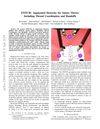
 STITCH improves suture accuracy and efficiency, especially with human help.
10 citations
,
May 2011 in “American Journal of Hematology” Vinblastine can help treat childhood ITP but may cause reversible side effects.
 December 2017 in “Elsevier eBooks”
 The vitamin D receptor helps maintain hair and bone health even without binding vitamin D.
 59 citations
,
January 2013 in “Annals of Dermatology”
59 citations
,
January 2013 in “Annals of Dermatology” Asian hair is more resistant to UV damage due to higher lipid content.
1 citations
,
January 2023 in “Dermatologic Therapy” Macrofocused ultrasound is a safe and effective treatment for reducing enlarged facial pores.