675 nm laser therapy effectively improves hair growth in Indian patients with androgenetic alopecia.
 February 2024 in “International Journal of Molecular Sciences”
 Hair loss in Androgenetic Alopecia is caused by genetics, aging, and lifestyle, leading to hair follicle shrinkage and related health risks.
 January 2018 in “Sohag Medical Journal”
 Combining topical dutasteride with microneedling is more effective for hair growth than microneedling alone.
 2 citations
,
May 2018 in “Australasian Journal of Dermatology”
2 citations
,
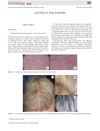
May 2018 in “Australasian Journal of Dermatology” Some patients' hair grew back black and white after chemotherapy.
January 2020 in “Revista Dermatológica Centro Uraga” Recognizing trichoscopic features is crucial for diagnosing various hair loss conditions.
 39 citations
,
November 2017 in “Journal of The American Academy of Dermatology”
39 citations
,
November 2017 in “Journal of The American Academy of Dermatology” The document suggests using standardized methods to track and measure hair loss in alopecia areata, including patient self-assessment and a 50% improvement in specific scores as a treatment goal.
 109 citations
,
May 2011 in “Dermatologic Therapy”
109 citations
,
May 2011 in “Dermatologic Therapy” Alopecia areata is a type of hair loss that can lead to complete baldness, often associated with other autoimmune conditions, and half of the cases may see hair return within a year.
 19 citations
,
January 2011 in “Clinics”
19 citations
,
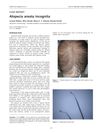
January 2011 in “Clinics” A young woman with a rare hair loss condition improved with steroid and biotin treatment.
 19 citations
,
December 2001 in “Dermatologic Therapy”
19 citations
,
December 2001 in “Dermatologic Therapy” Horizontal scalp biopsy sections are better for diagnosing alopecia areata, showing fewer hair follicles and more miniaturized hairs.
 10 citations
,
December 2020 in “Dermatologic Therapy”
10 citations
,
December 2020 in “Dermatologic Therapy” Minoxidil and spironolactone combo effectively treats androgenetic alopecia, improving hair density and diameter.
 4 citations
,
January 2011 in “Journal of UOEH”
4 citations
,
January 2011 in “Journal of UOEH” Autoimmune hair loss may be linked to increased Th1 and Th17 cells and decreased Th2 cells.
 April 2016 in “Journal of The American Academy of Dermatology”
 The study found that Temporal Triangular Alopecia often starts in early childhood, mainly affects the left side of the scalp, and has no effective treatment except surgery.
 April 2016 in “Journal of The American Academy of Dermatology”
 The study found that Temporal Triangular Alopecia often starts in early childhood, while Folliculitis Decalvans is characterized by tufted hairs and redness around hair follicles.
 April 2016 in “Journal of The American Academy of Dermatology”
 Certain scalp tissue features can predict how well alopecia areata responds to steroid injections.
 March 1985 in “Inpharma (Balgowlah)”
 Minoxidil helps 32% of patients with hereditary baldness regrow hair.
1 citations
,
March 2022 in “Anais brasileiros de dermatologia/Anais Brasileiros de Dermatologia” Trichoscopy helps tell apart hair loss due to alopecia areata from trichotillomania in eyebrows.
 April 2016 in “Journal of The American Academy of Dermatology”
 Different treatments are effective for hair loss conditions, but results vary by individual factors.
 80 citations
,
October 1983 in “BMJ”
80 citations
,
October 1983 in “BMJ” Minoxidil helps hair regrowth in alopecia patients, with 16 having good results and no side effects.
 75 citations
,
May 1986 in “Clinics in endocrinology and metabolism”
75 citations
,
May 1986 in “Clinics in endocrinology and metabolism” Male hormones are important for hair and oil gland development and can cause conditions like excessive hair growth and acne.
 62 citations
,
October 2016 in “Dermatologic Therapy”
62 citations
,
October 2016 in “Dermatologic Therapy” PRP more effective than minoxidil 5% for treating alopecia areata.
 53 citations
,
March 1987 in “Journal of The American Academy of Dermatology”
53 citations
,
March 1987 in “Journal of The American Academy of Dermatology” Minoxidil effectively regrows hair in male pattern baldness.
 36 citations
,
May 2015 in “Australasian Journal of Dermatology”
36 citations
,
May 2015 in “Australasian Journal of Dermatology” Low dose oral minoxidil helps regrow hair in permanent chemotherapy-induced alopecia.
 36 citations
,
January 2015 in “Dermatology”
36 citations
,
January 2015 in “Dermatology” Bimatoprost was found to be safer and more effective than mometasone furoate for treating scalp hair loss.
 35 citations
,
January 2013 in “Indian Journal of Dermatology, Venereology and Leprology”
35 citations
,
January 2013 in “Indian Journal of Dermatology, Venereology and Leprology” Intralesional triamcinolone acetonide is effective for treating patchy hair loss, and dermoscopy helps detect treatment response and side effects early.
 26 citations
,
April 2019 in “Journal of Cosmetic Dermatology”
26 citations
,
April 2019 in “Journal of Cosmetic Dermatology” Herbal alternatives like saw palmetto and green tea may offer safe, effective treatment for hormonal hair loss.
 24 citations
,
February 1987 in “Drugs”
24 citations
,
February 1987 in “Drugs” Minoxidil promotes hair regrowth, but more research needed for effectiveness and response factors.
 19 citations
,
January 1997 in “Endocrinology”
19 citations
,
January 1997 in “Endocrinology” Testosterone can slow hair growth in adult monkeys, but a blocker called RU 58841 can counteract this and potentially help hair regrow.
 18 citations
,
August 2019 in “Drug Development and Industrial Pharmacy”
18 citations
,
August 2019 in “Drug Development and Industrial Pharmacy” Quercetin-loaded nanoparticles can penetrate skin, minimize hair loss, and promote hair regrowth, showing slightly better results than a marketed product.
 13 citations
,
March 2002 in “Pediatric Dermatology”
13 citations
,
March 2002 in “Pediatric Dermatology” A child was initially wrongly diagnosed with a fungal scalp infection but actually had a non-scarring hair loss condition called Temporal Triangular Alopecia.
 7 citations
,
December 2016 in “British Journal of Dermatology”
7 citations
,
December 2016 in “British Journal of Dermatology” The report suggests that hair loss in Cronkhite-Canada syndrome may be caused by alopecia areata incognita, as shown by a patient's improvement with treatment.