1 citations
,
January 2026 in “Journal of the European Academy of Dermatology and Venereology” Vermeer likely omitted eyebrows for style, not due to hair loss.
January 2017 in “DR-NTU (Nanyang Technological University)” Keratin sponges are as biocompatible as collagen, but keratin gels are slightly less so.
31 citations
,
June 2022 in “Scientific Reports” A new imaging method accurately measures burn severity by assessing collagen damage.
 13 citations
,
September 2021 in “Communications Biology”
13 citations
,
September 2021 in “Communications Biology” Co5M offers a new way to observe and understand wound healing without labels.
 September 2016 in “Journal of Dermatological Science”
 A specific mutation known for causing cancer is also found to cause a skin condition in a young girl.
2 citations
,
July 2018 in “Chinese Journal of Dermatology” Sebaceous nevus changes with age, and dermoscopy and RCM are effective for diagnosis.
 December 2023 in “Forensic science international. Genetics”
 The RapidHIT ID system can effectively get DNA profiles from hair roots with enough cells.
12 citations
,
January 1991 in “Acta Dermato Venereologica” Basal cell epithelioma-like changes are most similar to normal basal cells.
 5 citations
,
January 2017 in “Anais brasileiros de dermatologia/Anais Brasileiros de Dermatologia”
5 citations
,
January 2017 in “Anais brasileiros de dermatologia/Anais Brasileiros de Dermatologia” Porokeratotic eccrine and hair follicle nevus is a very rare skin disorder possibly caused by a GJB2 gene mutation.
January 2017 in “British journal of dermatology/British journal of dermatology, Supplement” January 1990 in “Advances in forensic haemogenetics” Human hair protein patterns are inherited genetically.
1 citations
,
May 2022 in “European Journal of Dermatology” Longer treatment with vismodegib lowers relapse risk in basal cell carcinoma.
July 2025 in “OPAL (Open@LaTrobe) (La Trobe University)” Ultrasound and GelMA hydrogel with stem cell vesicles improve skin healing and regeneration.
3 citations
,
August 2017 in “Clinical case reports” A rare skin condition causes red and dark patches on the face and limbs.
158 citations
,
January 2003 in “Journal of Forensic Sciences” Hair testing can detect a single GHB exposure, useful for documenting sexual assault.
 1 citations
,
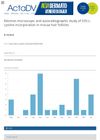
January 1971 in “Acta dermato-venereologica”
1 citations
,
January 1971 in “Acta dermato-venereologica” Mice hair follicles take in the amino acid cystine.
 1 citations
,
January 2001 in “Dermatologic Surgery”
1 citations
,
January 2001 in “Dermatologic Surgery” Pulsed dye laser and hydrogel dressings effectively treat hypertrophic scars.
51 citations
,
January 1997 in “PubMed” GABEB is a less severe skin condition caused by a gene mutation affecting collagen, leading to blisters and other symptoms.
January 2012 in “Heilongjiang xumu shouyi” EGF and KGF affect wool fineness in Gansu alpine Merino sheep.
5 citations
,
May 2001 in “Proceedings of SPIE, the International Society for Optical Engineering/Proceedings of SPIE” The DWLSM provides detailed imaging of hair shafts and follicles with high accuracy.
October 2014 in “Microscopy” The method using ionic liquid improves observation of cell structures with less damage.
September 2022 in “European Journal of Dermatology” Gene sequencing is essential for diagnosing Junctional epidermolysis bullosa.
56 citations
,
November 1958 in “The Journal of Cell Biology” A unique skin cell similar to hair bulb melanocytes was identified, with better preservation using permanganate fixation.
November 2024 in “Journal of Investigative Dermatology”  6 citations
,
January 2014 in “Clinical hemorheology and microcirculation”
6 citations
,
January 2014 in “Clinical hemorheology and microcirculation” Hereditary elliptocytosis causes elongated red blood cells and can lead to mild or no symptoms.
2 citations
,
September 2024 in “Diagnostics” A new method accurately measures cell changes in breast cancer.
 2 citations
,
June 2020 in “Dermatology and therapy”
2 citations
,
June 2020 in “Dermatology and therapy” Narrowband-UVB phototherapy successfully treated a rare case of Graham Little-Piccardi-Lassueur syndrome.
 April 2023 in “Journal of Investigative Dermatology”
 The specific skin disease variant p.(Arg2000Trp) in plectin can cause a wide range of symptoms, which should be considered when diagnosing patients.
 September 2019 in “Journal of Investigative Dermatology”
 Scientists used stem cells to create a model of the skin disease Epidermolysis Bullosa simplex, which helped them understand its molecular mechanisms and could aid in finding treatments.
22 citations
,
January 1990