 January 2019 in “The Review of Laser Engineering”
 Multiphoton excitation microscopy is a promising tool for deep tissue imaging and clinical applications.
 10 citations
,
July 2021 in “Archiv für Pathologische Anatomie und Physiologie und für Klinische Medicin”
10 citations
,
July 2021 in “Archiv für Pathologische Anatomie und Physiologie und für Klinische Medicin” LRIG1 is linked to better survival in Merkel cell carcinoma.
 8 citations
,
February 2005 in “British Journal of Haematology”
8 citations
,
February 2005 in “British Journal of Haematology” Chemotherapy caused the patient's hair to have alternating thick and thin segments.
January 2008 in “Chinese Journal of Spectroscopy Laboratory” Cysteine formation on hair indicates damage, best detected at pH 4.5.
58 citations
,
December 2000 in “Experimental Dermatology” Involucrin is a useful marker for keratinocyte differentiation in mice.
24 citations
,
December 2013 in “Archives of Dermatological Research” March 2026 in “Journal of the mechanical behavior of biomedical materials/Journal of mechanical behavior of biomedical materials” Hair cuticles remain stable and resilient under stress due to strong protein content and crosslinking.
 January 2019 in “SAGE Open Medical Case Reports”
 A scalp biopsy revealed systemic amyloidosis in a woman who initially seemed to have a common hair loss condition.
January 2020 in “Revista Dermatológica Centro Uraga” Recognizing trichoscopic features is crucial for diagnosing various hair loss conditions.
28 citations
,
May 2023 in “Current Opinion in Colloid & Interface Science” 49 citations
,
September 2004 in “Journal of the European Academy of Dermatology and Venereology” Careful light microscopy is crucial for detecting mild cases of pili annulati, which weakens hair and varies widely in expression.
20 citations
,
December 2006 in “Archives of dermatology”  2 citations
,
July 2017 in “IEEE Photonics Journal”
2 citations
,
July 2017 in “IEEE Photonics Journal” The study found that combining SHG and OCT effectively monitors skin wound healing in mice.
 March 2026 in “bioRxiv (Cold Spring Harbor Laboratory)”
 The Enriched-GF method efficiently produces high-yield growth factors for tissue repair.
 1 citations
,
September 2023 in “International Journal of Biological Macromolecules”
1 citations
,
September 2023 in “International Journal of Biological Macromolecules” The hydrogel made from plant polysaccharide and gelatin helps wounds heal faster by absorbing fluids and maintaining a moist healing environment.
 7 citations
,
January 1998 in “EXPERIMENTAL ANIMALS”
7 citations
,
January 1998 in “EXPERIMENTAL ANIMALS” The skin of both rat strains showed similar lectin binding patterns.
 14 citations
,
January 2020 in “International Journal of Biological Sciences”
14 citations
,
January 2020 in “International Journal of Biological Sciences” Multiphoton microscopy can effectively assess breast cancer treatment responses without labels.
A new hydrogel made from human hair keratin can help regenerate skin and fight bacteria.
December 2025 in “Materials Technology” The engineered scaffold shows promise for effective skin repair.
3 citations
,
May 1964 in “Nature” 30 citations
,
April 2009 in “Mycoses” Microsporum gypseum fungus breaks down keratin in hair by digesting it enzymatically, starting with less keratinized parts.
25 citations
,
March 2002 in “Scanning” Confocal microscopy is better than scanning electron microscopy for studying hair in its natural state and understanding hair products' effects.
1 citations
,
October 2010 in “Proceedings of SPIE, the International Society for Optical Engineering/Proceedings of SPIE” The skin fully recovered after using the optical clearing agent, showing no long-term harm.
Trichoepithelioma and desmoplastic trichoepithelioma have distinct features that can be identified using reflectance confocal microscopy.
2 citations
,
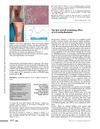
September 2017 Laser Lax is a new tool that measures scalp looseness accurately and comfortably.
 3 citations
,
November 2011 in “European Journal of Dermatology”
3 citations
,
November 2011 in “European Journal of Dermatology” 4-O-methylhonokiol from Magnolia officinalis significantly promotes hair growth.
46 citations
,
April 2005 in “Melanoma Research”  12 citations
,
February 2008 in “Journal of The American Academy of Dermatology”
12 citations
,
February 2008 in “Journal of The American Academy of Dermatology” Combining skin tissue pathology with genetics has greatly improved the diagnosis and understanding of certain skin diseases.
25 citations
,
January 2006 in “Journal of the European Academy of Dermatology and Venereology” A new technique effectively treats and diagnoses eruptive vellus hair cysts without recurrence.
 March 2026 in “Science China Materials”
 SeV-Tp speeds up healing of drug-resistant infections by targeting wounds and killing bacteria with light activation.