 11 citations
,
March 2020 in “Immunology”
11 citations
,
March 2020 in “Immunology” Human prenatal skin develops an immune network early on that helps with skin formation and healing without scarring.
 June 2023 in “Animal Bioscience”
 Vimentin and transthyretin proteins are linked to black coat color in sheep.
June 2026 in “Indian Dermatology Online Journal” A supernumerary nipple was correctly identified using dermoscopy, avoiding misdiagnosis.
 33 citations
,
December 2004 in “Differentiation”
33 citations
,
December 2004 in “Differentiation” Mouse amnion can turn into skin and hair follicles with help from certain cells and factors.
 7 citations
,
December 2011 in “Annals of anatomy”
7 citations
,
December 2011 in “Annals of anatomy” Involucrin helps strengthen the inner parts of human hair.
73 citations
,
January 2016 in “International review of cell and molecular biology” Cornification evolved from keratinization in vertebrates, with differences between mammals and sauropsids.
IVIG and dupilumab effectively improved symptoms in a child with Netherton syndrome.
20 citations
,
September 2004 in “Journal of Anatomy” The inner root sheath evolved to help hair grow safely through the skin in mammals.
9 citations
,
April 1985 in “Archives of Dermatology” Recognizing the "bamboo hair defect" is crucial for diagnosing Netherton's syndrome.
 1 citations
,
June 2020 in “bioRxiv (Cold Spring Harbor Laboratory)”
1 citations
,
June 2020 in “bioRxiv (Cold Spring Harbor Laboratory)” Fetal skin has unique immune cells different from adult skin.
 103 citations
,
March 2011 in “PLoS Biology”
103 citations
,
March 2011 in “PLoS Biology” Birds can lose neck feathers due to a genetic change that increases a gene's activity, helping them adapt to heat.
41 citations
,
October 2001 in “Experimental Dermatology” The nude gene is important for skin and hair development.
8 citations
,
July 2004 in “Journal of morphology” Marsupial hair structure and keratin distribution are similar to placental mammals.
 4 citations
,
January 2014 in “Indian dermatology online journal”
4 citations
,
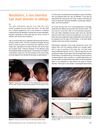
January 2014 in “Indian dermatology online journal” Monilethrix is a genetic hair disorder causing fragile, beaded hair with no effective treatment.
 5 citations
,
November 2024 in “Journal of Clinical Immunology”
5 citations
,
November 2024 in “Journal of Clinical Immunology” Dupilumab effectively controls symptoms in infants with Netherton syndrome.
24 citations
,
July 1994 in “Journal of Investigative Dermatology” June 2026 in “Case Reports in Dermatology” Dupilumab improved hair and skin in a woman with Netherton syndrome.
December 2015 in “European Journal of Pediatric Dermatology” Newborns can experience temporary hair loss in bands, unrelated to sleeping position.
 January 2021 in “Journal of Entomology and Zoology Studies”
 The piglets fully recovered from psoroptic mange after treatment.
82 citations
,
January 2006 in “International review of cytology” Vertebrate skin evolved to be more specialized and complex, especially in land animals.
23 citations
,
January 2023 in “Journal of Developmental Biology” Reptile skin protects and prevents water loss, helping them adapt to land.
11 citations
,
June 1994 in “Journal of Investigative Dermatology” 56 citations
,
October 2010 in “Pediatric Clinics of North America” Epidermal nevi are skin cell clusters linked to various syndromes.
1 citations
,
January 2012 in “International journal of trichology” Sheep hair follicle cells can grow a lot but need the dermal papilla to do so.
 86 citations
,
October 2005 in “Experimental Dermatology”
86 citations
,
October 2005 in “Experimental Dermatology” The Foxn1 gene mutation causes hairlessness and immune system issues, and understanding it could lead to hair growth disorder treatments.
34 citations
,
January 1998 in “Archiv für Pathologische Anatomie und Physiologie und für Klinische Medicin” Trichoblastomas may mimic fetal skin development by having many Merkel cells, unlike adult skin.
 71 citations
,
February 2006 in “Clinics in Dermatology”
71 citations
,
February 2006 in “Clinics in Dermatology” Pregnancy causes skin changes like darkening, hair thickening, nail changes, and increased risk of skin growths, most of which usually resolve after birth.
 40 citations
,
February 1990 in “Journal of The American Academy of Dermatology”
40 citations
,
February 1990 in “Journal of The American Academy of Dermatology” A 17-year-old developed woolly hair nevus in adolescence, which is unusual, and over time the hair darkened and straightened slightly, but microscopic changes persisted.
5 citations
,
January 1993 in “PubMed” Retinoic acid can change skin structures in vertebrates, like turning scales into feathers or hair buds into glands.
1 citations
,
June 2016 in “Medicina” Monilethrix is a genetic disorder causing brittle hair, diagnosed using tricoscopy.