March 2014 in “The Journal of Urology” Finasteride increases CD8+ T cells in BPH tissues.
 1 citations
,
January 2013 in “The Journal of Dermatology”
1 citations
,
January 2013 in “The Journal of Dermatology” A skin condition called pyodermatitis vegetans was found in a patient with multiple myeloma for the first time.
August 2025 in “BMC Pharmacology and Toxicology” The LTF gene may help predict and manage nonspecific orbital inflammation.
April 2019 in “Journal of Investigative Dermatology” The humanized AA mouse model is better for testing new alopecia areata treatments.
 June 2021 in “bioRxiv (Cold Spring Harbor Laboratory)”
 The gene Tfap2b is essential for creating a type of stem cell in zebrafish that can become different pigment cells.
 March 2025 in “Future Oncology”
 Sacituzumab govitecan improves quality of life and extends life for breast cancer patients compared to standard chemotherapy.
9 citations
,
April 2024 in “The Oncologist” Sacituzumab govitecan improves quality of life and symptoms in breast cancer patients, except for causing more diarrhea.
9 citations
,
December 1996 in “Cell Biology and Toxicology” Hair follicle cells produce VEGF, which can promote blood vessel cell growth and movement.
April 2017 in “The journal of investigative dermatology/Journal of investigative dermatology” Topical Vorinostat shows promise for treating alopecia areata by promoting hair regrowth.
115 citations
,
December 2001 in “Endocrinology” Expressing the human vitamin D receptor in skin cells prevents hair loss in certain mice.
 October 2024 in “Stem Cell Research & Therapy”
 CGF therapy may effectively treat psoriasis by reducing inflammation.
 April 2023 in “The journal of investigative dermatology/Journal of investigative dermatology”
 People with alopecia areata have fewer IL-10 producing immune cells, which might contribute to the condition.
 129 citations
,
January 2007 in “Otology & Neurotology”
129 citations
,
January 2007 in “Otology & Neurotology” Gene therapy with the Math1 gene helped regenerate balance-related cells and improve balance in mice.
 27 citations
,
April 2018 in “Scientific Reports”
27 citations
,
April 2018 in “Scientific Reports” Psoriasis patients' immune response to a hair protein depends on their specific gene type.
 1 citations
,
June 2001 in “Annals of Internal Medicine”
1 citations
,
June 2001 in “Annals of Internal Medicine” Troglitazone increases subcutaneous fat in lipodystrophy patients.
 28 citations
,
November 2019 in “Gene”
28 citations
,
November 2019 in “Gene” The ITGB6 gene is important for tissue repair and hair growth, and mutations can lead to enamel defects and other health issues.
23 citations
,
March 1958 in “JNCI Journal of the National Cancer Institute” Male-to-female skin grafts in mice are rejected due to sex-linked antigens.
Atopy and altered T cell functions contribute to Alopecia Areata.
 January 2025 in “Open Life Sciences”
 Overexpression of the HE4 gene in mice causes eye inflammation and cloudiness.
1 citations
,
January 2023 in “Annals of Indian Academy of Neurology” Recognizing CVG can help diagnose systemic amyloidosis early.
29 citations
,
September 1942 in “Archives of ophthalmology” Vogt-Koyanagi syndrome often leads to partial or complete blindness and responds poorly to treatment.
18 citations
,
October 2013 in “Stem Cell Research & Therapy” A specific combination of chemicals effectively expands genetically modified skin cells for potential use in skin therapy.
 4 citations
,
January 2015 in “Hair therapy & transplantation”
4 citations
,
January 2015 in “Hair therapy & transplantation” Hair follicle stem cells could be used to treat the skin condition vitiligo.
 1 citations
,
June 2023 in “Journal of steroid biochemistry and molecular biology/The Journal of steroid biochemistry and molecular biology”
1 citations
,
June 2023 in “Journal of steroid biochemistry and molecular biology/The Journal of steroid biochemistry and molecular biology” Vitamin D helps skin stem cells heal wounds by working with a key skin protein.
4 citations
,
September 2011 in “Journal of the American Academy of Dermatology” A man developed a skin cancer called folliculotropic mycosis fungoides after a kidney transplant.
 6 citations
,
April 1996 in “Journal of histochemistry and cytochemistry/The journal of histochemistry and cytochemistry”
6 citations
,
April 1996 in “Journal of histochemistry and cytochemistry/The journal of histochemistry and cytochemistry” TGF-alpha is present in sheep and ferret skin and may affect hair growth without directly stimulating cell proliferation.
 19 citations
,
March 1997 in “Journal of Cutaneous Pathology”
19 citations
,
March 1997 in “Journal of Cutaneous Pathology” Alopecia areata involves specific T-cells, unlike androgenetic alopecia.
 2 citations
,
June 2018 in “Clinical and Experimental Dermatology”
2 citations
,
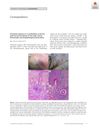
June 2018 in “Clinical and Experimental Dermatology” Permanent hair loss after a stem cell transplant can be a sign of chronic immune system attack on the scalp.
September 2025 in “Immunological Reviews” The skin can independently form immune responses through special structures, offering new ways to treat skin diseases.
 3 citations
,
September 2023 in “Advanced science”
3 citations
,
September 2023 in “Advanced science” A new vaccine using a porous scaffold boosts immunity and protects against the flu better than traditional methods.