 January 2015 in “Turkiye Klinikleri Journal of Dermatology”
 Peripilar keratin casts are a helpful sign for diagnosing traction alopecia.
 25 citations
,
December 2008 in “Journal of Dermatological Case Reports”
25 citations
,
December 2008 in “Journal of Dermatological Case Reports” Skin color may change how alopecia areata looks under a dermoscope.
 8 citations
,
November 2021 in “The Journal of Dermatology”
8 citations
,
November 2021 in “The Journal of Dermatology” The article simplifies trichoscopy terms and offers a new diagnostic flowchart.
January 1995 in “Revista de arqueología” 1 alpha,25-dihydroxy-vitamin D3 and calcipotriol speed up cell differentiation in hair follicles.
 2 citations
,
September 2021
2 citations
,
September 2021 The COVID-19 pandemic increased the use of teledermatology to treat skin conditions in low-income areas, despite challenges like poor photo quality.
 22 citations
,
February 2008 in “Journal of Dermatological Science”
22 citations
,
February 2008 in “Journal of Dermatological Science” EPR spectroscopy showed that spontaneous hair growth results in thicker skin and less pigmented hair than depilation-induced growth.
13 citations
,
January 1985 in “International Journal of Dermatology” The document found differences in lesion distribution and microscopic features among trichostasis spinulosa and similar skin conditions.
45 citations
,
May 1992 in “Journal of Investigative Dermatology” January 2016 in “Georg Thieme Verlag eBooks” Understanding and careful application of dermabrasion and microdermabrasion can minimize risks and improve patient outcomes.
 71 citations
,
March 1995 in “Journal of The American Academy of Dermatology”
71 citations
,
March 1995 in “Journal of The American Academy of Dermatology” Using both vertical and transverse sections for alopecia biopsies improves diagnosis without extra cost.
June 2026 in “Journal of Cutaneous Pathology” Polarized light microscopy is better at distinguishing scarring from non-scarring alopecia than diffractive microscopy.
November 2023 in “Veterinary Dermatology” December 2023 in “JEADV Clinical Practice” Brownish halos around axillary hair can help diagnose frontal fibrosing alopecia.
18 citations
,
June 1993 in “Archives of Dermatological Research” Human hair follicles can be used to create skin-like tissue for wound healing and drug testing.
January 2010 in “Computerized Tomography Theory and Applications” Dermoscopy image analysis is a simple, effective way to evaluate hair growth and product efficacy.
 5 citations
,
October 2021 in “Vlaams Diergeneeskundig Tijdschrift”
5 citations
,
October 2021 in “Vlaams Diergeneeskundig Tijdschrift” The protocol is easy to use, but reliable results need the same person to assess each time.
1 citations
,
August 2025 in “Medicina” Non-invasive imaging techniques improve scalp condition diagnosis and patient quality of life.
 June 2023 in “Pediatric investigation”
 A boy's scalp infection, usually found on the body, was effectively treated with antifungal cream.
 36 citations
,
August 2017 in “Journal of Cosmetic Dermatology”
36 citations
,
August 2017 in “Journal of Cosmetic Dermatology” PRP with microneedling effectively treats hair loss, and dermoscopy helps evaluate results.
February 2018 in “Dermatologic Surgery” 11 citations
,
January 2017 in “Skin Appendage Disorders” Use lower concentrations of triamcinolone acetonide to reduce steroid-induced scalp atrophy.
4 citations
,
November 2024 in “British Journal of Nursing” The article guides practitioners on how to effectively assess skin problems.
 13 citations
,
July 2007 in “Pediatric dermatology”
13 citations
,
July 2007 in “Pediatric dermatology” Vitamin D3 ointment improved skin bumps on the chin but didn't give lasting results after stopping use.
 May 2015 in “Actas Dermo-Sifiliográficas”
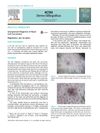
 A young man was unexpectedly diagnosed with basal cell carcinoma after a scalp examination and confocal microscopy.
January 2013 in “INTAS POLIVET” Vitamin A supplements improved skin and health issues in dogs.
73 citations
,
January 2004 in “Journal of the American Academy of Dermatology” Immunocompromised patients can develop skin and hair issues due to a virus.
 June 2026 in “Barind Medical College Journal”
 Misuse of topical steroids worsens skin infections, causing unusual and severe symptoms.
 January 2016 in “Experimental Dermatology”
 New findings suggest potential treatments for melanoma, hyperpigmentation, hair defects, and multiple sclerosis, and show skin microbiome changes don't cause atopic dermatitis.
January 2021 in “Skin Appendage Disorders”  August 2024 in “Nihon Ika Daigaku Igakkai Zasshi”
 The study made scar tissue transparent to better understand its structure.