 November 2025 in “Journal of Disease and Public Health”
 Post-COVID-19 syndrome is complex, affects 5%-10% of people, and requires better research and global collaboration for treatment.
 November 2025 in “Clinical Cosmetic and Investigational Dermatology”
 Tattoos may trigger autoimmune symptoms in some people.

A stable sheep ovarian cell line was created for studying reproduction and hormones.
 August 2025 in “Frontiers in Pharmacology”
 [6]-Gingerdiol 3-monoacetate shows promise for treating T. whipplei infections.
 April 2025 in “International Journal of General Medicine”
 The G allele of IFITM3 rs12252 is linked to more severe COVID-19.
 March 2025 in “MINAR International Journal of Applied Sciences and Technology”
 Certain genes can predict how well breast cancer patients respond to chemotherapy.
 February 2025 in “International Journal of Research in Medical Sciences”
 Reinfection patients had more physical complications, while initial infection patients had more mental health issues.
 February 2025 in “Physician s Journal of Medicine”
 Recognizing skin symptoms can help diagnose and manage COVID-19.
 January 2025 in “Epsilon Archive for Student Projects (University of Southampton)”
 Mange and orf are present in some goat herds in Zambia, but more research is needed.
 December 2024 in “Indian Journal of Veterinary Public Health”
 Argentine-cross polo ponies commonly develop sarcoid tumors with distinct types and histopathological features.
 November 2024 in “Karnataka Pediatric Journal”
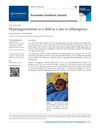
 Chikungunya can cause hyperpigmentation in children and should be considered in diagnosis.
 October 2024 in “Open Repository of the University of Porto (University of Porto)”
 Pharmacists play a crucial role in personalized care and medication management.
 September 2024 in “World Journal of Advanced Research and Reviews”
 COVID-19 can harm many body parts, not just the lungs.
 August 2024 in “Revista Científica Multidisciplinar Núcleo do Conhecimento”
 Malassezia restricta may be linked to intestinal diseases like Crohn's and ulcerative colitis.
 June 2024 in “International Journal of Research in Ayurveda and Pharmacy”
 Ayurveda suggests a healthy lifestyle and specific treatments can help prevent and treat hair problems.
 June 2024 in “Archives of dermatological research”
 Dietary supplements might help prevent post-COVID hair loss, but serum ferritin is not a reliable indicator.

The method creates realistic, anonymous acne face images for research, achieving 97.6% accuracy in classification.
 April 2024 in “Cell death and disease”
 Long COVID causes various long-term health issues and needs better awareness and treatment.
 March 2024 in “Sudan Journal of Medical Sciences”
 Many doctors lack knowledge about COVID-19 skin symptoms and need better education and guidelines.
 February 2024 in “Recima21”
 Covid-19 can cause hair loss due to immune and psychological factors.
 February 2024 in “Curēus”
 Long COVID is more common in those with severe initial infections, but not linked to blood group.
 January 2024 in “International Journal of Biology Sciences”
 Targeted interventions based on gender, education, and age can improve COVID-19 healthcare responses.
 January 2024 in “Clinical and Experimental Vaccine Research”
 Rabies vaccine might cause hair loss due to immune issues.
 December 2023 in “Curēus”
 COVID-19 vaccination does not significantly increase the risk of developing alopecia areata.
 December 2023 in “Y Dược học”
 Older adults in Vietnam often experience hair loss after COVID-19, especially women, singles, and those hospitalized.
 November 2023 in “The Bovine practitioner”
 A bull got very sick and had to be put down after eating hairy vetch for months.
 November 2023 in “Martor”
 People still turn to witchcraft for help with modern problems despite technological advances.
 October 2023 in “Dermatology practical & conceptual”
 Many patients experienced hair loss after COVID-19, with women affected more, starting on average 49 days post-infection.
 October 2023 in “Frontiers in medicine”
 Comprehensive screening for infections is crucial before starting JAK inhibitors in alopecia areata patients.
 October 2023 in “Clinical medicine and medical research”
 Thyroid function may influence hair loss after COVID-19.