Search
for
Sort by
Research
660-690 / 1000+ results
research 25 Hydroxyvitamin D 1 α-Hydroxylase Is Required for Optimal Epidermal Differentiation and Permeability Barrier Homeostasis
The enzyme 25 Hydroxyvitamin D 1 α-Hydroxylase is essential for healthy skin and recovery after skin damage.
research MON-369 Treatment of Nonclassic 11-Hydroxylase Deficiency with "Hair, Skin, and Nails," an Over-the-Counter, Insulin Sensitizing Vitamin/Mineral Supplement
An over-the-counter vitamin/mineral supplement improved hair loss and blood sugar control in a woman with non-classic 11-hydroxylase deficiency.
research Extrarenal Expression of 25-Hydroxyvitamin D3-1α-Hydroxylase1
The enzyme for activating vitamin D is found in many body tissues, not just the kidneys.

research Microscopic high-resolution digital volumetric imaging of human hair fibers
DVI provides detailed 3D imaging of hair and shows how various products protect and enhance hair.
research 42587 M89PF contains Vichy volcanic mineralizing water and probiotic fractions and is beneficial in facial skin stressed by ablative procedures and facial skin manifestations: results from an observational study performed in Southeast Asia
research The vitamin D receptor, the skin and stem cells
Vitamin D receptor is crucial for healthy hair growth and preventing hair loss.

research Trichotillomania associated with a 25-hydroxy vitamin D deficiency: A case report
Vitamin D supplements may reduce hair-pulling in people with Trichotillomania.
research Hereditary vitamin D rickets: a case series in a family
Three siblings with a genetic form of rickets showed different symptoms of the disease.
research Comment on: Serum Vitamin D3 levels and diffuse hair fall among the student population in South India: A case–control study
Vitamin D supplements might help reduce hair fall.
research Pathogenesis of Chemical Leukoderma and Chemical‐Induced Vitiligo
Chemical leukoderma is temporary, while chemical-induced vitiligo can be persistent and harder to treat.

research The role of zinc in skin physiology – relevance for the pathogenesis and treatment of vitiligo
Zinc may be linked to vitiligo development and severity, but its role is not fully understood and zinc supplementation benefits are unclear.

research Hereditary vitamin D resistant rickets (HVDRR) case series: phenotype, genotype, conventional treatment, and adjunctive cinacalcet therapy
Cinacalcet may help treat hereditary vitamin D resistant rickets safely.
research Prevalence of Cobalt in the Environment and Its Role in Biological Processes
Cobalt is important for health but too much or too little can cause health problems, and its environmental buildup is a concern.

research Intracranial hypertension secondary to low doses of vitamin A
Long-term low-dose Vitamin A intake may cause increased brain pressure.

research Combination Therapy with Baricitinib and Narrowband Ultraviolet B for Active Non-Segmental Vitiligo: A Retrospective Controlled Study
Combining baricitinib with UV-B therapy effectively treats non-segmental vitiligo and is well-tolerated.
research Valproate-acid-induced cutaneous leukocytoclastic vasculitis.
Valproic acid can cause a skin condition called leukocytoclastic vasculitis, which usually gets better after stopping the drug.

research PSAT217 Estrogen Deficiency as a Cause of Decreased 1- alpha - hydroxylase Activity
Estrogen deficiency can reduce the enzyme activity needed to activate vitamin D.
research Vitamin D and calcium signaling in epidermal stem cells and their regeneration
Vitamin D and calcium are important for skin stem cell function and wound healing.

research Association between Vitamin D Deficiency and Psoriasis: A Case-Control Study
The study found no link between vitamin D deficiency and psoriasis but suggests more research is needed.
research A Humanized Mouse Model of Hereditary 1,25-Dihydroxyvitamin D–Resistant Rickets Without Alopecia
Researchers created a mouse model of a type of rickets that does not cause hair loss.

research Relationship between the level of vitamin D in bloof flow and skin dermatosis
Low vitamin D levels are linked to more skin problems.
research Regulation of VDR by ΔNp63α is associated with inhibition of cell invasion
ΔNp63α helps control a protein that stops cancer cells from spreading.

research The Role of Topical Vitamin D in Vitiligo: A Narrative Literature Review
Topical vitamin D is effective in treating vitiligo with few side effects.
research Hereditary 1,25‐Dihydroxyvitamin D–Resistant Rickets Due to an Opal Mutation Causing Premature Termination of the Vitamin D Receptor
A specific gene mutation causes vitamin D-resistant rickets and hair loss.
research Physiological Importance of the Vitaminoid Thiocyanate and Its Influence on Hair Growth
Thiocyanate helps hair growth and can be supplemented in diet or applied topically.
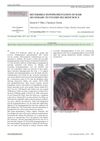
research Reversible hypopigmentation of hair secondary to Vitamin B12 deficiency
Vitamin B12 deficiency can cause reversible hair color loss in children.
research Association between Serum Brain-derived Neurotrophic Factor and 25-OH Vitamin D Levels with Vitamin D Receptors Gene Polymorphism (rs2228570) in Patients with Autoimmune Thyroiditis and Hypothyroidism
The VDR gene polymorphism does not affect BDNF levels in autoimmune thyroiditis and hypothyroidism patients.
research Review of the Literature: Vitamin D and hair: should we care after all?
Vitamin D might help with hair growth and hair loss treatments.

research Scorbut atypique associé à une anorexie mentale
A woman with anorexia improved significantly after being treated for scurvy with vitamin C, despite not showing typical scurvy symptoms.