
Vitamin D deficiency and altered lipid metabolism may contribute to female hair loss.
May 2023 in “Minia Journal of Medical Research” Vitamin D levels in hair and serum are similar for males and females.
May 2021 in “Indian journal of forensic medicine and toxicology” Females with androgenic alopecia have significantly lower vitamin D3 and ferritin levels.
The levels of zinc, vitamin D, ferritin, and selenium are different in people with androgenic alopecia compared to a control group.
 July 2023 in “Dermatology practical & conceptual”
 Low hemoglobin levels are significantly correlated with hair loss in women with Telogen Effluvium.
 7 citations
,
January 2013 in “Journal of Investigative Dermatology”
7 citations
,
January 2013 in “Journal of Investigative Dermatology” Vitamin A may influence hair loss conditions like alopecia, but more research is needed to understand how.
 August 2024 in “IAHS Medical Journal”
 Low vitamin D and ferritin levels are linked to female hair loss.
 29 citations
,
December 2017 in “International Journal of Dermatology”
29 citations
,
December 2017 in “International Journal of Dermatology” People with alopecia areata often have lower vitamin D levels, which are linked to more severe and longer-lasting hair loss, but vitamin D receptor levels in the skin don't show the same pattern and don't predict treatment success.
 24 citations
,
November 2008 in “Arquivos Brasileiros de Endocrinologia & Metabologia”
24 citations
,
November 2008 in “Arquivos Brasileiros de Endocrinologia & Metabologia” Four patients with a type of rickets and hair loss had different mutations in their vitamin D receptor gene, causing it to not work properly.
 7 citations
,
June 2019 in “Fayoum University Medical Journal/Fayoum University Medical Journal ”
7 citations
,
June 2019 in “Fayoum University Medical Journal/Fayoum University Medical Journal ” PRP combined with vitamin D improves vitiligo more effectively than vitamin D alone.
 59 citations
,
April 2016 in “Breast Cancer Research and Treatment”
59 citations
,
April 2016 in “Breast Cancer Research and Treatment” Targeting vitamin D and androgen receptors may effectively treat triple-negative breast cancer, especially with chemotherapy.
 13 citations
,
December 2012 in “Frontiers in bioscience”
13 citations
,
December 2012 in “Frontiers in bioscience” Vitamin D and estrogen may help protect heart and kidney health, and maintaining sufficient vitamin D levels could be especially beneficial for African Americans, postmenopausal women, and people with chronic kidney disease.
 12 citations
,
January 2016 in “Journal of Clinical and Investigative Dermatology”
12 citations
,
January 2016 in “Journal of Clinical and Investigative Dermatology” Low vitamin D levels are common in people with Alopecia Areata.
 4 citations
,
April 2020 in “Journal of Cosmetic Dermatology”
4 citations
,
April 2020 in “Journal of Cosmetic Dermatology” Low vitamin D levels are linked to different types of hair loss.
 4 citations
,
January 2017 in “Journal of pediatric endocrinology & metabolism/Journal of pediatric endocrinology and metabolism”
4 citations
,
January 2017 in “Journal of pediatric endocrinology & metabolism/Journal of pediatric endocrinology and metabolism” Two different mutations in the vitamin D receptor gene cause different symptoms and responses to treatment in Lebanese patients with hereditary rickets.
 3 citations
,
January 1992 in “Clinical Pediatric Endocrinology”
3 citations
,
January 1992 in “Clinical Pediatric Endocrinology” Patients with the same vitamin D receptor mutation showed different symptoms due to other factors.
 1 citations
,
November 2022 in “World Family Medicine Journal /Middle East Journal of Family Medicine”
1 citations
,
November 2022 in “World Family Medicine Journal /Middle East Journal of Family Medicine” People in Jeddah know about Vitamin D and its sources but are unclear on how much they need daily, and while many women take supplements, attitudes towards increasing Vitamin D levels vary.
 November 2025 in “Khalij-Libya Journal of Dental and Medical Research”
 Hair loss is linked to low levels of zinc, vitamin D, and ferritin.
 September 2025 in “Journal of Dhaka Medical College”
 Lower vitamin D levels are linked to more severe alopecia areata.
 March 2025 in “Institutional Repositories DataBase (IRDB)”
 The testes significantly contribute to vitamin D metabolism and may affect male reproductive health and conditions like hair loss.
 August 2023 in “İzmir tepecik eğitim hastanesi dergisi”
 Vitamin D levels do not significantly relate to the causes of PCOS or DOR in infertile patients.

Vitamin D is crucial for skin health and managing skin diseases.
 January 2022 in “Medical research archives”
 Taking vitamin D might improve life for MS patients and reduce skin side effects from alemtuzumab treatment.
 February 2018 in “Egyptian Journal of Radiation Sciences and Applications”
 Patients with Discoid Lupus Erythematosus have lower vitamin D and antioxidant levels and higher oxidative stress.
 January 2017 in “Journal of clinical & experimental dermatology research”
 Low ferritin levels might be linked to telogen effluvium, but vitamin D levels are not.
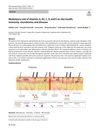 47 citations
,
September 2023 in “Pharmacological Reports”
47 citations
,
September 2023 in “Pharmacological Reports” Vitamins A, B3, C, D, and E can improve skin health and immunity.
 158 citations
,
August 2011 in “Reviews in endocrine and metabolic disorders”
158 citations
,
August 2011 in “Reviews in endocrine and metabolic disorders” Vitamin D and its receptor regulate skin functions like cell growth, immunity, hair cycle, and tumor prevention.
 119 citations
,
July 2016 in “Annals of the New York Academy of Sciences”
119 citations
,
July 2016 in “Annals of the New York Academy of Sciences” Vitamin D has potential benefits for cancer prevention, heart health, diabetes, obesity, muscle function, skin health, and immune function, but clinical results are mixed and more research is needed.
 11 citations
,
January 2011 in “Turkish Journal of Medical Sciences”
11 citations
,
January 2011 in “Turkish Journal of Medical Sciences” Low iron levels are a significant risk factor for hair loss, while high vitamin D levels might be a response to hair loss, not a cause.
 4 citations
,
July 2019 in “IOP conference series”
4 citations
,
July 2019 in “IOP conference series” Most young men with early gray hair have low vitamin D but normal iron levels.