 47 citations
,
September 2023 in “Pharmacological Reports”
47 citations
,
September 2023 in “Pharmacological Reports” Vitamins A, B3, C, D, and E can improve skin health and immunity.
 37 citations
,
June 2018 in “Clinical and Experimental Medicine”
37 citations
,
June 2018 in “Clinical and Experimental Medicine” People with alopecia areata often have lower vitamin D levels and more inflammation, suggesting vitamin D might be involved in the condition.
 29 citations
,
December 2017 in “International Journal of Dermatology”
29 citations
,
December 2017 in “International Journal of Dermatology” People with alopecia areata often have lower vitamin D levels, which are linked to more severe and longer-lasting hair loss, but vitamin D receptor levels in the skin don't show the same pattern and don't predict treatment success.
 28 citations
,
March 2017 in “Endocrinology”
28 citations
,
March 2017 in “Endocrinology” Removing vitamin D and calcium receptors in mice skin cells slows down skin wound healing.
 20 citations
,
September 2013 in “Anti-Cancer Drugs”
20 citations
,
September 2013 in “Anti-Cancer Drugs” PTH-CBD could help prevent and treat hair loss caused by chemotherapy in mice.
 14 citations
,
November 2005 in “Life sciences”
14 citations
,
November 2005 in “Life sciences” Vitamin D3 may protect rat hair follicles from radiation damage.
 13 citations
,
December 2012 in “Frontiers in bioscience”
13 citations
,
December 2012 in “Frontiers in bioscience” Vitamin D and estrogen may help protect heart and kidney health, and maintaining sufficient vitamin D levels could be especially beneficial for African Americans, postmenopausal women, and people with chronic kidney disease.
 11 citations
,
June 2012 in “Archives of Dermatological Research”
11 citations
,
June 2012 in “Archives of Dermatological Research” L-cystine and vitamin B6 at high doses prevented hair loss in mice treated with a chemotherapy drug.
 11 citations
,
January 2011 in “Turkish Journal of Medical Sciences”
11 citations
,
January 2011 in “Turkish Journal of Medical Sciences” Low iron levels are a significant risk factor for hair loss, while high vitamin D levels might be a response to hair loss, not a cause.
 6 citations
,
January 2014 in “Journal of pediatric endocrinology & metabolism/Journal of pediatric endocrinology and metabolism”
6 citations
,
January 2014 in “Journal of pediatric endocrinology & metabolism/Journal of pediatric endocrinology and metabolism” Three siblings with a genetic form of rickets showed different symptoms of the disease.
 5 citations
,
January 1970 in “Journal of Nepal Paediatric Society”
5 citations
,
January 1970 in “Journal of Nepal Paediatric Society” Hair loss can be a key sign of a rare type of rickets when vitamin D treatment doesn't work and advanced tests aren't available.
 1 citations
,
January 2009 in “Trepo - Institutional Repository of Tampere University”
1 citations
,
January 2009 in “Trepo - Institutional Repository of Tampere University” Vitamin D may help regulate cholesterol and influence prostate cancer development.
 May 2026 in “Jurnal Sehat Indonesia (JUSINDO)”
 Low vitamin D levels may worsen or cause alopecia areata.
 November 2025 in “Bioscientia Medicina Journal of Biomedicine and Translational Research”
 A combined treatment with microneedling and vitamin D3 led to complete hair regrowth in a woman with stubborn patch alopecia areata.
 September 2024 in “African Journal of Biomedical Research”
 Alopecia areata patients have lower vitamin D and slightly lower copper levels, so these should be checked.
 January 2022 in “Medical research archives”
 Taking vitamin D might improve life for MS patients and reduce skin side effects from alemtuzumab treatment.
 September 2018 in “International Journal of Dermatology”
 People with alopecia areata often have lower levels of zinc and vitamin D.
 February 2018 in “Egyptian Journal of Radiation Sciences and Applications”
 Patients with Discoid Lupus Erythematosus have lower vitamin D and antioxidant levels and higher oxidative stress.
 January 2017 in “Journal of clinical & experimental dermatology research”
 Low ferritin levels might be linked to telogen effluvium, but vitamin D levels are not.
The vitamin D receptor has many roles in the body beyond managing calcium, affecting the immune system, hair growth, muscles, fat, bone marrow, and cancer cells.
 October 2004 in “Radiotherapy and oncology”
 Active vitamin D3 might protect hair follicles from radiation damage.
 271 citations
,
September 2008 in “Nutrition reviews”
271 citations
,
September 2008 in “Nutrition reviews” Vitamin D receptor interacts with certain dietary components to help prevent diseases and regulate hair growth.
 134 citations
,
December 2018 in “Dermatology and Therapy”
134 citations
,
December 2018 in “Dermatology and Therapy” Some vitamins and minerals like vitamin D and iron can help with certain types of hair loss, but more research is needed for others.
 50 citations
,
October 1986 in “European journal of pediatrics”
50 citations
,
October 1986 in “European journal of pediatrics” A boy with severe Vitamin D-resistant rickets did not respond to treatment and lacked a common symptom, suggesting a need for alternative treatments.
 42 citations
,
July 2007 in “Journal of Biological Chemistry”
42 citations
,
July 2007 in “Journal of Biological Chemistry” Most Hairless gene mutations reduce its ability to work with the Vitamin D Receptor, which might explain a certain type of hair loss.
 37 citations
,
April 2011 in “Journal of Biological Chemistry”
37 citations
,
April 2011 in “Journal of Biological Chemistry” LEF1 interacts with Vitamin D Receptor, affecting hair follicle regeneration and this could be linked to hair loss conditions.
 34 citations
,
January 1943 in “Endocrinology”
34 citations
,
January 1943 in “Endocrinology” Adrenalectomy boosts hair growth and melanin in black rats, even with vitamin B¹ deficiency.
 13 citations
,
November 2013 in “Journal of Endocrinology/Journal of endocrinology”
13 citations
,
November 2013 in “Journal of Endocrinology/Journal of endocrinology” Vitamin D receptor helps control hair growth genes in skin cells.
 6 citations
,
August 2020 in “Dermatology and Therapy”
6 citations
,
August 2020 in “Dermatology and Therapy” People with Alopecia Areata often have lower vitamin D levels, and vitamin D supplements might help treat it.
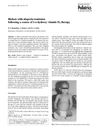 6 citations
,
August 1989 in “European journal of pediatrics”
6 citations
,
August 1989 in “European journal of pediatrics” Child with rickets improved with a specific vitamin D therapy, but alopecia did not change.