 January 2023 in “International Journal of Contemporary Pediatrics”
 A rare genetic disease causes rickets and often hair loss in young children, which can improve with specific treatments.
October 2014 in “Archives of Disease in Childhood” Growth hormone therapy can improve symptoms and growth in children with Vitamin-D Dependent Rickets Type-2.
 January 2025 in “Clinical Pediatric Endocrinology”
 Calcium supplements improved bone deformities but not skin papules or hair loss.
 January 2023 in “PARIPEX INDIAN JOURNAL OF RESEARCH”
 Vitamin D Dependent Rickets Type-2A can cause complete hair loss and bone growth issues in infants.
81 citations
,
March 1985 in “Journal of Clinical Investigation” Measuring 24-OHase induction helps identify defects in vitamin D processing and predict treatment response.
2 citations
,
February 1990 in “PubMed” DDR-II hair follicle cells don't respond to 1, 25-dihydroxyvitamin D3, aiding diagnosis.
 January 2024 in “Clinical, cosmetic and investigational dermatology”
 A child with a rare vitamin D-resistant condition improved with treatment.
 50 citations
,
October 1986 in “European journal of pediatrics”
50 citations
,
October 1986 in “European journal of pediatrics” A boy with severe Vitamin D-resistant rickets did not respond to treatment and lacked a common symptom, suggesting a need for alternative treatments.
May 2025 in “Hormone Research in Paediatrics” Persistent hyperparathyroidism doesn't stop rickets healing or phosphate level normalization in VDDR2A.
10 citations
,
September 1991 in “Journal of Dermatological Science”  1 citations
,
January 2016 in “Journal of Nepal Paediatric Society”
1 citations
,
January 2016 in “Journal of Nepal Paediatric Society” A child with rickets and hair loss might have a rare type of rickets that doesn't improve much with usual vitamin D and calcium treatment.
2 citations
,
July 2013 in “Journal of Life Sciences” A 2-year-old girl with a rare vitamin D disorder had rickets and hair loss, but treatment was ineffective due to poor compliance.
31 citations
,
September 2003 in “International Journal of Dermatology” Vitamin D-dependent rickets Type II causes bone problems and hair loss, and doesn't improve with Vitamin D treatment.
57 citations
,
August 1997 in “Pediatrics International” VDDR I and II are genetic disorders affecting vitamin D use, causing rickets, with VDDR I treatable by vitamin D supplements and VDDR II needing high doses and calcium.
October 1990 in “Pediatric Research” Nocturnal calcium infusions improved a boy's severe rickets without causing hair loss.
 August 2019 in “International journal of contemporary pediatrics”
 A child with a rare type of rickets showed some improvement with high doses of vitamin D, but such conditions often respond poorly to treatment.
 5 citations
,
January 1970 in “Journal of Nepal Paediatric Society”
5 citations
,
January 1970 in “Journal of Nepal Paediatric Society” Hair loss can be a key sign of a rare type of rickets when vitamin D treatment doesn't work and advanced tests aren't available.
88 citations
,
October 1983 in “The Journal of clinical endocrinology and metabolism/Journal of clinical endocrinology & metabolism” Patients with this syndrome can have different responses and worsening resistance to treatment over time.
52 citations
,
August 1993 in “Clinical endocrinology” Intravenous and oral calcium effectively treated vitamin D dependent rickets type II, improving growth and bone health.
 October 2024 in “Journal of the Endocrine Society”
 A rare genetic mutation causes resistance to vitamin D, leading to severe rickets and requiring high doses of calcium and vitamin D for treatment.
October 2024 in “Journal of the Endocrine Society” A rare genetic mutation causes resistance to vitamin D, leading to severe rickets and requires high doses of calcium and vitamin D for management.
 6 citations
,
August 1989 in “European journal of pediatrics”
6 citations
,
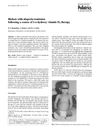
August 1989 in “European journal of pediatrics” Child with rickets improved with a specific vitamin D therapy, but alopecia did not change.
23 citations
,
October 2009 in “Gastroenterology” Vitamin D is crucial for bone health and preventing serious diseases.
18 citations
,
November 2009 in “Calcified tissue international” A genetic mutation caused severe rickets and alopecia in an Indian patient, but high-dose calcium and phosphate treatment improved their condition.
 3 citations
,
January 1992 in “Clinical Pediatric Endocrinology”
3 citations
,
January 1992 in “Clinical Pediatric Endocrinology” Patients with the same vitamin D receptor mutation showed different symptoms due to other factors.
 October 2023 in “Scientific Reports”
 Gene therapy helped rats with a specific type of rickets grow hair without severe inflammation.
November 2023 in “Biomolecules” The research showed that Vitamin D and its receptor are important for healthy bones and normal hair and skin in rats.
 June 2026 in “World Journal of Clinical Pediatrics”
 Early diagnosis and tailored treatment improve outcomes for non-nutritional rickets.
6 citations
,
July 2020 in “Photodermatology Photoimmunology & Photomedicine” Early diagnosis of skin conditions linked to rickets is crucial to prevent growth and bone issues.
11 citations
,
January 2018 in “DOAJ (DOAJ: Directory of Open Access Journals)” A 4-year-old boy with a rare type of rickets and hair loss improved in bone health but not hair growth after vitamin D and calcium treatment.