38 citations
,
September 1997 in “The journal of investigative dermatology/Journal of investigative dermatology” A mutation in mice causes hair loss and skin issues due to a defect in a gene affecting cell adhesion.
2 citations
,
January 2020 in “bioRxiv (Cold Spring Harbor Laboratory)” Androgen signaling reduces Wnt activity, affecting prostate stem cell growth.
 2 citations
,
August 2020 in “International Journal of Cosmetic Science”
2 citations
,
August 2020 in “International Journal of Cosmetic Science” Lindera strychnifolia root extract may help balance scalp bacteria and potentially reduce hair loss.
 199 citations
,
April 2010 in “Nature”
199 citations
,
April 2010 in “Nature” A gene called APCDD1, which controls hair growth, is found to be faulty in a type of hair loss called hereditary hypotrichosis simplex.
 June 2013 in “Faculty Opinions – Post-Publication Peer Review of the Biomedical Literature”
 Wnt ligand secretion by hair follicle cells is essential for hair growth and repair.
 59 citations
,
November 2010 in “Circulation Research”
59 citations
,
November 2010 in “Circulation Research” Wnt signaling may be linked to heart diseases in aging and could be a target for future treatments.
5 citations
,
November 2021 in “The journal of investigative dermatology/Journal of investigative dermatology” Wnt/β-catenin signaling is important for keeping skin cell attachment structures stable.
 May 2007 in “Science's STKE”
 Healing skin wounds in mice can create new hair follicles, and adjusting Wnt signaling could potentially reduce scarring and treat hair loss.
 18 citations
,
May 2017 in “Experimental Dermatology”
18 citations
,
May 2017 in “Experimental Dermatology” AMT may cause hair loss and changing dWAT activity could help treat it.
January 1969 in “Santes Creus: Boletín del Archivo Bibliográfico de Santes Creus” Planarians regenerate using conserved gene expression mechanisms, with runt-1 crucial for cell type specification.
 18 citations
,
July 2016 in “Medicine”
18 citations
,
July 2016 in “Medicine” Wnt/β-catenin and TGF-β pathways affect hair loss, and activating Wnt/β-catenin could be a potential treatment.
 10 citations
,
October 2016 in “Experimental Dermatology”
10 citations
,
October 2016 in “Experimental Dermatology” Nail stem cells and Wnt signaling are important for fingertip regeneration but not sufficient for regenerating more complex limb structures.
17 citations
,
January 1998 in “Neurourology and Urodynamics” Adrenomyeloneuropathy (AMN) can cause bladder problems due to nerve damage.
 May 2024 in “JCI insight”
 A variant in the ADAM17 gene causes hair loss by increasing protein degradation through TRIM47.
 36 citations
,
June 2021 in “Experimental & Molecular Medicine”
36 citations
,
June 2021 in “Experimental & Molecular Medicine” Targeting Hedgehog signaling may help treat ligamentum flavum fibrosis.
November 2025 in “Skin Health and Disease” Autosomal recessive woolly hair is rare and involves tightly coiled hair without other health issues.
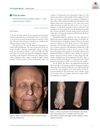 March 2019 in “Journal der Deutschen Dermatologischen Gesellschaft”
 Rothmund-Thomson syndrome type 2 can cause chronic, poorly healing wounds.
 4 citations
,
January 2011 in “Journal of UOEH”
4 citations
,
January 2011 in “Journal of UOEH” Autoimmune hair loss may be linked to increased Th1 and Th17 cells and decreased Th2 cells.
Non-immune dermal cells dominate, epidermal cells increase after day 9, and certain immune cells persist beyond inflammation in wound-induced hair follicle regeneration.
 326 citations
,
February 2009 in “The American journal of pathology”
326 citations
,
February 2009 in “The American journal of pathology” Lgr5 is a marker for active, self-renewing stem cells in the intestine and skin, important for tissue maintenance.
October 2020 in “Research Square (Research Square)” Aging-related changes in hair follicle stem cells can be partially reversed with a specific treatment.
Mechanical stress causes ligament thickening through WISP-1 and Hedgehog signaling.
43 citations
,
April 2010 in “Clinical genetics” Truncating mutations in the C2orf37 gene cause Woodhouse–Sakati syndrome.
20 citations
,
May 2011 in “Journal of Clinical Investigation” The study created a mouse model to mimic degenerative diseases for testing tissue repair and new therapies.
7 citations
,
April 2000 in “Mammalian Genome” A new mutation in mice causes crooked whiskers and messy hair.
 3 citations
,
December 2021 in “Frontiers in endocrinology”
3 citations
,
December 2021 in “Frontiers in endocrinology” A new mutation in the DCAF17 gene was found in a Chinese family, causing Woodhouse-Sakati syndrome and diabetes.
 103 citations
,
March 2011 in “PLoS Biology”
103 citations
,
March 2011 in “PLoS Biology” Birds can lose neck feathers due to a genetic change that increases a gene's activity, helping them adapt to heat.
 5 citations
,
November 2021 in “Saudi medical journal”
5 citations
,
November 2021 in “Saudi medical journal” The document reports three sisters with Woodhouse-Sakati syndrome showing typical symptoms and unusual gynecological anomalies.

Wound-induced hair follicle creation is a complex process in adult mammals that involves various cells and immune responses, and understanding it better could help improve skin healing strategies.
 56 citations
,
May 2017 in “Nature Cell Biology”
56 citations
,
May 2017 in “Nature Cell Biology” Hair can regrow after certain stem cells are lost because other stem cells can take over their role.