6 citations
,
May 2020 in “British Journal of Dermatology” Lichen Sclerosus causes itching, pain, and potential complications in the genital area.
3 citations
,
November 2022 in “The Egyptian Rheumatologist” Macrophage activation syndrome can be a deadly first sign of systemic lupus erythematosus.
April 2025 in “European Journal of Pharmaceutics and Biopharmaceutics” The new drug delivery system improves bicalutamide skin retention for better treatment of hair loss.
 February 2025 in “Advanced Composites and Hybrid Materials”
 Glutamic acid microneedle patches promote better hair growth than traditional treatments.
 January 2025 in “Journal of Clinical Medicine”
 Unsanitary barber practices can spread scalp infections, treatable with oral antifungals.
 June 2023 in “British Journal of Dermatology”
 Baricitinib was effective and safe for severe hair loss treatment over 6 months.
 5 citations
,
September 2021 in “Dermatology Reports”
5 citations
,
September 2021 in “Dermatology Reports” Skin problems like acne and excess hair in PCOS are common and linked to being overweight.
 3 citations
,
October 2022 in “International Journal of Impotence Research”
3 citations
,
October 2022 in “International Journal of Impotence Research” Testosterone Replacement Therapy can improve sexual health in postmenopausal women with low sexual desire, but more research is needed on its long-term effects.
 2 citations
,
August 2023 in “Pharmaceutics”
2 citations
,
August 2023 in “Pharmaceutics” New skin disease treatments using TDDS are improving but face challenges like side effects and high costs.
1 citations
,
January 2022 in “Annals of Dermatology” A new mutation in the MBTPS2 gene causes a mild form of IFAP syndrome.
 August 2023 in “Skin Research and Technology”
 Measuring bald patch size can help grade hair loss severity, with photograph-based evaluation being more reliable.
January 2022 in “Menoufia Medical Journal” Obesity can cause various skin problems, with differences in prevalence between males and females.
 56 citations
,
January 2021 in “Clinical and Experimental Medicine”
56 citations
,
January 2021 in “Clinical and Experimental Medicine” The document concludes that while there are various treatments for Alopecia Areata, there is no cure, and individualized treatment plans are essential due to varying effectiveness.
 4 citations
,
January 2019 in “PubMed”
4 citations
,
January 2019 in “PubMed” Patterned hair loss in women is linked to hormonal imbalances and biochemical changes, and should be evaluated for underlying health issues.
 1 citations
,
January 1967 in “The BMJ”
1 citations
,
January 1967 in “The BMJ” The document concludes that while some hair and scalp disorders can be treated, hair loss from destroyed follicles is permanent, and damaged hair can only regrow naturally.
380 citations
,
March 2000 in “Proceedings of the National Academy of Sciences” Overexpressing GLI-1 in mice skin can cause tumors like human basal cell carcinomas.
 28 citations
,
January 2017 in “Indian Dermatology Online Journal”
28 citations
,
January 2017 in “Indian Dermatology Online Journal” Skin problems like acne, excessive hair growth, and oily skin are common in women with PCOS and can help with early diagnosis.
 1 citations
,
June 2021 in “Journal of gynecology and womens health”
1 citations
,
June 2021 in “Journal of gynecology and womens health” The study found that PCOS affects about 6.5-6.8% of women in both urban and rural areas of Telangana, India, and highlighted the importance of lifestyle changes for management.
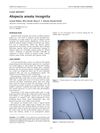 December 2007 in “CRC Press eBooks”
 Alopecia areata incognita causes widespread hair loss without patches and needs a scalp biopsy for diagnosis.
4 citations
,
December 2022 in “Skin Research and Technology” Reduced Sonic hedgehog signaling leads to increased HPV replication and wart formation.
 94 citations
,
October 2017 in “International Journal of Dermatology”
94 citations
,
October 2017 in “International Journal of Dermatology” Lichen planus pigmentosus causes dark skin patches and is treated by avoiding triggers and using anti-inflammatory medications.
 14 citations
,
September 2015 in “Expert Opinion on Therapeutic Targets”
14 citations
,
September 2015 in “Expert Opinion on Therapeutic Targets” The conclusion is that while oral contraceptive pills are effective for PCOS-related high androgen levels, new treatments with fewer side effects are needed.
 1 citations
,
November 2017
1 citations
,
November 2017 The document concludes that while some organisms can regenerate body parts, mammals generally cannot, and cancer progression is complex, involving mutations rather than a strict stem cell hierarchy.
 182 citations
,
October 2003 in “British Journal of Dermatology”
182 citations
,
October 2003 in “British Journal of Dermatology” The 2003 guidelines suggest that while some treatments can regrow hair in alopecia areata, none alter the disease's progression, and wigs may be the best option for extensive hair loss.
 114 citations
,
April 2004 in “International Journal of Dermatology”
114 citations
,
April 2004 in “International Journal of Dermatology” Postinflammatory hyperpigmentation causes dark skin patches and needs personalized treatment.
 14 citations
,
January 1985 in “International Journal of Dermatology”
14 citations
,
January 1985 in “International Journal of Dermatology” The cause of alopecia areata was unknown, and while various treatments existed, no best treatment was agreed upon.
 12 citations
,
November 1945 in “Archives of dermatology”
12 citations
,
November 1945 in “Archives of dermatology” Transplanted skin on hooded rats often grows white hair instead of black.
 4 citations
,
January 2016 in “Dermatology online journal”
4 citations
,
January 2016 in “Dermatology online journal” Using bacitracin zinc and selenium sulfide one after the other can temporarily turn white hair yellow.
 1 citations
,
October 2000 in “Pediatrics in Review”
1 citations
,
October 2000 in “Pediatrics in Review” The document says that hookworms are treated with mebendazole and stress-related hair loss usually gets better in 6 months, while other hair loss types have specific treatments.
 January 2023 in “Research Square (Research Square)”
 Blacks and Hispanics have higher chances of alopecia areata than Whites.