 February 2011 in “Journal of the American Academy of Dermatology”
 A 60-year-old man with a long-term balding condition also developed a rare hair loss condition usually seen in postmenopausal women.
 41 citations
,
January 2014 in “Annals of Dermatology”
41 citations
,
January 2014 in “Annals of Dermatology” Dermoscopic examination helps diagnose different types of hair loss conditions by showing specific patterns.
August 2024 in “Indian Dermatology Online Journal” DCPA commonly affects males' lower legs, showing follicular pustules and white areas.
March 2021 in “Faculty Opinions – Post-Publication Peer Review of the Biomedical Literature” Fat tissue around hair follicles releases a growth factor that helps hair grow and develop color.
 December 2023 in “Clinical, cosmetic and investigational dermatology”
 The study found that white hair in vitiligo has specific patterns and structures, which vary with the stage of the disease and may be similar to another hair condition.
 January 2016 in “Journal of The American Academy of Dermatology”
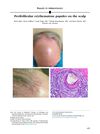
 The woman has a type of scarring hair loss with red bumps around hair follicles.
 1 citations
,
January 2019 in “Acta dermato-venereologica”
1 citations
,
January 2019 in “Acta dermato-venereologica” The woman's skin and hair symptoms were confirmed as frontal fibrosing alopecia, and while facial papules are common in such cases, there's no effective local treatment, but systemic treatments can help.
9 citations
,
January 2002 in “Dermatology” Reduced CD44 expression may cause abnormal hyaluronate buildup in cutaneous myxoma.
 April 2026 in “Scientific Reports”
 Capillary and dermal papilla interactions are vital for hair growth and aging, with potential for treating hair loss.
 October 2025 in “Research Square (Research Square)”
 Enhancing blood vessel interactions with hair cells may help treat hair loss and skin aging.
 12 citations
,
February 1999 in “British Journal of Dermatology”
12 citations
,
February 1999 in “British Journal of Dermatology” Minoxidil increased small openings in blood vessel walls near growing hair in rats.
July 2026 in “Anais Brasileiros de Dermatologia” AGA and SD share similar features, making diagnosis challenging.
159 citations
,
August 2010 in “British journal of dermatology/British journal of dermatology, Supplement” Hydroxychloroquine effectively reduces symptoms of frontal fibrosing alopecia, especially in the first 6 months.
July 2017 in “Chinese Journal of Dermatology” Dermoscopy is effective in diagnosing facial actinic keratosis using specific features.
 207 citations
,
January 2011 in “Dermatologic Therapy”
207 citations
,
January 2011 in “Dermatologic Therapy” Laser hair removal is the most requested cosmetic procedure and has become a scientifically-based treatment suitable for all skin types.
2 citations
,
September 2021 in “JAAD case reports” A man with a weakened immune system was diagnosed with a rare skin condition called trichodysplasia spinulosa using skin examination techniques.
January 2026 in “Clinical Case Reports” A 6-year-old girl had both monilethrix and trichorrhexis nodosa, causing brittle hair, with minimal improvement from treatment.
September 2025 in “Brazilian Journal of Health Review” Early diagnosis and less aggressive hair care improve outcomes for Black women with frontal fibrosing alopecia.
26 citations
,
January 1992 in “Carcinogenesis” TPA strongly increases ODC activity in certain skin cells, potentially aiding tumor growth.
 14 citations
,
January 2006 in “Australasian journal of dermatology”
14 citations
,
January 2006 in “Australasian journal of dermatology” Alopecia areata can look like frontal fibrosing alopecia, making diagnosis hard.
 14 citations
,
March 2002 in “The journal of investigative dermatology/Journal of investigative dermatology”
14 citations
,
March 2002 in “The journal of investigative dermatology/Journal of investigative dermatology” Patients with severe alopecia areata have higher levels of MIF, which decrease after successful treatment.
 6 citations
,
January 2012 in “Springer eBooks”
6 citations
,
January 2012 in “Springer eBooks” Trichoscopy is not specific for diagnosing telogen effluvium and both telogen effluvium and androgenetic alopecia often occur together.
1 citations
,
January 2021 in “Journal of V. N. Karazin Kharkiv National University: Series Medicine” Nonandrogenic factors like oxidative stress and microinflammation are important in hair loss progression.
 1 citations
,
January 2010 in “Springer eBooks”
1 citations
,
January 2010 in “Springer eBooks” Hair loss in androgenetic alopecia may be due to ongoing tiny inflammation and tissue changes around hair follicles.
1 citations
,
January 2007 in “The Internet Journal of Dermatology” A rare, harmless skin tumor was found on a man's nose.
November 2025 in “Revista Foco” Minoxidil effectively promotes hair growth for alopecia, especially when combined with other treatments and proper monitoring.
 January 2024 in “Brazilian Journal of Hair Health”
 Androgens might not be the only major factor in hair loss; other elements could also be important.
 April 2023 in “Journal of Investigative Dermatology”
 The study suggests fibrosing alopecia in a pattern distribution has distinct features and may vary by race.
 January 2018 in “Springer eBooks”
 Trichotillomania is a condition where people repeatedly pull out their hair, which can be triggered by stress and has various physical signs.
 April 2016 in “Journal of The American Academy of Dermatology”
 Low-cost videomicroscopes might not be reliable for examining scalp disorders compared to standard methods.