 January 2009 in “Indian Journal of Plastic Surgery”
 Surgical methods for hair loss due to scarring should be chosen based on the size, location, and shape of the area, with most patients seeing good results.
Ethanol and methanol extracts of Spirulina platensis do not kill WiDr colon cancer cells.
 232 citations
,
January 2016 in “BMC Bioinformatics”
232 citations
,
January 2016 in “BMC Bioinformatics” The method can effectively extract biomedical information without needing expert annotation, performing better than previous models.
 141 citations
,
November 2005 in “International journal of pharmaceutics”
141 citations
,
November 2005 in “International journal of pharmaceutics” Hair follicles may soon be used more for targeted and systemic drug delivery.
 31 citations
,
November 2013 in “Dermatologic Clinics”
31 citations
,
November 2013 in “Dermatologic Clinics” The ARTAS robotic system for hair restoration is efficient with fewer cuts than manual methods, but it's limited to certain hair types and can still leave scars.
 17 citations
,
November 2017 in “Dermatologic Clinics”
17 citations
,
November 2017 in “Dermatologic Clinics” New techniques improve hair restoration success.
10 citations
,
September 2022 in “Animals” Certain genes affect udder shape in Holstein cows, important for health and milk production.
 10 citations
,
July 2017 in “Archives of Plastic Surgery”
10 citations
,
July 2017 in “Archives of Plastic Surgery” Hair thickness decreases from the upper to lower areas of the back of the head, affecting hair transplant results.
 4 citations
,
February 2017 in “Archives of Aesthetic Plastic Surgery”
4 citations
,
February 2017 in “Archives of Aesthetic Plastic Surgery” Double-layer scalp wound closure is better than single-layer closure after strip hair transplant surgery.
 3 citations
,
March 2019 in “Archives of Plastic Surgery”
3 citations
,
March 2019 in “Archives of Plastic Surgery” Hair transplantation effectively corrects hairline issues after midface-lifting surgery with high patient and physician satisfaction.
 3 citations
,
November 2017 in “The American Journal of Cosmetic Surgery”
3 citations
,
November 2017 in “The American Journal of Cosmetic Surgery” The new Cosmetic Surgery Scar Assessment Scale (CSSAS) was found to be simple and effective in evaluating scars from hair restoration surgeries.
 2 citations
,
January 2023 in “BMC plant biology”
2 citations
,
January 2023 in “BMC plant biology” Scientists found new genetic areas that affect how rice root hairs grow and develop.
 2 citations
,
April 2018 in “Journal of Cosmetic Dermatology”
2 citations
,
April 2018 in “Journal of Cosmetic Dermatology” Tumescent fluid increases scalp hair angles, which may improve hair transplant results and reduce surgeon fatigue.
 9 citations
,
September 1997 in “Dermatologic Surgery”
9 citations
,
September 1997 in “Dermatologic Surgery” The technique of transplanting micrografts in hair restoration surgery is fast, practical, and efficient, minimizing damage to follicles and grafts.
August 2025 in “Journal of Cosmetic Dermatology” Hairline transplants improve forehead appearance and satisfaction in East Asian women.
211 citations
,
March 2011 in “Journal of Lipid Research” A new, quick method was developed to analyze skin lipids, discovering a new ceramide subclass.
 November 2023 in “Facial Plastic Surgery”
 Follicular Unit Excision (FUE) is a popular, less invasive hair restoration method with high patient satisfaction when done correctly, despite some complications from untrained practitioners.
 4 citations
,
July 2023 in “Pharmaceutics (Basel)”
4 citations
,
July 2023 in “Pharmaceutics (Basel)” Nanoparticle-based drug delivery to hair follicles is more effective when tested under conditions that match skin behavior.
 6 citations
,
March 2018 in “Hair transplant forum international”
6 citations
,
March 2018 in “Hair transplant forum international” The Graft Quality Index grades hair transplant grafts to predict placement difficulty and surgery results.
 April 2024 in “Journal of Investigative Dermatology”
 Using quantitative traits in genetics can improve understanding and management of skin health and conditions.
3 citations
,
November 2024 in “Electrochimica Acta” A new, quick method accurately detects minoxidil in drugs and cosmetics.
October 2021 in “Operative techniques in otolaryngology--head and neck surgery” The document concludes that various surgical techniques and postoperative care are used to protect eye health, improve vision, and restore facial balance in people with facial paralysis.
 39 citations
,
November 1987 in “Clinica Chimica Acta”
39 citations
,
November 1987 in “Clinica Chimica Acta” Human platelets change minoxidil to minoxidil sulfate, helping blood vessels widen.
 119 citations
,
March 2020 in “Frontiers in Bioengineering and Biotechnology”
119 citations
,
March 2020 in “Frontiers in Bioengineering and Biotechnology” Asia has made significant progress in tissue engineering and regenerative medicine, but wider clinical use requires more development.
 January 2014 in “Journal of Cutaneous and Aesthetic Surgery”
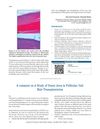
 The document suggests that for better patient satisfaction in hair transplants, high-quality photos are needed, and using a narrow donor strip might lead to fewer grafts and dissatisfaction, but filling the scar with FUE grafts and using tranexamic acid can improve results.
March 2013 in “Pigment Cell & Melanoma Research” A gene called Taqpep affects cat coat patterns like stripes and blotches.
Transplanting beard hair into a scalp wound after hair transplant surgery improves scar appearance and hair keeps its normal traits.
 29 citations
,
January 2010 in “PubMed”
29 citations
,
January 2010 in “PubMed” FUE hair transplants offer minimal scarring and are good for short hairstyles but are time-consuming and can be costly.
 8 citations
,
March 1994 in “The American Journal of Cosmetic Surgery”
8 citations
,
March 1994 in “The American Journal of Cosmetic Surgery” The Total Excision Techniques improve hair transplant results by increasing grafts by at least 50% and reducing scarring.
 February 2002 in “Dermatologic Surgery”
 Best hair transplant results happen when tissues are least damaged.