 April 2026 in “Journal of the Korean Society of Cosmetology”
 Limosilactobacillus reuteri from honeybees may promote hair growth by activating a specific cell pathway.
71 citations
,
November 2005 in “The journal of investigative dermatology. Symposium proceedings/The Journal of investigative dermatology symposium proceedings” Edar signaling is crucial for proper hair follicle development and function.
May 2006 in “The Journal of Cell Biology” Keratin 17 is crucial for cell growth in wound healing by aiding protein synthesis.
250 citations
,
November 2003 in “The Journal of Cell Biology” BMP receptor IA is essential for proper hair cell differentiation in mice.
April 2023 in “Journal of Investigative Dermatology” RNase L suppresses regeneration in mammals.
 55 citations
,
March 2015 in “Carcinogenesis”
55 citations
,
March 2015 in “Carcinogenesis” WNT10A helps esophageal cancer cells spread and keep renewing themselves.
 2 citations
,
January 2022 in “Journal of Investigative Dermatology”
2 citations
,
January 2022 in “Journal of Investigative Dermatology” Hedgehog signaling in skin cells is crucial for hair growth and skin healing, but needs to be balanced to avoid harmful effects like scarring and cancer.
 13 citations
,
March 2022 in “Cell Death and Differentiation”
13 citations
,
March 2022 in “Cell Death and Differentiation” Sema3A can both slow and speed up wound healing, depending on its form and combination with EGF.
 5 citations
,
October 2024 in “International Journal of Biological Sciences”
5 citations
,
October 2024 in “International Journal of Biological Sciences” A peptide from hair follicle stem cells can boost hair growth.
 7 citations
,
April 2013 in “Journal of Cellular Biochemistry”
7 citations
,
April 2013 in “Journal of Cellular Biochemistry” CD61 is important for mouse tooth cell growth and works through Lgr5.
December 2021 in “Figshare” BBS7 is essential for healthy gums by supporting cell movement and blood flow.
 July 2016 in “Journal of Investigative Dermatology”
 R-spondin2 may help treat hair loss, gene differences could explain baldness, a peptide's regulation is linked to psoriasis, B-defensin gene copies may affect a skin condition's risk and severity, and potential markers and targets for alopecia areata were identified.
1 citations
,
July 2024 in “Nanomedicine” Stem cell-derived vesicles improve blood vessel growth in limbs.
 829 citations
,
May 2007 in “Nature”
829 citations
,
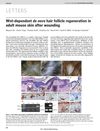
May 2007 in “Nature” Hair follicles can regrow in wounded adult mouse skin using a process like embryo development.
4 citations
,
May 2024 in “Cytotechnology”  6 citations
,
June 2021 in “Developmental biology”
6 citations
,
June 2021 in “Developmental biology” Dermal EZH2 controls skin cell development and hair growth in mice.
1 citations
,
October 2021 in “bioRxiv (Cold Spring Harbor Laboratory)” Heat shock proteins help basal cell carcinoma grow by responding to inflammation signals.
 160 citations
,
January 2014 in “Seminars in cell & developmental biology”
160 citations
,
January 2014 in “Seminars in cell & developmental biology” Early development of hair, teeth, and glands involves specific signaling pathways and cellular interactions.
7 citations
,
December 2019 in “Experimental and Therapeutic Medicine” WNT10B affects hair growth by altering gene activity in hair cells.
 November 2024 in “Journal of Investigative Dermatology”
 TGF-β signaling is essential for new hair growth after wounds.
 7 citations
,
May 2022 in “PLOS ONE”
7 citations
,
May 2022 in “PLOS ONE” Certain genes and pathways are linked to the production of finer and denser wool in Hetian sheep.
1 citations
,
June 2025 in “Stem Cell Reviews and Reports” 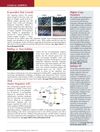 July 2016 in “Experimental Dermatology”
 New treatments for hair growth and psoriasis may be possible, and gene differences could affect baldness and the severity of skin conditions.
3 citations
,
August 2025 in “Cell” Fibroblast bioelectric signaling can promote hair growth and may help treat hair loss.
117 citations
,
April 2008 in “Developmental biology” Ectodysplasin inhibits Wnt signaling to help form hair follicles.
 October 2022 in “Frontiers in Genetics”
 The research found new potential mechanisms in mouse hair growth by studying RNA interactions.
324 citations
,
May 2002 in “Oncogene” 53 citations
,
August 2005 in “The Journal of Cell Biology” Sgk3 is essential for normal hair follicle growth and maintenance.
April 2019 in “The journal of investigative dermatology/Journal of investigative dermatology” Spiny mice regenerate skin better than laboratory mice due to larger hair bulges, more stem cells, and different collagen ratios.
 78 citations
,
June 2013 in “Science”
78 citations
,
June 2013 in “Science” Mice without the Sept4/ARTS gene heal wounds better due to more stem cells that don't die easily.