 19 citations
,
May 1991 in “Journal of Chromatography B: Biomedical Sciences and Applications”
19 citations
,
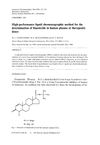
May 1991 in “Journal of Chromatography B: Biomedical Sciences and Applications” Reliable method detects finasteride in human plasma at low doses.
 3 citations
,
January 2020 in “Acta Dermatovenerologica Alpina Pannonica et Adriatica”
3 citations
,
January 2020 in “Acta Dermatovenerologica Alpina Pannonica et Adriatica” Cryotherapy is effective for ingrown toenails, especially in single cases, but has high recurrence in younger and bilateral cases.
Communities adapt and reinterpret the landscape of the former Stutthof concentration camp, balancing memory and identity.
Hair movement can indicate hair quality and health.
15 citations
,
January 2011 in “International journal of trichology” Using a hot iron on wet hair can cause dry, brittle hair with air bubbles inside.
1 citations
,
August 2015 in “PubMed” Human hair's strength comes from a honeycomb-like structure and macrofibrils.
16 citations
,
September 2022 in “Cold Spring Harbor Perspectives in Biology” Wound healing can potentially regrow hair and aid in hair loss treatments.
 27 citations
,
July 2017 in “Scientific Reports”
27 citations
,
July 2017 in “Scientific Reports” N-WASP is essential for healthy skin and preventing inflammation.
4 citations
,
February 2001 in “PubMed” A medication called sodium valproate likely caused a girl's hair to become kinky and dry.
March 2018 in “Journal of Experimental Biology” Hair curliness is caused by the arrangement and length of two different cell types.
 199 citations
,
April 2010 in “Nature”
199 citations
,
April 2010 in “Nature” A gene called APCDD1, which controls hair growth, is found to be faulty in a type of hair loss called hereditary hypotrichosis simplex.
16 citations
,
January 1977 January 2004 in “Giornale di Metafisica: revista bimestrale di filosofia” Increased Wnt signaling causes hair graying by depleting melanocyte stem cells in aged mice.
 1 citations
,
July 2018 in “Elsevier eBooks”
1 citations
,
July 2018 in “Elsevier eBooks” Avoid chemical and physical damage to protect hair.
7 citations
,
June 2018 in “Journal of the American Academy of Dermatology” The document suggests finding a simpler, cheaper way to diagnose Uncombable Hair Syndrome.
July 2025 in “Journal of Investigative Dermatology” Secreted inhibitors of Wnt and IGF signaling control hair and tooth development, creating species-specific patterns.
 6 citations
,
February 2016 in “International Journal of Dermatology”
6 citations
,
February 2016 in “International Journal of Dermatology” The true cause of hair suddenly turning white is still unknown.
 January 2015 in “Proceedings of the Oklahoma Academy of Science”
 Eating raw cotton seeds can cause hair loss, likely due to gossypol.
2 citations
,
May 2022 in “Stem cell research & therapy” Disrupted stem cell signals in hairpoor mice cause hair loss.
10 citations
,
June 2024 in “Frontiers in Genetics” Different sheep breeds share similar genetic factors affecting wool fineness.
21 citations
,
January 2020 in “Pharmaceutical Biology” Salvia plebeia extract can stimulate hair growth.
 5 citations
,
January 2010 in “The anatomical record”
5 citations
,
January 2010 in “The anatomical record” Most dogs have hair whorls on their chest and limbs, with shelter dogs and short-haired dogs having more chest whorls.
September 1973 in “Primates”  14 citations
,
August 2006 in “Clinical and Experimental Dermatology”
14 citations
,
August 2006 in “Clinical and Experimental Dermatology” A girl with no hair neglect developed plica neuropathica in the hospital, lost all her hair, but it grew back.
 12 citations
,
February 2006 in “Lipids”
12 citations
,
February 2006 in “Lipids” Hair texture changes with age due to varying levels of lipids.
41 citations
,
October 2001 in “Experimental Dermatology” The nude gene is important for skin and hair development.
1 citations
,
August 2013 in “The Journal of Cell Biology” Lack of Evi in skin causes psoriasis-like symptoms in mice.
 3 citations
,
February 2014 in “Asian Pacific journal of tropical medicine”
3 citations
,
February 2014 in “Asian Pacific journal of tropical medicine” Wnt5a may slow down hair growth in mice.
April 2016 in “Journal of Investigative Dermatology” Mutations in the TSPEAR gene cause a new form of ectodermal dysplasia affecting hair and tooth development.
January 2005 in “Chinese Journal of Veterinary” Hairless mice lose hair by 3-4 weeks, develop thicker, folded skin, and show pigmentation differences.