1 citations
,
May 2025 in “Cytotechnology” Icariside II may help treat gastric cancer by stopping tumor growth.
7 citations
,
May 2022 in “Cancers” UC.145 may be a new biomarker for predicting gastric cancer.
July 2026 in “Pathology - Research and Practice” April 2021 in “Institutional Repositories DataBase (IRDB)” High-intensity red LED light boosts bone cell growth and mineralization.
245 citations
,
April 2009 in “Circulation Research” CD133+ cells help heal diabetic ulcers by promoting blood vessel growth and activating Wnt signaling.
 103 citations
,
November 2014 in “Journal of Cell Biology”
103 citations
,
November 2014 in “Journal of Cell Biology” MicroRNA-214 is important for skin and hair growth because it affects the Wnt pathway.
 95 citations
,
January 2012 in “British Journal of Dermatology”
95 citations
,
January 2012 in “British Journal of Dermatology” Androgens block hair growth by disrupting cell signals; targeting GSK-3 may help treat hair loss.
 74 citations
,
September 2006 in “Cell Cycle”
74 citations
,
September 2006 in “Cell Cycle” The HR protein's role as a repressor is essential for controlling hair growth.
72 citations
,
November 2017 in “Journal of developmental biology” The Hedgehog signaling pathway is important for skin and hair growth and can lead to cancer if it doesn't work right.
 72 citations
,
April 2008 in “Organogenesis”
72 citations
,
April 2008 in “Organogenesis” Wnt signaling is crucial for skin and hair development and its disruption can cause skin tumors.
 66 citations
,
July 2015 in “Organogenesis”
66 citations
,
July 2015 in “Organogenesis” Wnt signaling is crucial for skin wound healing and reducing scars.
 59 citations
,
April 2016 in “Cell Reports”
59 citations
,
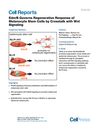
April 2016 in “Cell Reports” EdnrB signaling helps melanocyte stem cells regenerate and could be targeted to treat pigmentation issues.
 57 citations
,
January 2013 in “International Journal of Medical Sciences”
57 citations
,
January 2013 in “International Journal of Medical Sciences” Lef1 helps stem cells become hair cells by interacting with specific signaling pathways.
 53 citations
,
May 2010 in “Journal of Cellular Physiology”
53 citations
,
May 2010 in “Journal of Cellular Physiology” Mice without Vitamin D receptors have hair growth problems because of issues in the hedgehog signaling pathway.
 43 citations
,
September 2017 in “Lasers in Surgery and Medicine”
43 citations
,
September 2017 in “Lasers in Surgery and Medicine” LED light therapy may help hair growth by activating certain cell pathways.
 42 citations
,
March 2014 in “European Journal of Pharmacology”
42 citations
,
March 2014 in “European Journal of Pharmacology” Ginsenoside F2 from ginseng may increase hair growth better than standard treatments by affecting cell growth signals.
29 citations
,
February 2019 in “Journal of Microbiology and Biotechnology” Silibinin may help hair growth and treat hair loss.
24 citations
,
March 2020 in “Cells” Natural small molecules can help treat diseases by activating or inhibiting the Wnt pathway.
22 citations
,
March 2019 in “The Journal of Cell Biology” The Wave complex controls skin growth by suppressing certain signals.
19 citations
,
September 2023 in “Journal of Biomedical Science” Photobiomodulation may help heal diabetic wounds, but more research is needed.
1 citations
,
February 2025 in “International Journal of Molecular Sciences” HMBi supplementation boosts cashmere growth by affecting specific metabolic and signaling pathways in goats.
 1 citations
,
January 2018 in “Recent clinical techniques, results, and research in wounds”
1 citations
,
January 2018 in “Recent clinical techniques, results, and research in wounds” Using developmental signaling pathways could improve adult wound healing by mimicking scarless embryonic healing.
May 2026 in “Animal Bioscience” m6A-circHECA helps stem cells become hair follicles in cashmere goats.
 December 2025 in “Preprints.org”
 Milk-derived exosomes may help treat hair loss by boosting hair cell growth and signaling.
November 2025 in “Journal of Investigative Dermatology” NUL-5 may boost hair growth by improving hair follicle health and structure.
October 2025 in “Animals” miR-200a reduces goose fibroblast growth by targeting PITX2 in the Wnt pathway.
September 2025 in “Stem Cells Translational Medicine” Lithium chloride-treated stem cell exosomes boost hair growth by activating a specific pathway.
Editing the FGF5 gene in sheep increases fine wool growth.
 April 2017 in “Journal of Investigative Dermatology”
 SM04755 may be an effective topical treatment for psoriasis.
 December 2012 in “Journal of Dermatological Science”
 Wnt/beta-catenin signaling in the skin helps fat cell development during hair growth and repair.