124 citations
,
July 2017 in “eLife” Type XVII collagen helps control skin cell growth and could be a target for anti-aging treatments.
 November 2022 in “Journal of Investigative Dermatology”
 Most Recessive Dystrophic Epidermolysis Bullosa patients with a specific mutation likely have Sephardic ancestry from about 500 years ago.
 6 citations
,
July 2007 in “Developmental Dynamics”
6 citations
,
July 2007 in “Developmental Dynamics” The molecule Wise is involved in the development of various structures in chick embryos.
10 citations
,
April 2013 in “Journal of Investigative Dermatology” Epidermolytic ichthyosis can be inherited in a semidominant way with mild symptoms in carriers.
24 citations
,
January 2023 in “Cancer Research” AMPK activation may reduce melanoma risk in red-haired individuals.
 6 citations
,
January 2020 in “International Journal of Biological Sciences”
6 citations
,
January 2020 in “International Journal of Biological Sciences” Septin4 helps kill colon cancer cells by working with the protein BAX.
133 citations
,
June 2016 in “Nature Neuroscience” Zeb2 is crucial for nerve repair by controlling Schwann cell function.
18 citations
,
February 2006 in “Genomics” A new genetic mutation in mice causes permanent hair loss and skin wrinkling.
 January 2022 in “bioRxiv (Cold Spring Harbor Laboratory)”
 Skin lesions in Carney complex are likely caused by a specific group of skin cells that promote pigment production due to a genetic mutation.
176 citations
,
February 2006 in “Cancer Research” Patched1 helps prevent tumors by controlling cell growth.
 December 2023 in “bioRxiv (Cold Spring Harbor Laboratory)”
 Different types of inactive melanocyte stem cells exist with unique characteristics and potential to develop into other cells.
1 citations
,
May 2025 in “Cell Reports Medicine” RSPO1 could help create new diabetes treatments by increasing pancreatic β cells.
FoxA is crucial for planarian pharynx regeneration.
 556 citations
,
September 2008 in “Genes & Development”
556 citations
,
September 2008 in “Genes & Development” Wnt signaling is vital for cell growth, development, and cancer research.
January 2026 in “SSRN Electronic Journal” 2 citations
,
August 2020 in “CRC Press eBooks” Tabby mutations in mice affect hair follicle development and help study genetic mapping and certain medical conditions.
January 2002 in “Agritrop (Cirad)” The hr gene is linked to hair loss in Valle del Belice sheep.
September 2005 in “電子情報通信学会ソサイエティ大会講演論文集” Cancer prevention has advanced significantly, with some strategies proving successful.
16 citations
,
March 2021 in “EvoDevo” Different species use the same genes for tooth regeneration.
 28 citations
,
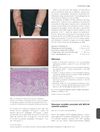
February 2010 in “British journal of dermatology/British journal of dermatology, Supplement”
28 citations
,
February 2010 in “British journal of dermatology/British journal of dermatology, Supplement” WNT10A mutations cause varied symptoms in patients with odonto-onycho-dermal dysplasia.
 10 citations
,
November 2017 in “Journal of Investigative Dermatology”
10 citations
,
November 2017 in “Journal of Investigative Dermatology” A mutation in the FAM83G gene is linked to skin and hair abnormalities in two related individuals.
210 citations
,
February 2008 in “Nature genetics” Mutations in the P2RY5 gene cause autosomal recessive woolly hair.
 11 citations
,
March 2020 in “Cellular Signalling”
11 citations
,
March 2020 in “Cellular Signalling” XIST RNA helps regenerate hair follicles by targeting miR-424 and activating hedgehog signaling.
 January 2024 in “Australasian journal of dermatology (Print)”
 A boy's hair turned red because of genetic mutations, not lack of zinc.
1 citations
,
November 2023 in “Anais Brasileiros de Dermatologia” Certain gene variations and low adiponectin levels may increase the risk of hair loss in Egyptians.
 February 2013 in “Journal of Visualized Experiments”
 The document's conclusion cannot be provided because the document is not available for analysis.
 3 citations
,
May 2018 in “European Journal of Dermatology”
3 citations
,
May 2018 in “European Journal of Dermatology” Photodynamic therapy may not work for erythroplasia of Queyrat and could lead to invasive squamous cell carcinoma.
1 citations
,
January 2024 in “Veterinary Dermatology” Alopecia X in Pomeranians is likely genetic, not environmental.
 8 citations
,
October 2019 in “Immunological investigations”
8 citations
,
October 2019 in “Immunological investigations” The AIRE gene variant rs2075876 is linked to a higher risk of alopecia areata in males.
 1 citations
,
December 2020 in “bioRxiv (Cold Spring Harbor Laboratory)”
1 citations
,
December 2020 in “bioRxiv (Cold Spring Harbor Laboratory)” Sox9 levels in brain stem cells affect whether they stay as stem cells or become neurons.