2 citations
,
January 2025 in “Veterinary Dermatology” Male Pomeranians with woolly coats are more likely to develop alopecia X.
 31 citations
,
January 2010 in “GenomeBiology.com (London. Print)”
31 citations
,
January 2010 in “GenomeBiology.com (London. Print)” The research concluded that selection significantly shaped the genetic variation of the X chromosome, with certain regions affected by past selective events.
34 citations
,
February 2012 in “International Journal of Dermatology” Dermatoscopy can help identify hydroquinone-induced skin issues, avoiding invasive biopsies.
20 citations
,
October 2021 in “Applied materials today” A new microneedle patch and yellow light therapy significantly promote hair regrowth.
 April 2024 in “JMR. Journal of molecular recognition/Journal of molecular recognition”
 Hydrophilic carbon dots cause one protein to clump more and prevent another from clumping.
![The Synthesis of (−)-4-Methyl-8-Chloro-Trans-1,2,3,4,4a,5,6,10b-Octahydrobenzo-[f]-Quinolin-3-One-[3-14C] (LY300502-14C) via a Circuitous Route](/images/assets/73bab8dc-bdf0-45e3-8ef7-73d0d4b93cb1/small/21074.jpg) 3 citations
,
October 1994 in “Journal of Labelled Compounds and Radiopharmaceuticals”
3 citations
,
October 1994 in “Journal of Labelled Compounds and Radiopharmaceuticals” Scientists made a carbon-14 labeled version of a drug with a 48% yield and over 99% purity.
49 citations
,
October 1989 in “Genomics” Type I keratin genes are closely linked to the rex locus on mouse chromosome 11, affecting hair development.
Certain genetic markers on chromosome 20 are linked to hair loss in the Han Chinese from Yunnan.
 November 2025 in “Frontiers in Pharmacology”
 Xiaozhi Yufa decoction may help treat hair loss by improving hair growth and reducing inflammation.
 1 citations
,
November 2020 in “Research Square (Research Square)”
1 citations
,
November 2020 in “Research Square (Research Square)” The study found specific skin cells and genes that may affect the quality of cashmere in Liaoning Cashmere Goats.
18 citations
,
July 2023 in “International Journal of Molecular Sciences” KY19382 speeds up wound healing by activating a specific cell signaling pathway.
January 2025 in “EXPERIMENTAL ANIMALS” Gamma-ray exposure improves genome editing efficiency in mice using the i-GONAD method.
63 citations
,
January 2021 in “Adipocyte” Adipose tissue-derived exosomes help regulate metabolism and may aid in disease treatment.
 1 citations
,
September 2015 in “Elsevier eBooks”
1 citations
,
September 2015 in “Elsevier eBooks” SOX2 is crucial for skin cell function and hair growth, and it plays a role in skin cancer and wound healing.
 January 2022 in “Revista Dermatológica Centro Uraga”
 Monilethrix is a genetic hair disorder affecting hair shape, seen in two brothers.
3 citations
,
January 2013 in “Journal of cosmetics, dermatological sciences and applications” HAIRCARECUBE TM (HCC) helps hair products work better by getting active ingredients deeper into the hair.
 January 2024 in “Authorea (Authorea)”
 Using laccase to add poly(tyrosine) to wool makes it less likely to shrink and stronger.
February 2020 in “Oncology Times” Antibody drug conjugates show promise in targeting cancer cells while reducing harm to healthy cells.
1 citations
,
January 2022 in “Brazilian Journal of Pharmaceutical Sciences” Minoxidil can be effectively encapsulated in coated nanovesicles for potential drug delivery.
 January 2024 in “Theranostics”
 Exosomes from special stem cells help treat ulcerative colitis by reducing inflammation and stress.
January 2015 in “International Journal of Nanomedicine” Anionic squarticles can effectively counteract amitriptyline overdose, improving survival rates.
Sensory neuron and Merkel-cell changes in the skin happen independently during normal skin maintenance.
31 citations
,
May 2017 in “JAAD Case Reports” ATX-101 injections can cause hair loss.
April 2024 in “Anais Brasileiros de Dermatologia” 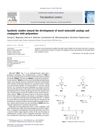 12 citations
,
February 2010 in “Tetrahedron Letters”
12 citations
,
February 2010 in “Tetrahedron Letters” New minoxidil compounds with better water solubility were made, but their full effects and safety need more research.
January 2025 in “SSRN Electronic Journal”  May 2012 in “Nature Genetics”
 Blond hair in Solomon Islanders is due to a unique genetic variant, not European ancestry.
 February 2025 in “International Journal of Cosmetic Science”
 A new amino acid derivative, ATS, improves hair texture and moisture, making it easier to straighten curly hair.
27 citations
,
July 1993 in “The journal of investigative dermatology/Journal of investigative dermatology” 43 citations
,
April 1996 in “Journal of Investigative Dermatology”